

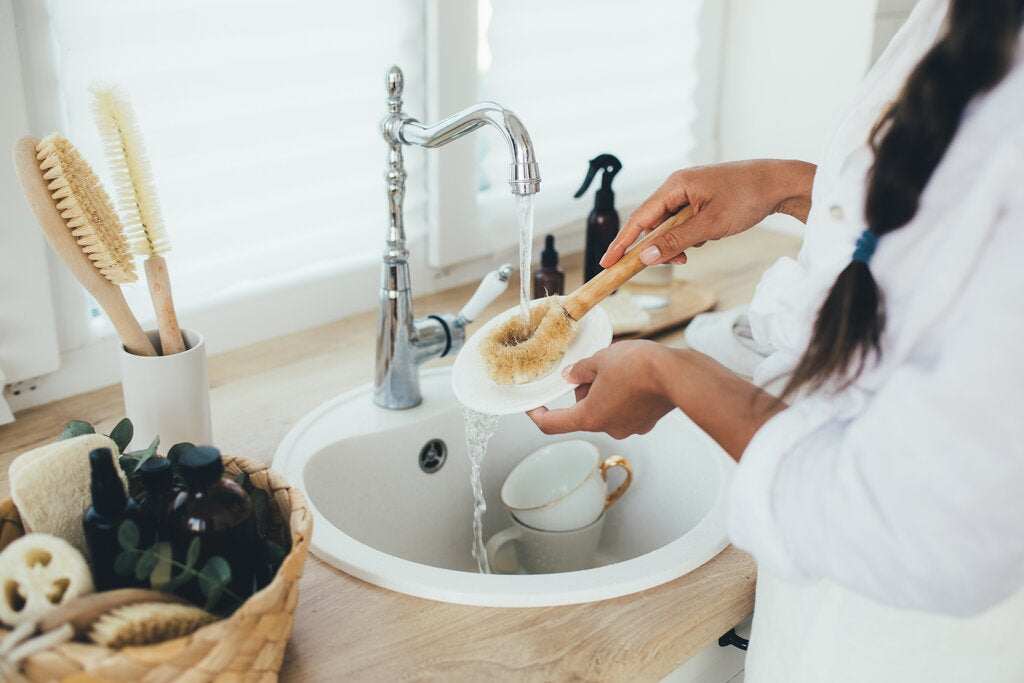
Most kitchen cleaning checklists fail for the same reason: they are one long list. Faced with forty items, nobody starts. The useful version splits the work by how often each job actually needs doing, so the daily list stays short enough to finish.
Here is that checklist, plus the five things in a kitchen that almost nobody cleans and genuinely should.
Daily, about five minutes
This is the list that matters. Do these and the weekly clean stops being a job.
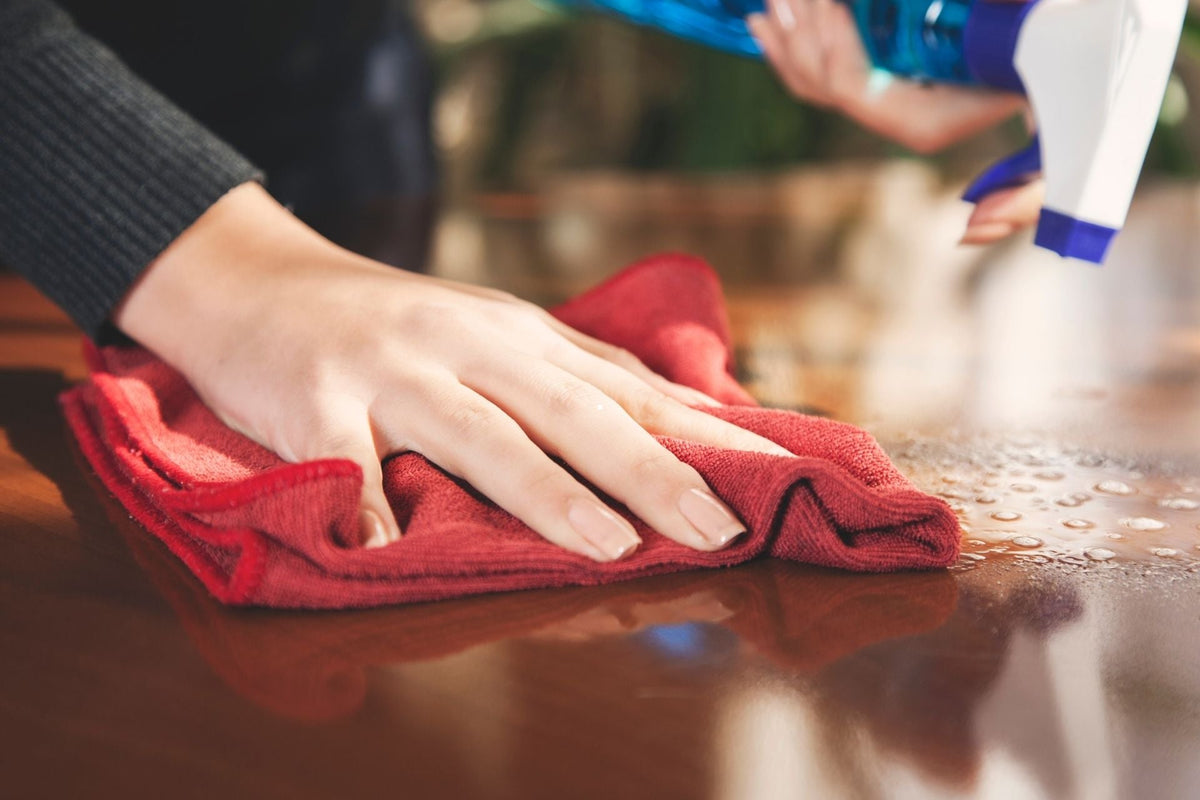
- Wipe the counters after cooking, not before bed.
- Wipe the stovetop while it is still warm. Warm, not hot. Spills lift with a damp cloth and no product at all. Once they go through another heat cycle they are baked on.
- Run the sink empty. Dishes in the machine or washed, sink rinsed.
- Sweep or spot-sweep the floor. Thirty seconds.
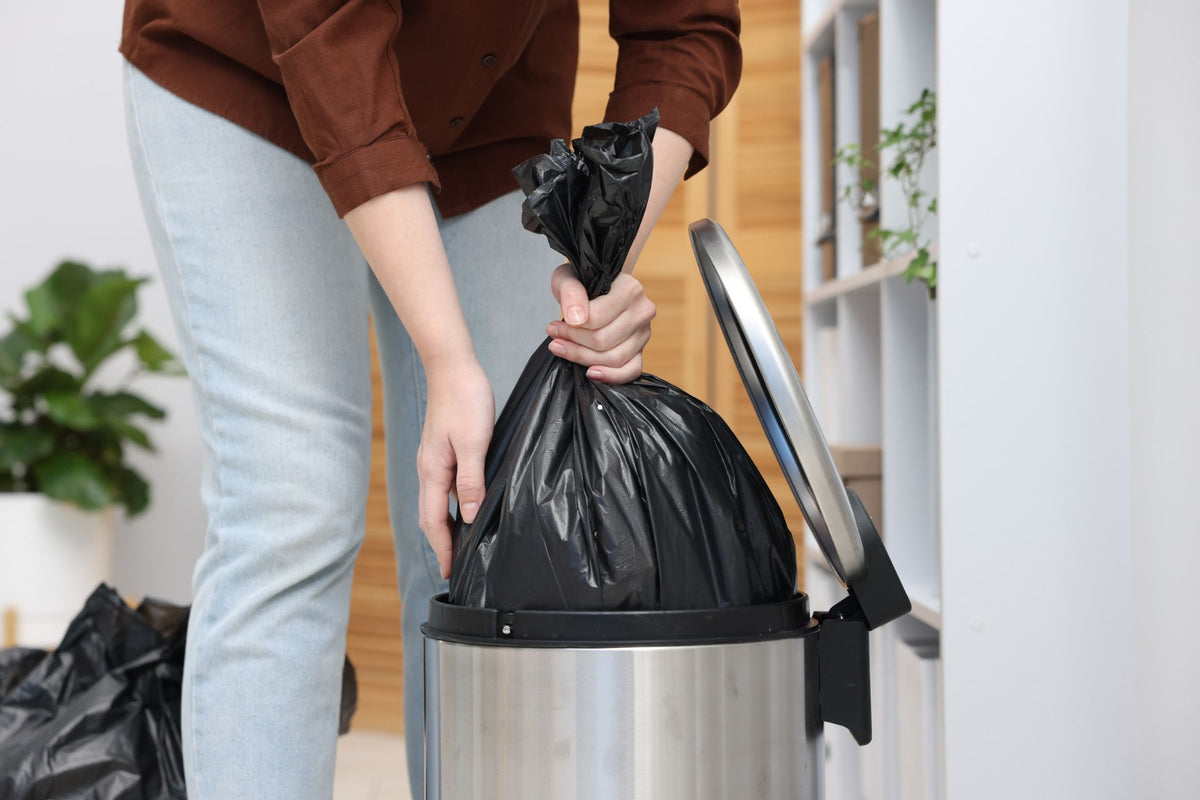
- Take the bin out if it has food in it. Not when it is full, when it has food in it. Different threshold.
The stovetop one is the highest-value habit on this page. Almost every "how do I get baked-on residue off" problem starts with skipping it.
Weekly, about thirty minutes
- Wipe cabinet fronts and handles. Handles collect more grease than the cabinet doors.
- Clean the sink properly, including the taps and around the base where limescale collects.
- Wipe the fridge exterior, especially the handle.
- Clean the microwave. A bowl of water heated for two minutes softens everything, then wipe.
- Wipe down small appliances. Kettle, toaster exterior, coffee machine.
- Mop the floor.
- Wash or replace the sponge and cloths.
- Wipe the bin lid and the rim, which is where the smell usually lives rather than in the bag.
Monthly
- Clean out the fridge. Remove everything, wipe the shelves, bin what has expired.
- Run a cleaning cycle on the dishwasher.
- Descale the kettle and the coffee machine. Vinegar works here.
- Wipe the range hood surface and wash the filter.
- Clean the oven door glass before it needs a full oven clean.
- Wipe the tops of cabinets and the fridge, where greasy dust settles.
- Flush the drains. Baking soda, then hot water.
Quarterly, or twice a year
- Deep clean the oven.
- Pull out the fridge and clean the coils behind it. Dusty coils make the fridge work harder and use more electricity, so this one saves money.
- Empty and wipe every drawer and cupboard.
- Clean the window and the sill.
- Check food storage for anything long expired.
The five things almost nobody cleans
These are the jobs missing from most checklists, and several cause problems people blame on something else.
1. The dishwasher filter. Most dishwashers have a removable filter in the base that twists out. If your dishes come out gritty or the machine smells, this is almost always why. Rinse it under the tap monthly. A lot of people own a dishwasher for years without knowing it exists.
2. The fridge door seal. The rubber gasket collects crumbs and grows mold in the folds. Wipe it with a damp cloth, getting into the channel. A dirty seal also stops sealing properly, which costs you electricity.
3. The sink overflow hole. That small hole near the top of the basin builds biofilm and is a common source of a smell people attribute to the drain. A bottle brush and some cleaner sorts it.
4. The range hood filter. Metal mesh filters can go in the dishwasher or soak in hot water with a degreaser. A clogged filter means the hood is not extracting, so grease lands on your cabinets instead.
5. Under and behind the bin. Liquid escapes bags. The floor under a kitchen bin is often the actual source of a persistent smell, and no amount of cleaning the bin itself fixes it.
What you actually need to do all of this
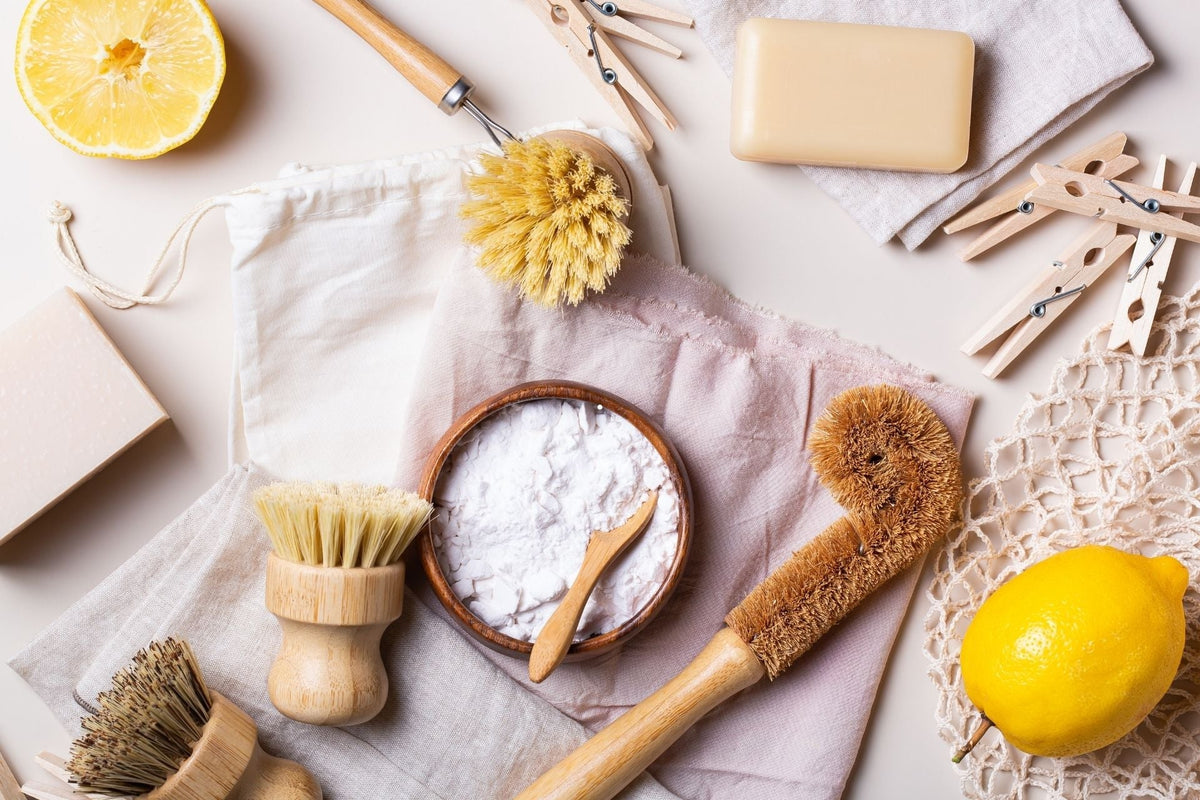
Far less than the aisle suggests. One multi-surface cleaner covers counters, cabinet fronts, appliance exteriors and the stovetop. Baking soda handles anything that needs a mild abrasive. Vinegar descales the kettle and does the window. A cloth, a sponge, and a brush for the drains.
That is five things, and it covers every job on this page. We wrote a fuller version of that argument in our cleaning supplies list, including which popular products you can skip entirely.
Two cautions on the DIY side. Vinegar is genuinely useful in a kettle and on glass, but it etches stone, so keep it off a marble or granite counter. And do not mix cleaning products, particularly anything with bleach. Use one thing at a time.
Cutting the waste while you are at it
The kitchen generates more single-use waste than any other room, and cleaning is a decent share of it. Three swaps do most of the work.
A sponge cloth of cellulose and organic cotton replaces paper towels for wiping and drying, and washes out rather than going in the bin. A biodegradable scrub sponge made from cellulose and loofah replaces the plastic kind, which sheds microplastic fragments as it wears down. And compostable trash bags close the loop on food scraps, BPI certified for industrial composting facilities and TUV OK Compost HOME certified for backyard piles.
For the cleaner, our non-toxic cleaners range works on the refill principle: a tablet dissolves in tap water in a bottle you keep, so you stop rebuying the bottle. Allow 20 to 30 minutes for it to dissolve fully, since there is no plastic film to speed it up. Eight mineral-based ingredients, published in full on our ingredients page, fragrance-free and dye-free.
The honest limits for kitchen work: it is rated for sealed counters, stovetops, sealed tile and sealed wood, and for sealed stone including marble, granite and quartz. It is not for floors, so you still need something for mopping, and not for glass, so the window and the oven door want vinegar instead. It is not EPA registered, so it cleans and we make no claim that it disinfects or sanitizes. For a board that has held raw meat, use a registered disinfectant.
Where to start if the kitchen is already out of hand
Do not attempt the whole list. Pick the daily five and do only those for a week.
Most of the monthly and quarterly jobs exist because the daily ones were skipped. A kitchen where the stovetop gets wiped warm and the bin goes out with food in it does not develop baked-on rings or a smell nobody can locate. Get the five-minute habit in place, and the rest of this checklist becomes maintenance rather than rescue.
Share:
Cleaning with Vinegar, the Dos and Don'ts
Eco-Friendly Laundry Tips for a Greener Wash