

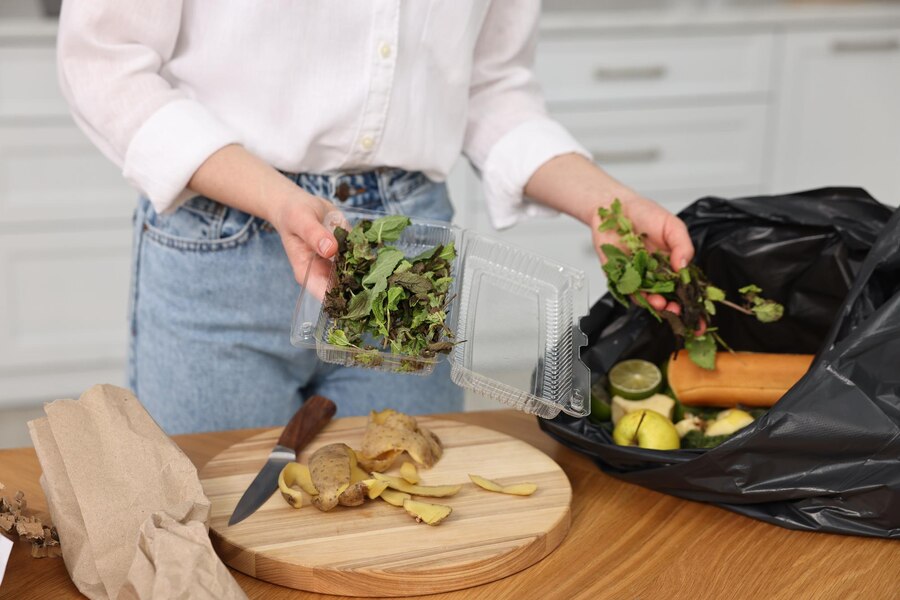
A trash bag is the one thing in your kitchen designed to be thrown away, yet a conventional one can outlast everything it ever held. Compostable trash bags are the fix, but the labels are confusing. Half the bags on the shelf say compostable, the other half say biodegradable, and the two are not the same thing.
This guide cuts through it. You will learn the real difference between compostable and biodegradable, the certifications that actually mean something, how to pick the right size, and how to dispose of the bags so they break down the way they are supposed to. It is the practical side of zero waste cleaning, the part that happens after the bin is full.
Compostable vs biodegradable, the difference that matters
This is the first thing to get straight, because it is where most bags fail you.
Biodegradable is a vague word with no set standard behind it. A bag can be labeled biodegradable and still take decades to break apart, and when it does, it often fragments into microplastics that stay in the soil. There is no rule about how long it takes or what it leaves behind.
Compostable means something specific. A certified compostable bag is tested to break down into non-toxic organic matter within a defined environment and timeframe. No microplastic fragments, no mystery. If a bag only says biodegradable and carries no certification, treat that as a red flag.
The certifications to look for
Certifications are how you know a compostable claim is real. Two matter most for household trash bags:
- BPI (ASTM D6400) certifies that a bag breaks down in a commercial composting facility, the high-heat industrial setting many cities run, in roughly 180 days.
- TUV OK Compost HOME certifies that a bag breaks down in a backyard compost pile, with no industrial heat needed, over about 6 to 12 months.
The difference is the environment. A bag with only BPI certification needs an industrial facility to do its job. A bag that also carries TUV OK Compost HOME works in the pile in your yard. Plastno's compostable trash bags carry both, so they break down whether you have curbside compost pickup or a bin out back.
What compostable bags are made of
Most certified compostable bags are made from a blend of cornstarch, PLA (a plant-based polymer), and PBAT. PBAT is worth being honest about: it is petroleum-derived, but unlike conventional plastic it is engineered to compost rather than fragment. That blend is what lets the bag hold wet kitchen waste without leaking and still break down in a compost setting. A bag made from conventional polyethylene with an additive to help it crumble is not the same thing, and will not pass a real compost certification.
How to spot a real compostable bag
A few quick checks separate a real claim from a green leaf printed on the box:
- Look for a named certification like BPI or TUV OK Compost HOME, not just the word compostable.
- Check whether it says home or industrial compostable, since they are not interchangeable.
- Read the materials list rather than the front of the package.
- Be skeptical of any bag that also calls itself plastic-free. Most compostable bags contain PBAT, which is engineered to compost but petroleum-derived, so a true plastic-free claim on a trash bag is a red flag.
How to pick the right size
Size is simple once you match the bag to the bin:
- 13-gallon is the standard tall kitchen bag and fits most household bins. This is the one to buy for your main trash can. Plastno's 13-gallon tall bag covers it.
- 4-gallon suits small bins, bathroom cans, and the countertop caddy where food scraps collect before they go to the compost.
For heavy or wet waste, look for a thicker bag with a reinforced seal so it holds without tearing on the way to the bin.
How to compost or dispose of them the right way
This is the step most people skip, and it is the one that decides whether a compostable bag was worth buying.
- Curbside or municipal compost. If your city runs a green-bin or food-waste program, a certified compostable bag can usually go straight in. Check your local rules, since some programs only accept certain certifications.
- Backyard compost. A TUV OK Compost HOME certified bag breaks down in a home pile along with the scraps inside it. Keep the pile moist and turn it now and then to keep things moving.
- No composting access yet. Look into a local drop-off site or a compost pickup service. The bag only delivers on its purpose in a compost setting.
One honest caveat: a sealed landfill does not compost much of anything. Composting needs oxygen, moisture, and microbes, and a packed landfill starves all three. So a compostable bag tossed in the regular trash will not break down the way the label promises. The bag and the environment work together, or not at all.
Shelf life and storage
Compostable bags are built to break down, so they do not sit on a shelf forever. Plan for about a 12-month shelf life and store them somewhere cool and dry, away from direct heat and sunlight. Buy what you will use in a season rather than stockpiling years ahead.
The swap that closes the loop
Switching your kitchen bin from conventional plastic to certified compostable bags is one of the simplest zero waste cleaning moves you can make. It lets your food scraps and the bag holding them break down together instead of sealing both in plastic for good. Plastno's compostable trash bags are BPI and TUV OK Compost HOME certified and sized for the tall kitchen bin and the small caddy, so the bag works as hard as the rest of your routine.

Share:
The Benefits of Using Compostable Trash Bags Every Day
Eco-Friendly Cleaning for Apartments and Rentals