


Spring is a natural reset. Longer days and open windows make it easy to spot what built up over winter: the clutter in the back of a closet, the grime on a baseboard, the half-used supplies under the sink. It is also the best time of year to clean deeper while throwing away less.
This is a room-by-room sustainable spring cleaning checklist built around zero waste cleaning. Reusable tools, non-toxic supplies you likely already own, and a plan that fits real weeknights. Work through it one room at a time and you will refresh the whole house without filling a stack of trash bags to do it.
Start with what you already have
Before buying anything, take stock. Most of a good spring clean uses tools already in the house. Walk through each room and pull together washable cloths and old towels that can become cleaning rags, glass jars and spray bottles saved from food or past products, and baskets for sorting your donate, recycle, repair, and keep piles.
Then make a short list of swaps, one at a time. The plastic wrap that always ends in the trash can become beeswax wrap. The sponge that turns smelly after a week can become a sponge cloth made from cellulose and organic cotton, which absorbs up to ten times its weight and replaces as many as 1,500 paper towels. You do not need to replace everything at once. One swap per room is enough to cut real waste.
Build a low-waste cleaning kit
A small kit keeps you from reaching for single-use products mid-clean. Gather it once and carry it room to room in a tote:
- A natural all-purpose cleaner. White vinegar and baking soda handle most surfaces, and refillable cleaning tablets lift everyday grease and buildup without synthetic fragrance.
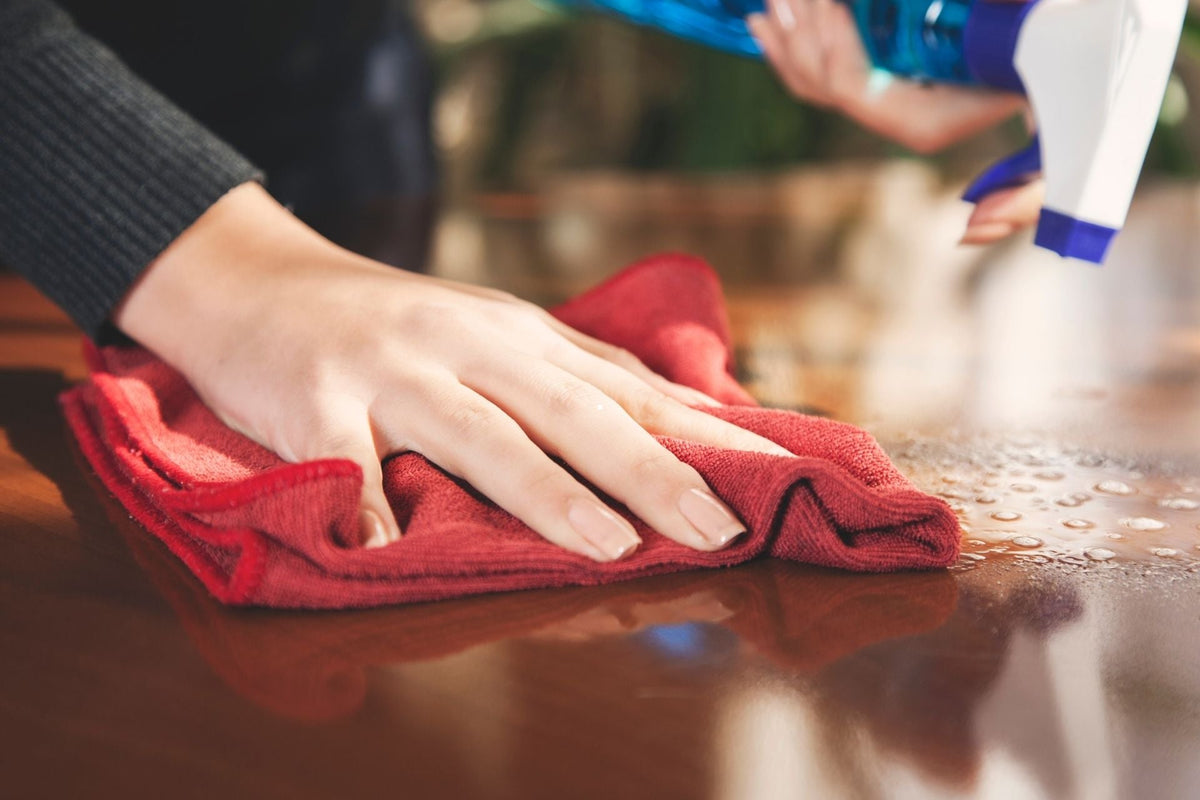
- Reusable cloths and a biodegradable scrub sponge made from plant-based cellulose and loofah, instead of paper towels and conventional sponges that shed microplastics as they wear down.
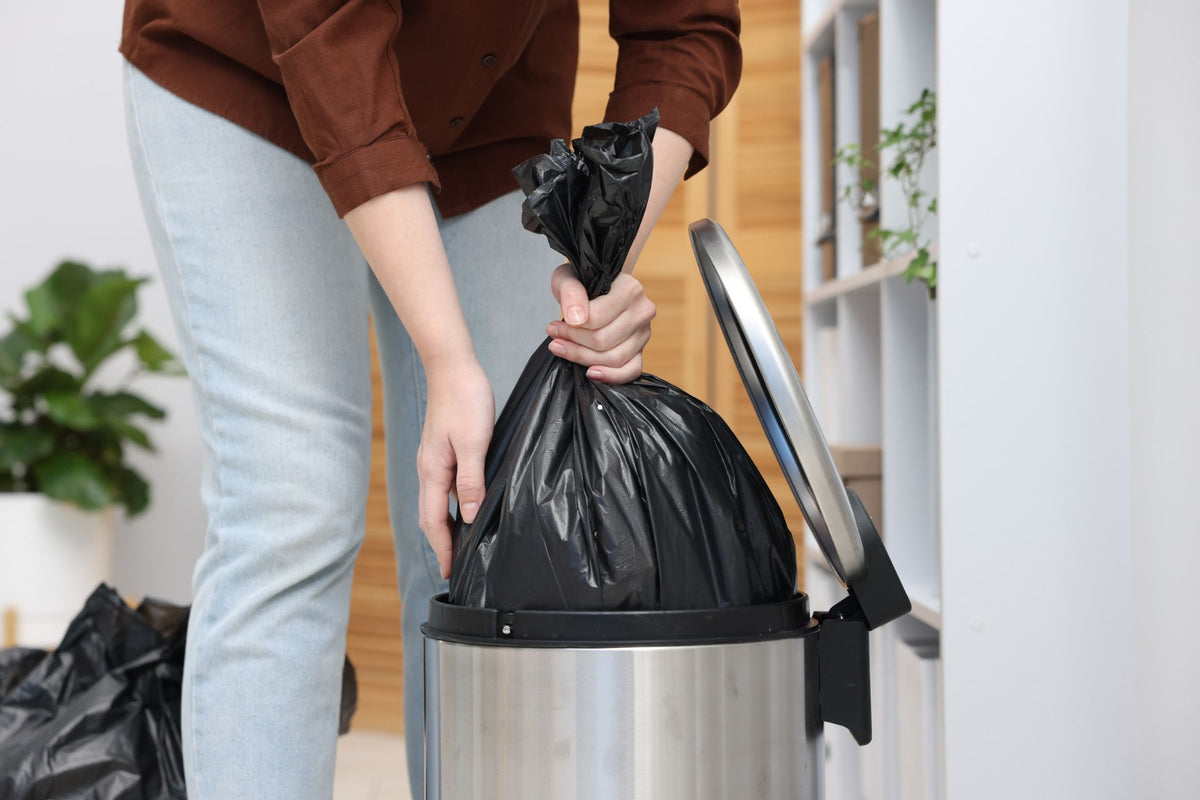
- Compostable trash bags for the cleanup itself, so the waste you do create is handled the low-waste way.
Choosing tools that last is the heart of zero waste cleaning. Every reusable swap is one less thing in the bin six months from now.
The room-by-room checklist
Clean top to bottom in each room so dust falls onto surfaces you have not done yet.
Kitchen
- Empty the fridge and pantry, wipe the shelves, move expired food to the compost
- Run vinegar and baking soda through the disposal and drains
- Clean the oven, microwave, and stovetop with a baking soda paste
- Wipe cabinet fronts, the backsplash, and the often-missed top of the fridge
- Descale the kettle and coffee maker with diluted vinegar
Bathroom
- Scrub tile and grout with baking soda and a stiff brush
- Soak the showerhead in vinegar to clear mineral buildup
- Wash bath mats and shower curtains
- Wipe mirrors and fixtures with a damp cloth and skip the paper towels
- Sort expired products for proper disposal
Bedrooms
- Wash all bedding, then rotate and vacuum the mattress
- Pack away winter clothing and donate what you did not wear
- Dust blinds, sills, and the tops of dressers and frames
- Vacuum under the bed and behind furniture
Living areas
- Dust ceiling fans, light fixtures, and shelves
- Air out or wash drapes, vacuum upholstery and under the cushions
- Wipe baseboards, switch plates, and door handles
- Clean windows inside and out with vinegar and a reusable cloth
The spots most people skip
- Tops of cabinets and door frames
- Behind and under heavy furniture
- Air vents and return grilles
- Window tracks and corners
Use an extendable duster or a vacuum attachment instead of disposable wipes. These areas hold the most dust and allergens, and clearing them makes the biggest difference to how clean a room actually feels.
A room-a-day plan if a full weekend is too much
You do not have to do it all at once. Spreading the work over a week keeps it from taking over a Saturday and gives each room real attention:
- Monday: kitchen
- Tuesday: bathrooms
- Wednesday: bedrooms
- Thursday: living and dining areas
- Friday: entryway, laundry, and the spots most people skip
- Weekend: windows, a donation drop-off, and anything that needs repair
Keep your kit packed between days so starting again takes thirty seconds.
Handle the cleanup waste the low-waste way
A deep clean creates its own pile of waste. A few habits keep most of it out of the landfill:
- Compost food scraps and natural-fiber dust. Line your bin with compostable trash bags made from cornstarch and plant starches. They are BPI certified for commercial composting facilities and TUV OK Compost HOME certified for backyard piles, so the bag breaks down with the scraps in the right setting rather than sitting in a landfill.
- Donate clothes, books, and housewares that still have life in them.
- Recycle paper, glass, and rigid plastics your local program accepts, and rinse them first.
- Repair before you replace. Set aside anything that needs a button, a glue, or a quick fix.
Habits that keep your home cleaner past spring
The point of a sustainable spring clean is not one perfect weekend. It is setting up routines that make next spring easier. Keep reusable cloths and a cleaner refill stocked so you never fall back on single-use. Do a ten-minute reset a few times a week instead of letting clutter build. The Plastnofy app helps you plan a rotating cleaning schedule and stick to it. Small, steady habits beat one big scramble every year.

Share:
Teaching Kids Eco-Friendly Cleaning Habits That Stick
Why Do Regular Trash Bags Smell Bad? Eco-Friendly Solutions That Work