

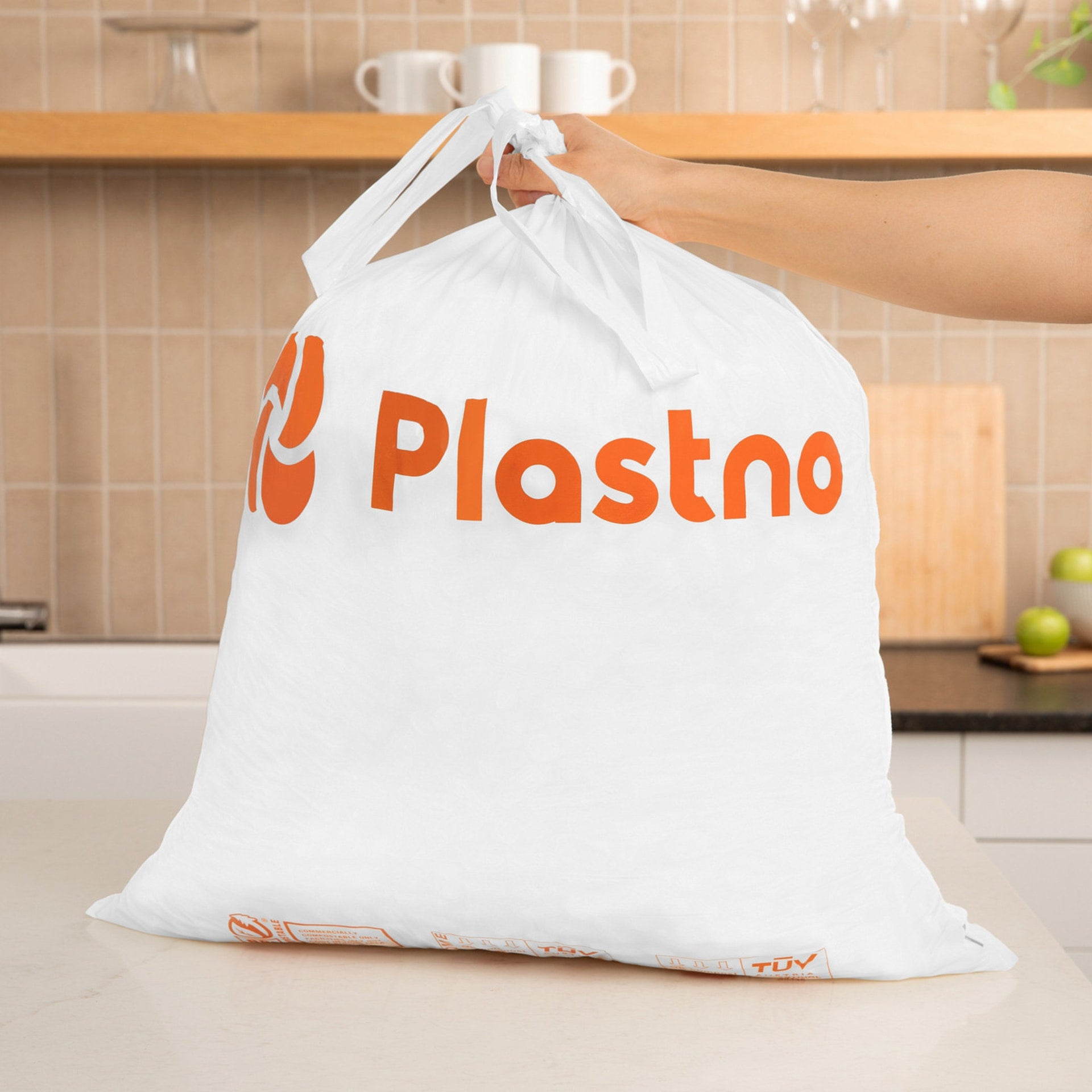
Product highlights

Material

Sustainability

Lifecycle

Purpose

Room
Waste Bag Tall
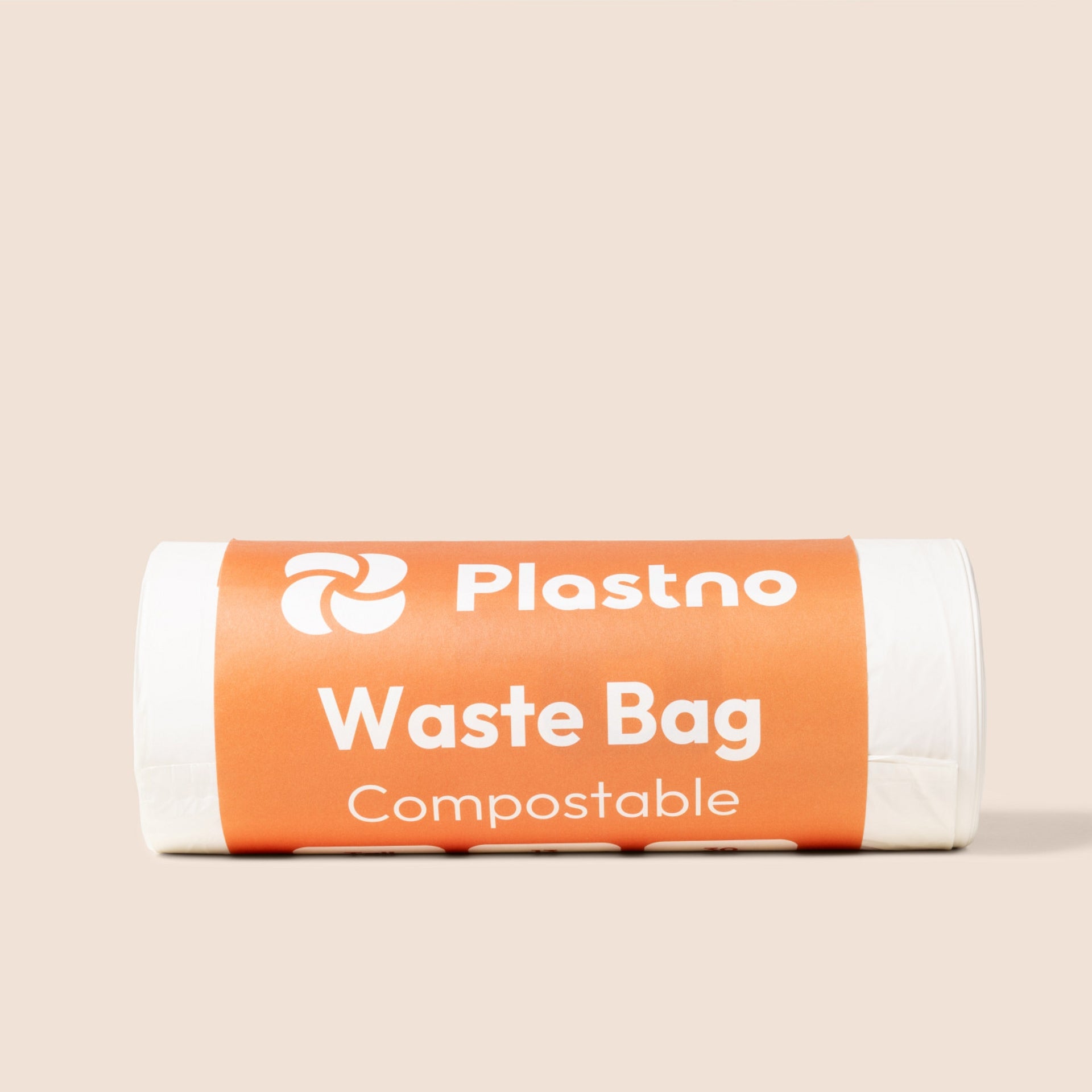
13 gallon compostable trash bags for a plastic-free kitchen, sized to fit most standard tall cans.
Product highlights
Material
Sustainability
Lifecycle
Purpose
Room

White

13 Gallon

30 Bags
Overview
The bag for the can you empty most. Plastno's 13 gallon compostable trash bags take on everyday kitchen trash and food scraps, hold their weight on the walk to the bin, and work exactly like the bag you're replacing. The difference shows up at the end: instead of sitting in a landfill for centuries, the whole thing composts.
- Fits your kitchen can: 13 gallon capacity, 30 bags per roll, sized 24 by 28 inches to line most standard tall bins.
- Compostable, not plastic: Made from cornstarch, PLA, and PBAT, with a drawstring closure and a flat-sealed bottom that resists leaks and tears.
- Certified to break down: BPI certified for commercial composting and TUV OK Compost HOME certified for a backyard pile.
Ingredients
Made with Cornstarch, Polylactic Acid, Polybutylene Adipate Terephthalate.
Use
1. Store smart. Keep the roll in a cool, dry place to preserve the strength of the plant-derived material. Shelf life is about 12 months.
2. Drain first. Drain excess liquid from wet waste before you tie the bag off. It keeps the bag stronger for longer.
3. Take it out. Empty your bin every 7 to 10 days so the bag stays strong.
Details
| Specification | Waste Bag Tall |
|---|---|
| Capacity | 13 gallon |
| Dimensions | 24" W x 28" H |
| Thickness | 1 mil (25.4 microns) |
| Bags per roll | 30 |
| Closure | Drawstring |
| Bottom seal | Flat seal |
| Material | Cornstarch, PLA, PBAT |
| Commercial composting | BPI certified to ASTM D6400 |
| Home composting | TUV OK Compost HOME |
| Tested load | Held 24 lb for 20 minutes, independently tested by a professional cleaner |
| Shelf life | About 12 months from production |
| Packaging | Kraft plastic-free paper wrapper, kraft cardboard box or mailer |
Bundle & save

100% Satisfaction Guarantee

Free Shipping Over $50
Waste Bag Tall
If you have any questions, you are always welcome to contact us. We'll get back to you as soon as possible, within 24 hours on weekdays.
-
Shipping Information
Fulfilled within 1-2 business days and packaged in our minimal, fully recyclable signature boxes.
-
Customer Care
Give us a few details and we’ll offer the best solution. We are available Monday to Friday (8am-5pm EST)
-
FAQ’s
Visit our FAQs page to find answers to common questions.
-
Contact Us
We'd love to hear from you. Our team is here to help. Visit our contact page to send us a message.
The 13 gallon compostable trash bags that compost, not pile up
Some things always end up in the trash. When they do, these bags hold a full kitchen load, then compost instead of sitting in a landfill for centuries like a conventional liner. They fill, tie, and toss just like the bag you are replacing. The only thing that changes is where they end up, a backyard pile or a compost cart instead of the trash.
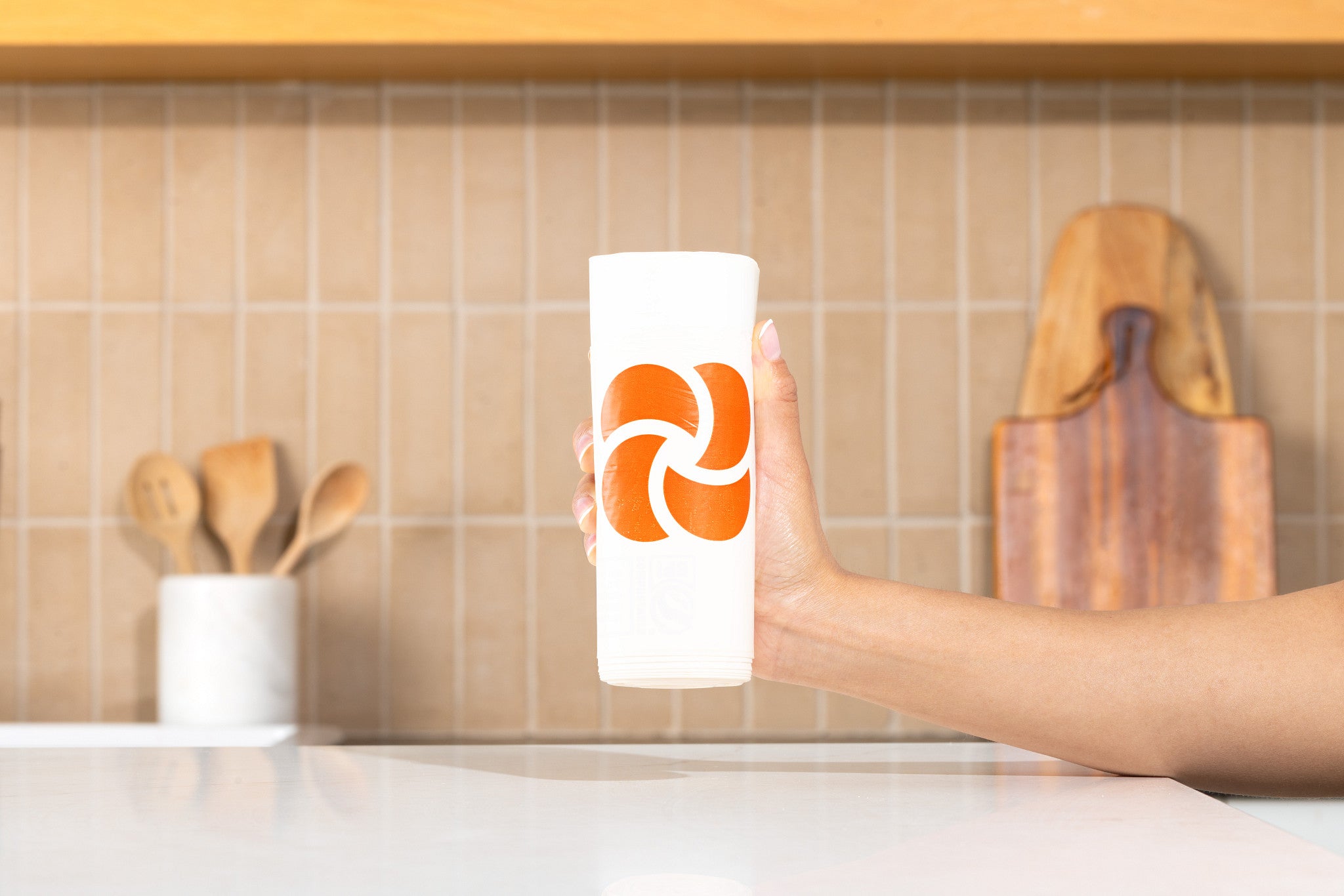
How it works
1. Fill. Load the bag with kitchen trash, food scraps, or yard trimmings.
2. Tie. Pull it closed once the bag is full.
3. Toss. Add it to a backyard compost pile or a curbside compost cart, or send it to a commercial composter.
Plant-based ingredients
Cornstarch
The plant-based base of the bag. It is the same starch that thickens gravy, and it breaks down completely in a compost pile.
Polylactic Acid
Made from plant sugars in corn and sugarcane. It acts like plastic in everyday use, then breaks down under composting conditions with no microplastic left behind.
Polybutylene Adipate Terephthalate
This one comes from petroleum, but unlike regular plastic it composts. It adds the strength that cornstarch and PLA cannot give on their own, and it breaks down in the composting conditions BPI and TUV certify for.
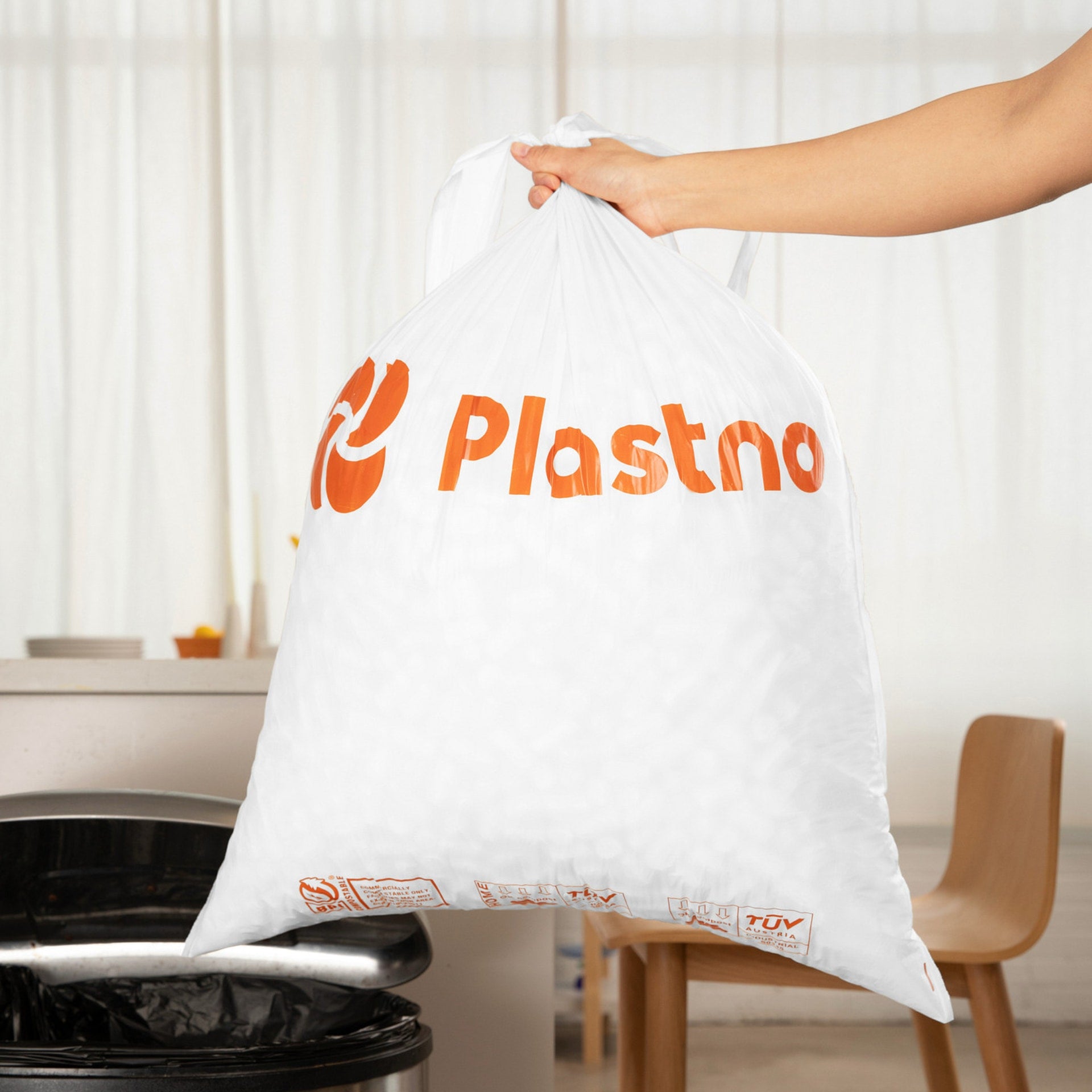
Why switch to compostable trash bags
A typical household goes through about 500 trash bags a year, and the conventional ones are petroleum plastic that sheds microplastics into soil and water and never really goes away. Swap them for compostable trash bags that break down in a backyard pile or a commercial composter, and that is 500 fewer plastic bags a year from one change at the bin.
Certified compostable trash bags

BPI Certified
Independently verified to break down in commercial composting facilities under the ASTM D6400 standard.

TUV Certified
Independently verified to break down in a backyard compost pile, not just commercial facilities.
What you won't find in Plastno
Human safe
Every Plastno product is made with plant and mineral based ingredients, free from the petroleum-based plastics, synthetic foams, added fragrances, and harsh chemicals found in conventional cleaning supplies. Safer for your home, safer for the people in it.
✗ Microplastic shedding
✗ Synthetic foams
✗ Petroleum-based plastics
✗ Added fragrances
✗ Harsh chemicals
✗ Synthetic dyes
✗ Antimicrobial coatings
Less plastic
From the product to the packaging, every Plastno purchase keeps single-use plastic out of your home and out of waterways. Packaging is intentionally minimal, just a clean paper wrapper and a curbside-recyclable cardboard box. No clamshells, no shrink wrap, no fancy inserts that add waste in the name of looking premium.
✓ Intentionally minimal packaging
✓ Plastic-free, recyclable paper wrapper
✓ Curbside-recyclable shipping box
✓ Paper-based tape
✓ Water-based inks
✓ No clamshells, shrink wrap, or extra inserts
13 Gallon vs 4 Gallon Compostable Trash Bags
Same bag, two sizes. Match it to your bin.
Plastno
Waste Bag Tall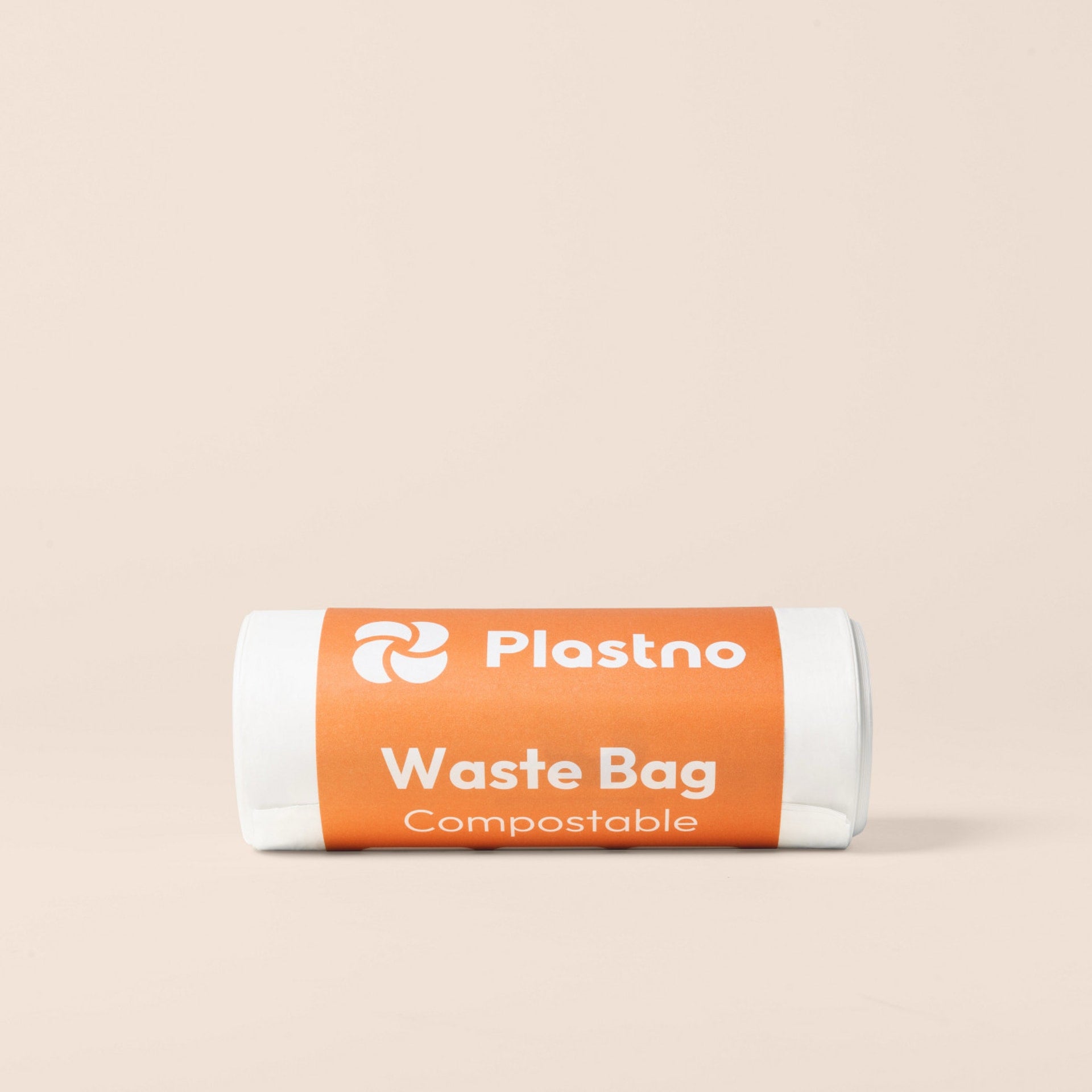
Plastno
Waste Bag Short
Plastno
Waste Bag Tall
Plastno
Waste Bag ShortCapacity
13 gallon
Capacity
4 gallon
Best for
Tall kitchen trash bins
Best for
Bathroom, bedroom, office, and countertop bins
Dimensions
24 x 28 in
Dimensions
17 x 19 in
Drawstring closure
Drawstring closure
Bags per roll
30
Bags per roll
30
BPI and TUV certified compostable
BPI and TUV certified compostable
Where these bags break down
What are Plastno compostable trash bags made from?
Cornstarch, PLA, and PBAT. Cornstarch and PLA come from plants. PBAT comes from petroleum, but unlike regular plastic it breaks down in compost. Together they hold a full kitchen load, and the blend is BPI certified for commercial composting and TUV certified for a backyard pile. The packaging is plastic-free and recyclable.
How do I use Plastno compostable trash bags?
Fill, tie, and toss, the same way you use a conventional bag. Drain excess liquid from wet waste so the bag stays stronger for longer, and store the roll somewhere cool and dry. Shelf life is about 12 months. Keep bags away from children and pets to avoid any suffocation risk. Draining also keeps odors down, and here is more on why trash bags smell.
How are Plastno trash bags packaged and shipped?
In plastic-free, recyclable paper, inside a curbside-recyclable cardboard box. The tape is paper-based and the inks are water-based, with no plastic shrink wrap and no filler. The bags sit in a paper sleeve, not double-wrapped in plastic like most conventional brands. The whole thing goes in your recycling.
How many bags come in a roll?
Thirty bags per roll. They are BPI and TUV certified compostable trash bags, 24 inches wide by 28 inches tall and 1 mil thick, sized to fit most standard tall kitchen bins including the 13 gallon size. Shelf life is about 12 months, so keep the roll somewhere cool and dry.
Will these bags break down in a backyard compost?
Yes. They are TUV certified OK Compost HOME, which means they are validated to break down in a backyard compost pile, not just an industrial one. They are also BPI certified for commercial composting facilities. A sealed landfill is slower and not certified, so a backyard pile or a compost cart is the right way to toss them. If you are checking another brand, here is how to tell if a bag is actually compostable.