

Product highlights

Material

Sustainability

Lifecycle

Purpose

Room
Kitchen Sponge Set
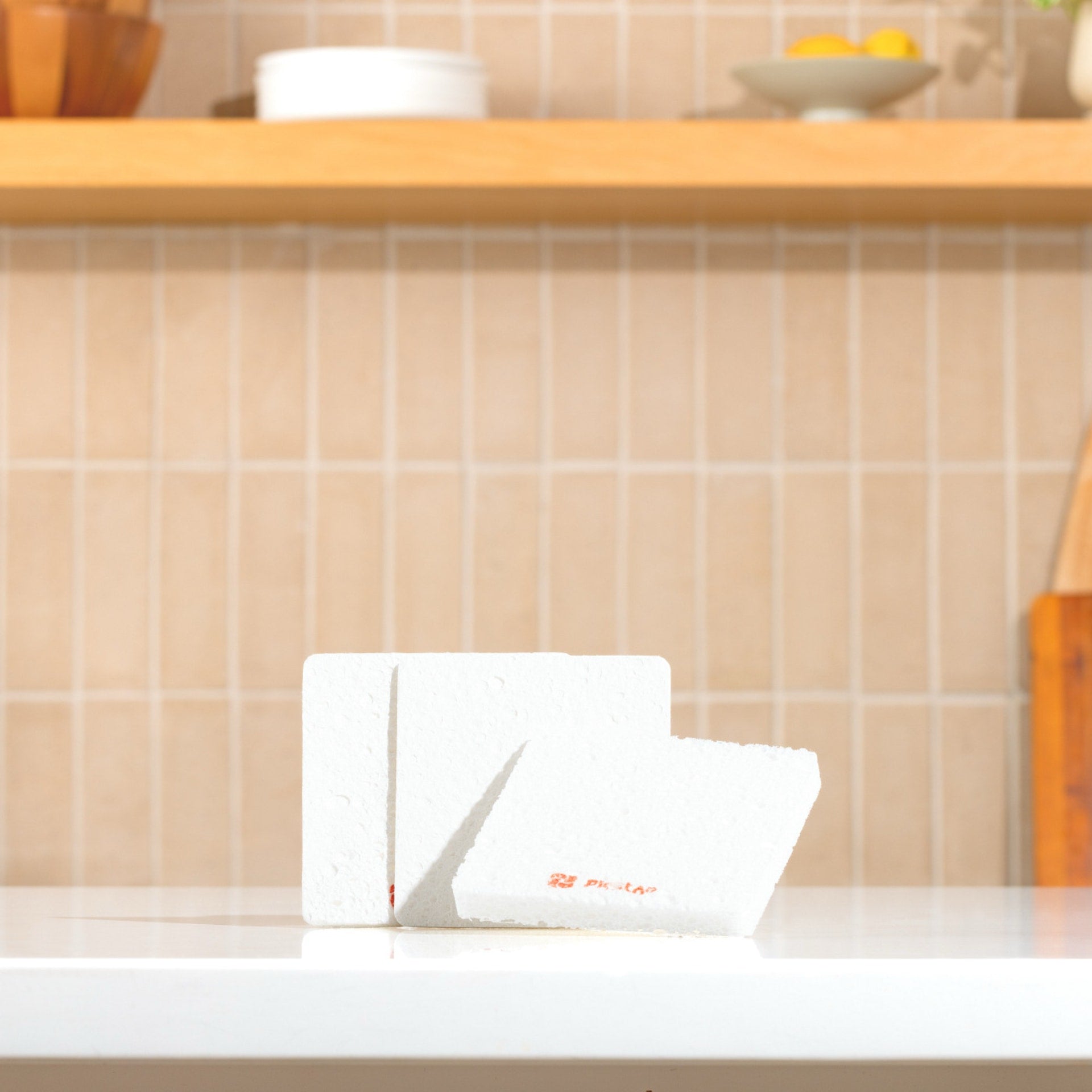
Biodegradable kitchen sponges that cover everything from baked-on pans to wine glasses.
Product highlights
Material
Sustainability
Lifecycle
Purpose
Room

White | Tan

Overview
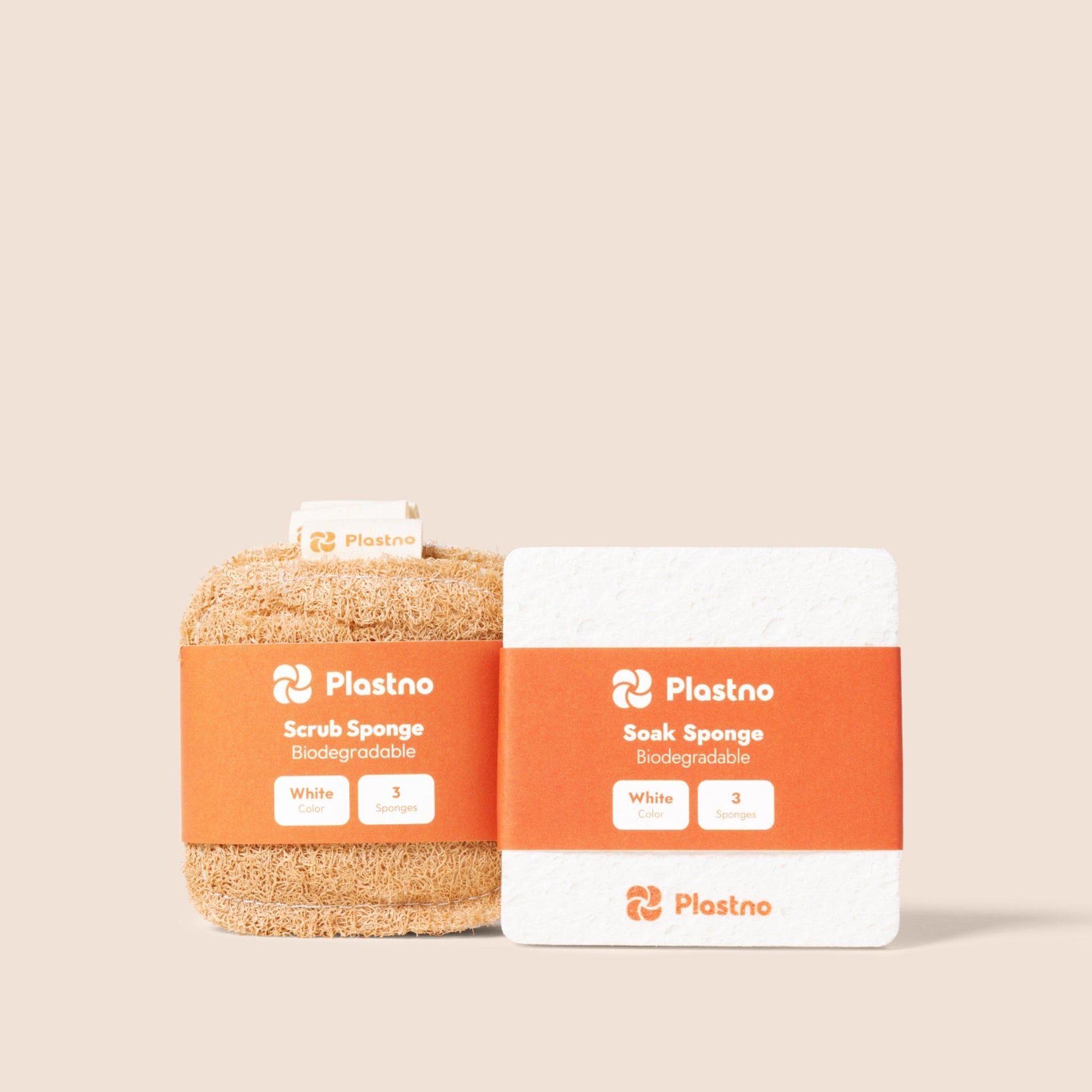
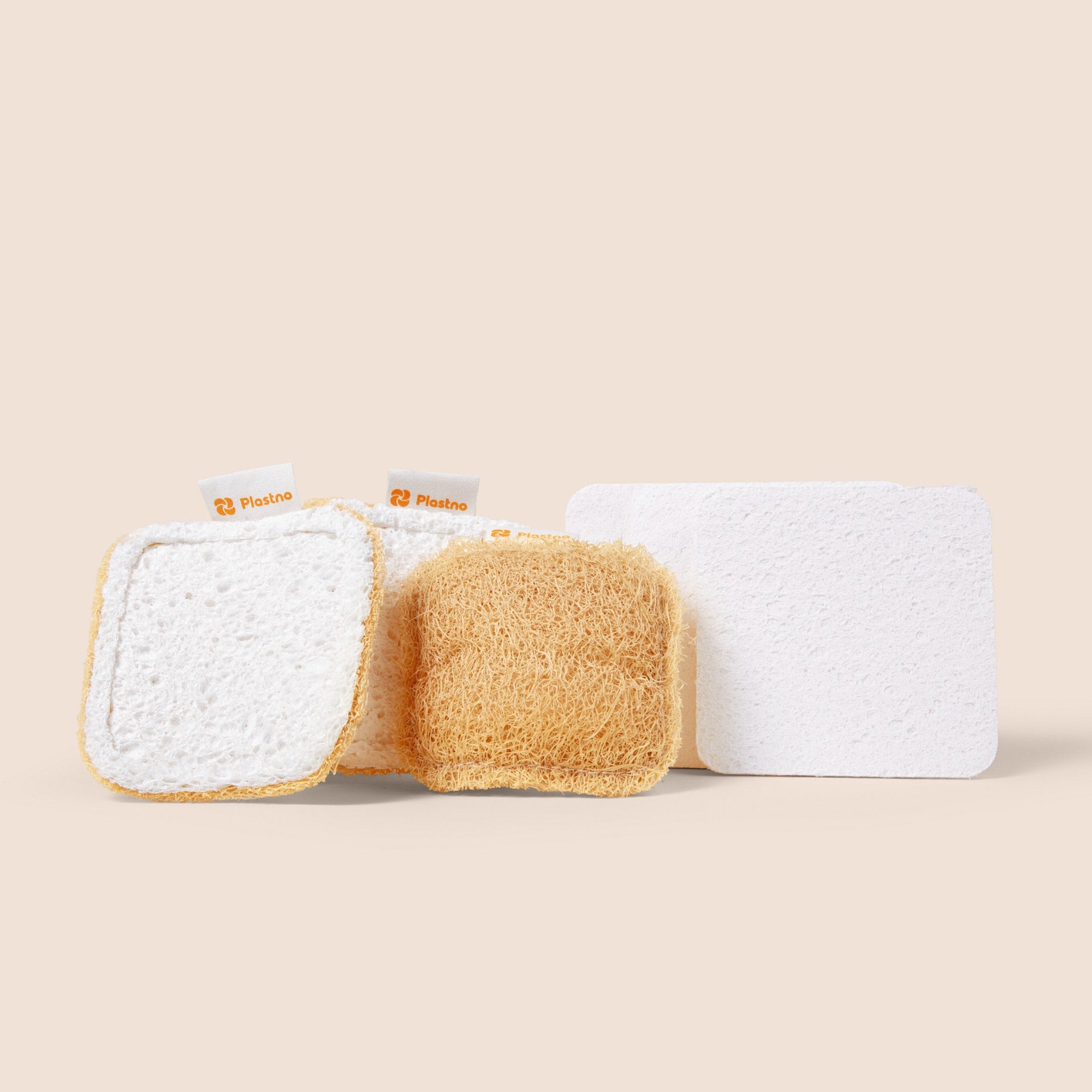
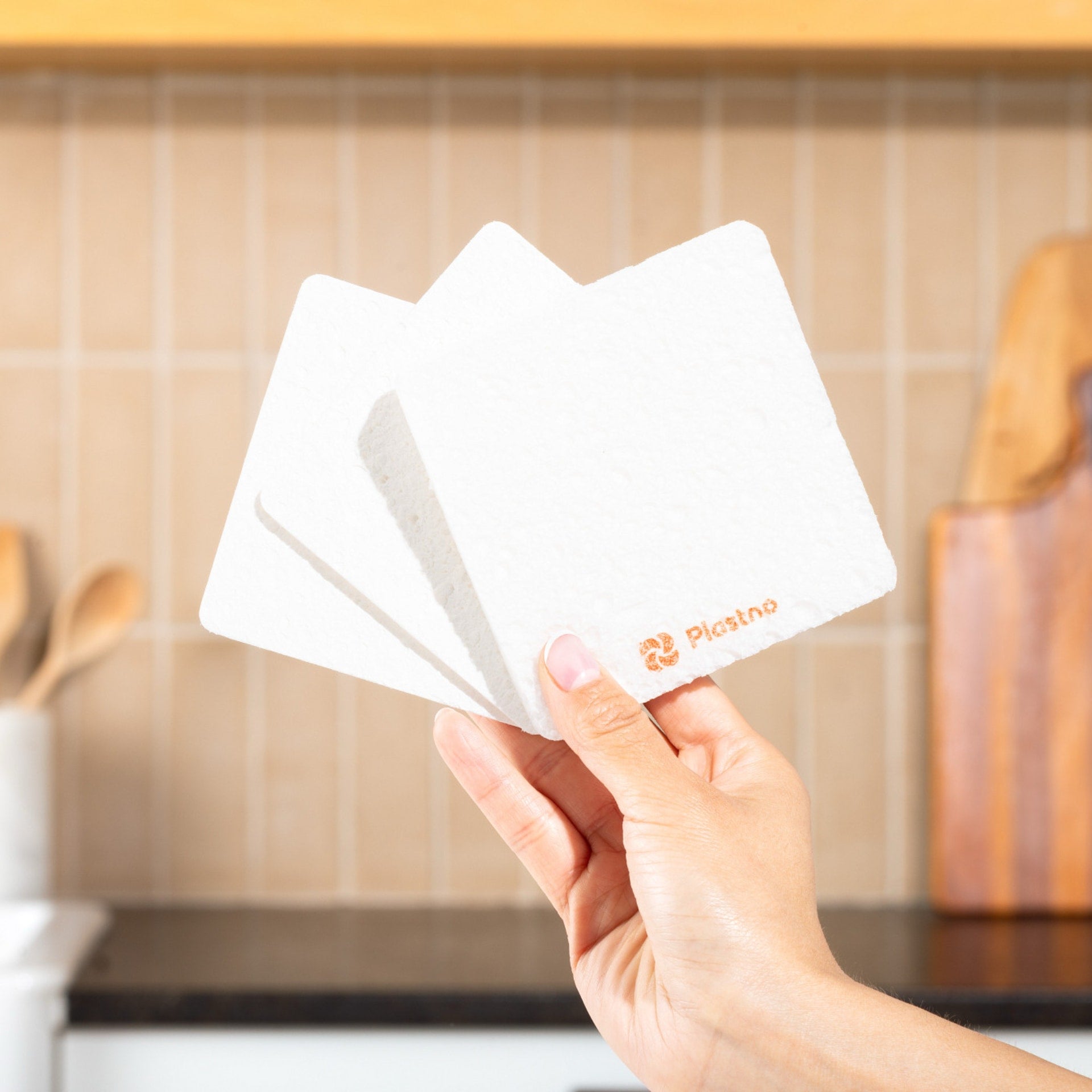
Both of our biodegradable kitchen sponges in one set. You get the dual-action Scrub Sponge for stuck-on food and the pop-up Soak Sponge for everyday dishes, so the whole sink is covered without a scrap of plastic foam. When each one wears out, it biodegrades instead of piling up.
- Two sponges, two jobs: The loofah-and-cellulose Scrub Sponge for scrubbing, plus the cellulose Soak Sponge for washing.
- Plastic-free and plant-based: Both made from plant fiber, biodegradable, with no synthetic foam or plastic glue.
- Easy to sanitize: Dishwasher top rack or a quick boil. Each sponge lasts two to four months.
Ingredients
Made with loofah, plant-based cellulose, and cotton thread.
Use
1. Pick a side. Reach for a Scrub Sponge when there's baked-on food, grease, or cast iron. Reach for a Soak Sponge for daily dishes, glassware, and counters.
2. Clean. Both handle dishes, sinks, and most hard surfaces without shedding microplastics.
3. Sanitize. Top rack of the dishwasher or a 1 to 2 minute boil once a week. Air-dry between uses.
Details
| Specification | Kitchen Sponge Set |
|---|---|
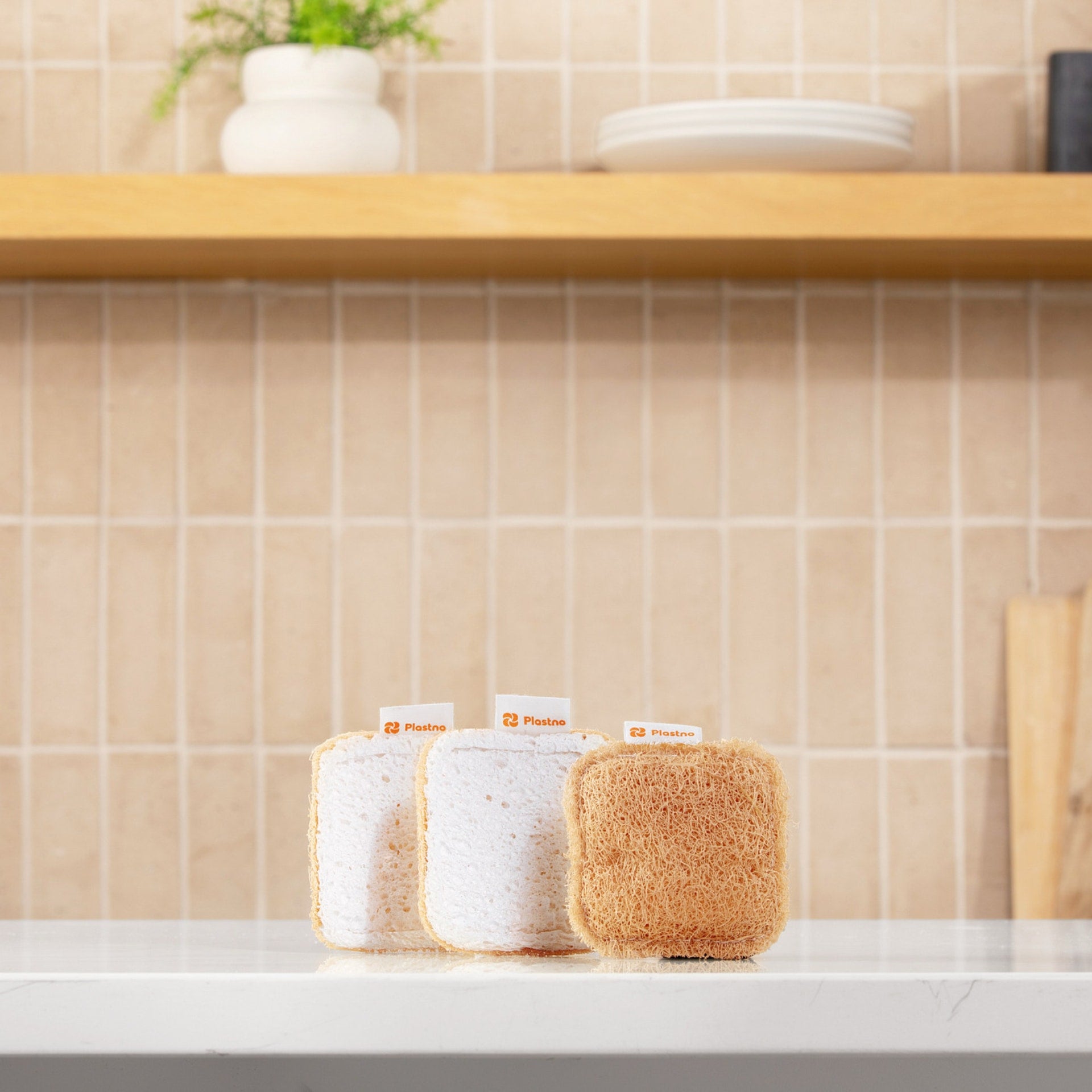
| In the set | 6 sponges. Three Scrub Sponges and three Soak Sponges |
| Dimensions | 3.75" W x 3.75" H each |
| Shape | Square |
| Materials | Loofah and plant-based cellulose |
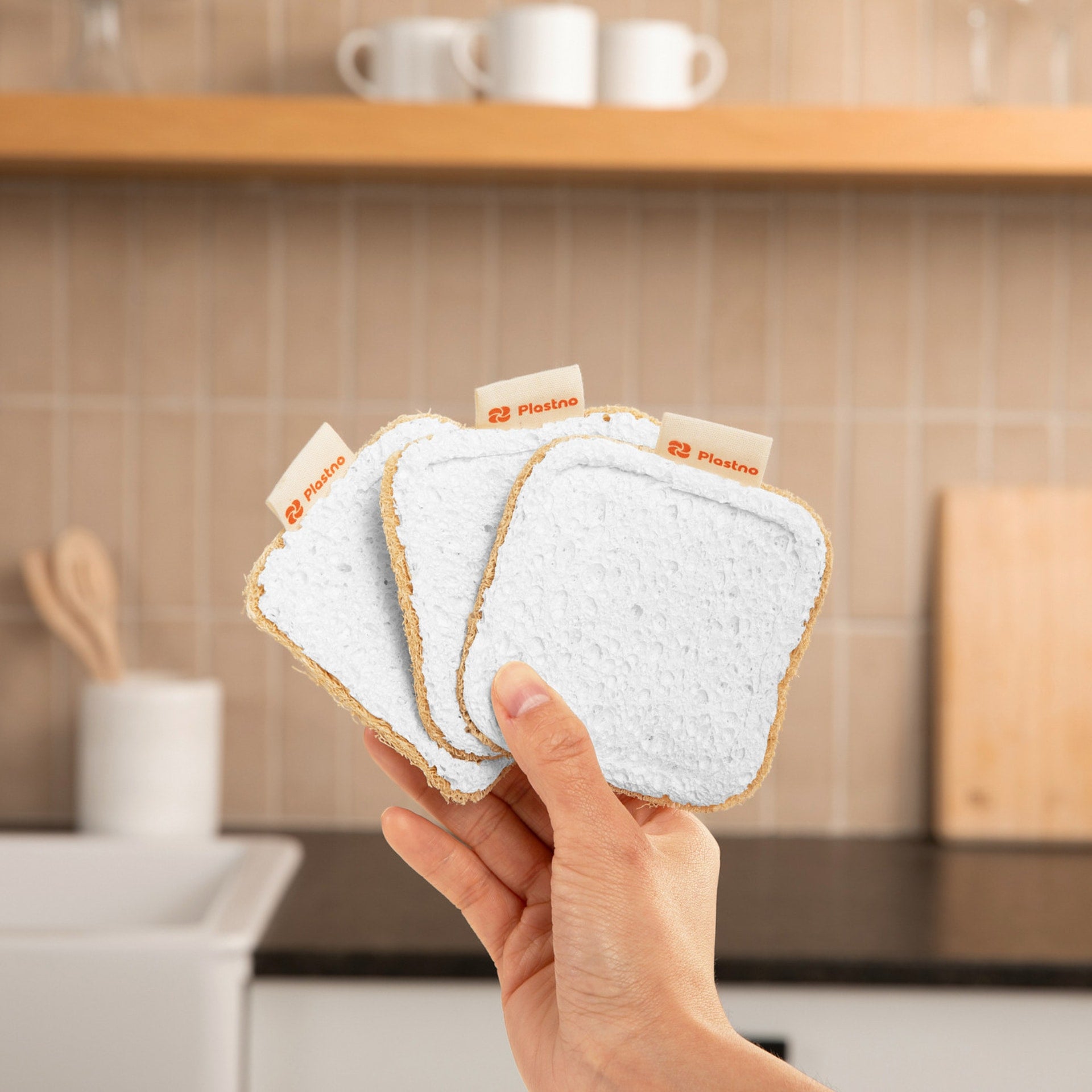
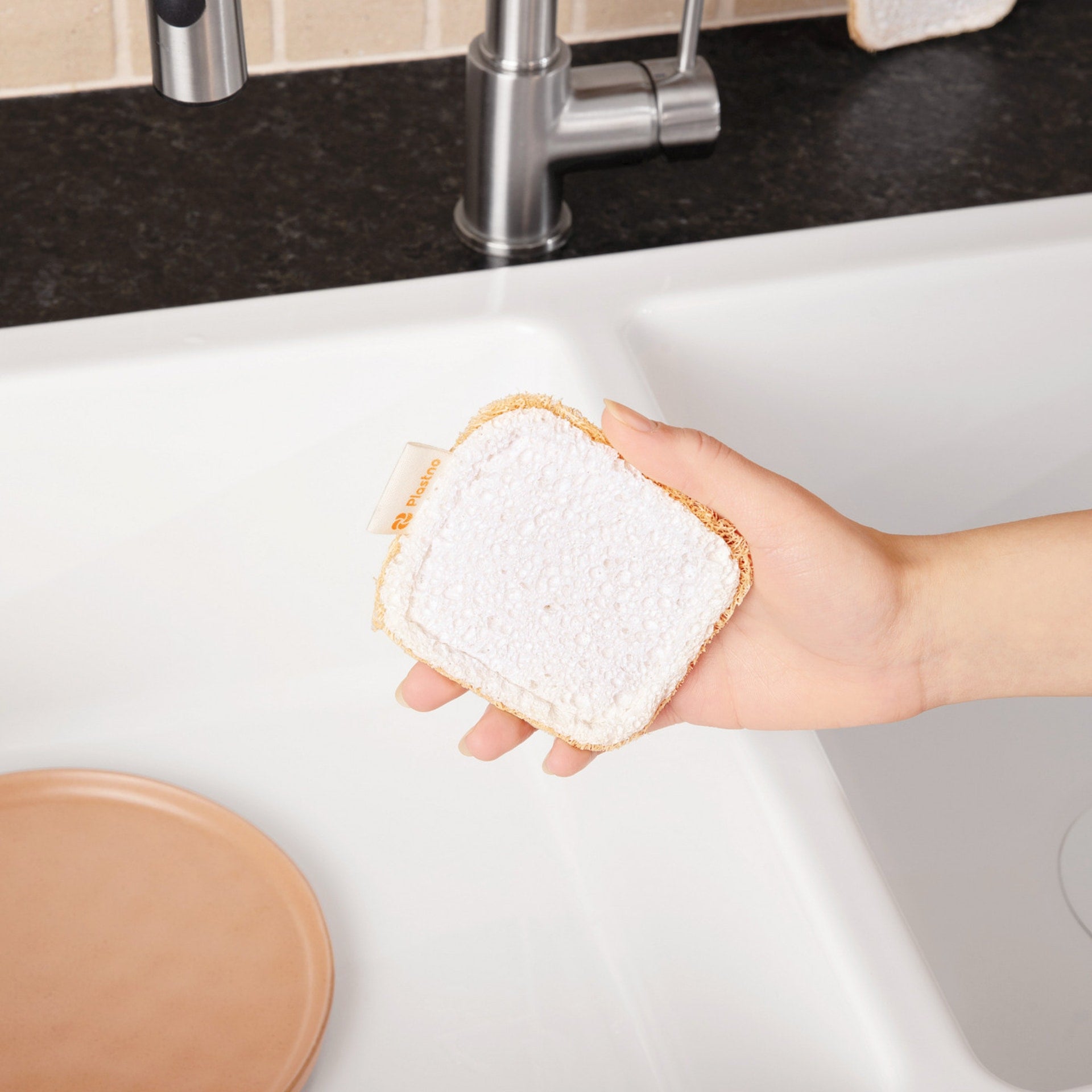
| Scrub Sponge | Loofah scrub side and cellulose wash side, 0.25" each, 0.5" thick total |
| Soak Sponge | Cellulose single layer. 0.5" expanded, 0.20" flat as shipped |
| Expands | The Soak Sponge ships flat and expands on contact with water |
| Colors | White, Tan |
| Weight | About 0.03 lb per Scrub Sponge, 0.016 lb per Soak Sponge |
| Stated lifespan | 2 to 4 months per sponge with proper care |
| Sanitizing | Top rack of the dishwasher on a hot cycle, or boil 1 to 2 minutes. Weekly is recommended |
| Shelf life | None. Stable indefinitely when stored dry |
| Biodegradable | Yes. All materials are plant-derived |
| Compostable | All materials break down in a home compost pile. Not third-party certified |
| Plastic scouring layer | None. The scrub side is loofah, not nylon or polyester mesh |
| Contains no | Polyurethane, polyester, nylon, polypropylene, PET, synthetic foam, plastic scrubber, added fragrance, synthetic dye, antimicrobial coating |
| Safe on | Cast iron, stainless steel, sinks and stovetops with the loofah side. Non-stick, glass and painted surfaces with the cellulose sides |
| Packaging | Kraft plastic-free paper wrapper, kraft cardboard box or mailer |
Bundle & save

100% Satisfaction Guarantee

Free Shipping Over $50
Kitchen Sponge Set
If you have any questions, you are always welcome to contact us. We'll get back to you as soon as possible, within 24 hours on weekdays.
-
Shipping Information
Fulfilled within 1-2 business days and packaged in our minimal, fully recyclable signature boxes.
-
Customer Care
Give us a few details and we’ll offer the best solution. We are available Monday to Friday (8am-6pm EST)
-
FAQ’s
Visit our FAQs page to find answers to common questions.
-
Contact Us
We'd love to hear from you. Our team is here to help. Visit our contact page to send us a message.
The biodegradable kitchen sponges that split the work
One box, both sponges, so you stop choosing between scrubbing power and everyday absorbency. The Scrub Sponge brings a loofah side for burned-on food and a cellulose side for glass and non-stick. The Soak Sponge ships flat, pops up the moment it hits water, and takes over daily dishes and counters. Both are plant, not plastic foam, so neither one sheds microplastic into your sink.
Which kitchen sponge for which mess
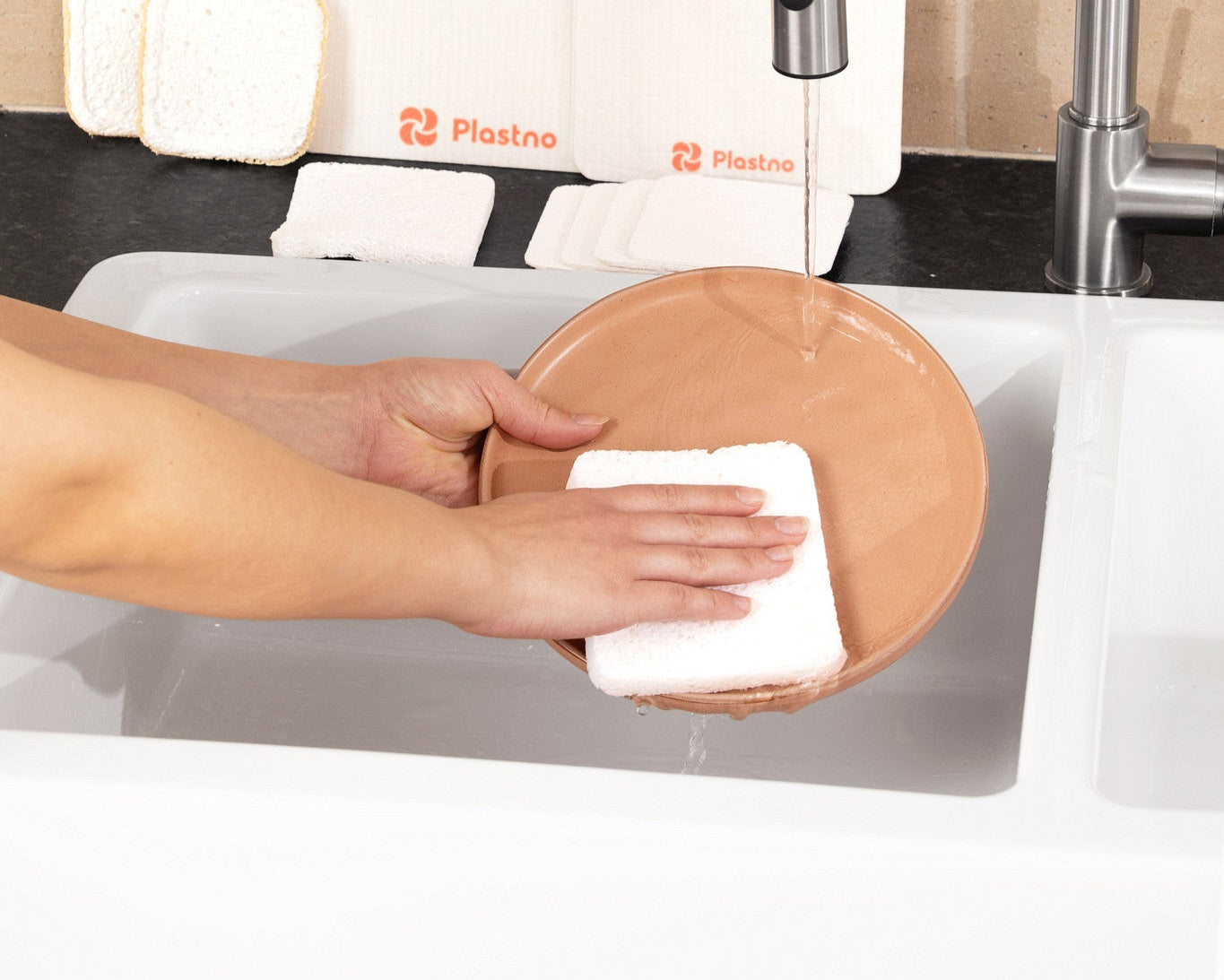
- Dishes and glassware: Soak Sponge. Cellulose is soft, absorbent, and safe on non-stick and glass.
- Grease and burned-on food: Scrub Sponge, loofah side. Firm enough for cast iron, stainless steel, and stovetops.
- Counters, sinks, and spills: Either one. Rinse thoroughly and air-dry between uses so both last months.
What's included
Scrub Sponge
A loofah dish sponge with a firm scrub side and a soft wash side. The loofah is the dried fibrous skeleton of the loofah plant, tough enough for grease, cast iron, and burned-on food. Flip it for cellulose on glass and non-stick. Plastic-free and biodegradable.
Soak Sponge
A pop-up cellulose sponge that ships flat and expands the second water hits it. Cellulose is a plant fiber sourced from wood pulp, soft and absorbent for daily dishes, glassware, and counters. Plastic-free and biodegradable.
Why switch to biodegradable kitchen sponges
A polyurethane sponge sheds microplastics into your sink and your food every time you wash, and most households run through one every couple of weeks. This set replaces that cycle with six eco-friendly kitchen sponges that each last 2 to 4 months, with no petroleum and no microplastic shedding. Same scrubbing power, same absorbency, split across two sponges built for different jobs.
What you won't find in Plastno
Human safe
Every Plastno product is made with plant and mineral based ingredients, free from the petroleum-based plastics, synthetic foams, added fragrances, and harsh chemicals found in conventional cleaning supplies. Safer for your home, safer for the people in it.
✗ Microplastic shedding
✗ Synthetic foams
✗ Petroleum-based plastics
✗ Added fragrances
✗ Harsh chemicals
✗ Synthetic dyes
✗ Antimicrobial coatings
Less plastic
From the product to the packaging, every Plastno purchase keeps single-use plastic out of your home and out of waterways. Packaging is intentionally minimal, just a clean paper wrapper and a curbside-recyclable cardboard box. No clamshells, no shrink wrap, no fancy inserts that add waste in the name of looking premium.
✓ Intentionally minimal packaging
✓ Plastic-free, recyclable paper wrapper
✓ Curbside-recyclable shipping box
✓ Paper-based tape
✓ Water-based inks
✓ No clamshells, shrink wrap, or extra inserts
Before you throw out another sponge
What kind of sponge is best for dishes?
A soft cellulose sponge for everyday dishes, plus a loofah-backed one for cookware. This set includes both eco-friendly kitchen sponges, the Scrub Sponge and the Soak Sponge. Cellulose is gentle on glass and non-stick, and loofah handles grease and burned-on food, so you are never scrubbing a delicate pan with the wrong side.
How do you clean a kitchen sponge?
Rinse it thoroughly after every use, wring it out, and let it air-dry. Once a week, boil it for 1 to 2 minutes or run it on the top rack of the dishwasher. Drying is the step most people skip, and it does more for a sponge than anything else.
How long should you use a kitchen sponge for dishes?
Longer than the two weeks a foam sponge usually gets. Plastno's Scrub Sponge and Soak Sponge each last 2 to 4 months of daily use. Replace either one when it stops holding its shape or stops rinsing clean, not on a fixed schedule.
What are the cleanest kitchen sponges to use?
Plant-derived ones that dry fast and get replaced on time. Loofah and cellulose rinse out and air-dry more readily than dense polyurethane foam, which holds onto water and food. Neither material in this set carries an antimicrobial coating, so nothing is added to the sponge to prop up that claim. Here is what our sponges are made of.
What happens to the sponges when they wear out?
Both materials are plant-derived and biodegradable, so they break down far faster than polyurethane foam. Both materials break down in a home compost pile. Not third-party certified. You can also put worn sponges in the bin with Plastno's BPI and TUV certified trash bags.