

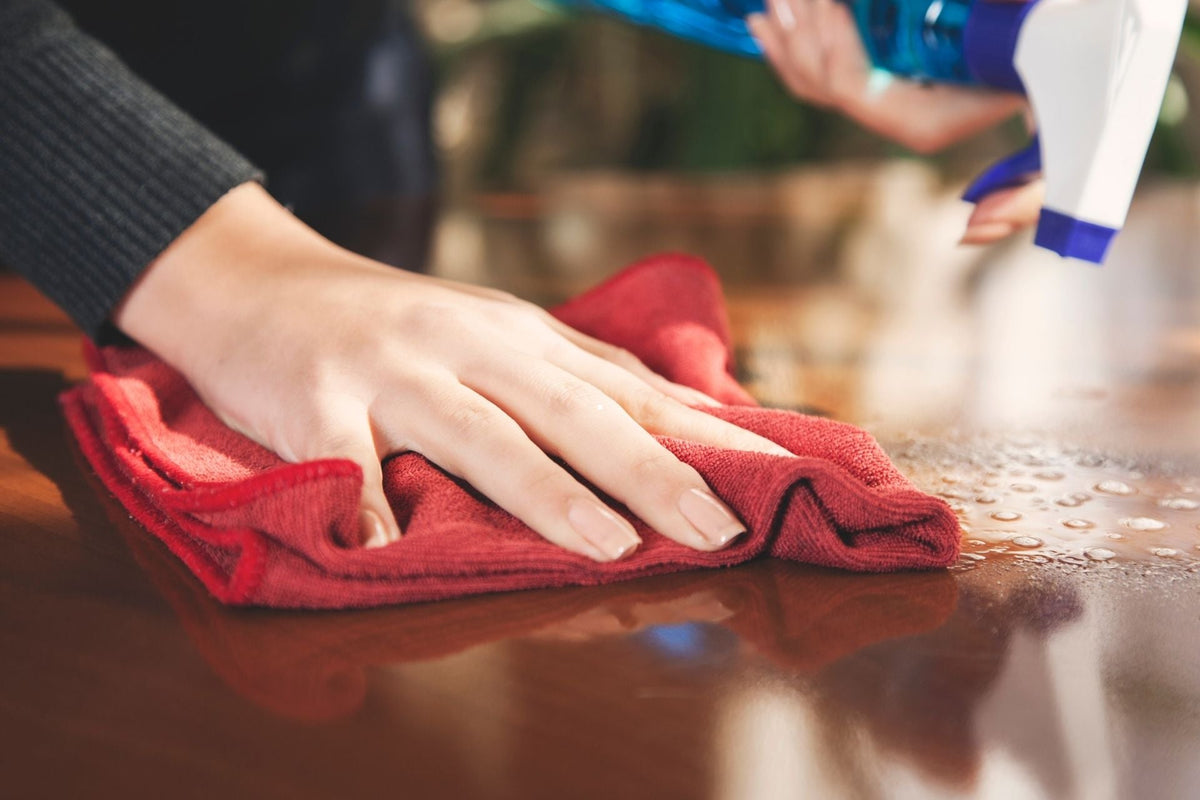
A wood table takes more abuse than almost anything else in the house. Hot plates, wet glasses, sticky hands, and whatever spray was closest. Over time that adds up to a dull, slightly tacky surface that never feels quite clean, even right after you wipe it.
The fix is gentle, not strong. A few drops of dish soap in warm water, a cloth wrung out until it stops dripping, a wipe along the grain, and a dry cloth straight after will clean most wood tables. What decides the rest is the finish on top of the wood.
Fair warning about who is telling you this: we make a cleaning tablet that is made for sealed wood, so we have a stake in how you clean your table. Plain dish soap does the everyday job, and we will say so. Where the tablet earns its place is the sticky film that soap alone struggles with.
What you need to clean a wood table
- A dry, soft cloth for dusting
- Dish soap and a bowl of warm water
- Two more soft cloths, one to wash and one to dry
- A spray bottle, if you plan to use a cleaner for the sticky spots
Skip anything abrasive. A scouring pad or the green side of a kitchen sponge can scratch a finish, sometimes for good.
Is your wood table sealed or oiled?
Check this before anything wet touches the table, because the two need different care.
- Sealed: the surface has a glossy or satin sheen and feels smooth, almost like plastic, under your hand.
- Oiled or waxed: the surface looks and feels closer to bare wood, and a drop of water darkens it or soaks in instead of beading up.
That sheen test comes from furniture maker Castlery's wood care guide, which adds a useful rule. If you genuinely cannot tell, treat the table as oiled, which means the least water possible and the care instructions from whoever made it.
How to clean a wood table, step by step
- Dust first. Wipe crumbs and dust off with a dry cloth before anything wet goes on. Grit plus moisture plus pressure is how fine scratches happen.
- Mix a few drops of dish soap into warm water. A few drops is enough. More soap just leaves a film behind.
- Wring the cloth until it stops dripping. Damp, not wet. Bob Vila's wood furniture guide calls soaking the wood a common mistake, and it is how tables swell, warp, and cloud.
- Wipe along the grain. Going against it pushes moisture and grime into the lines of the wood.
- Dry it right away with a separate dry cloth, the whole surface, edges included.
Day to day, you can skip the soap entirely. A soft cloth after each meal, dry or barely damp, keeps a sealed table in good shape between proper cleans.
How to clean a sticky wood table
A sticky table is usually one of two things. Food and grease from everyday meals, or a buildup of furniture polish and spray, which Castlery describes as layering up like sediment. Either way, the fix is to lift the layer off, not to add another product on top of it.
On a sealed table, a mild cleaner made for sealed surfaces does this faster than soap. Our multi cleaner tablet is mineral-based and built on washing soda, which is alkaline, and alkaline cleaners are good at lifting greasy, sticky residue. It is also fragrance-free, so it does not leave a scent on the table you eat at.
- Make the spray. Drop one tablet into 16 ounces of warm water and give it 20 to 30 minutes to dissolve fully. We wrote a short guide to making a spray from a tablet if it is your first time.
- Test it first. Try a small spot underneath the table edge and let it dry.
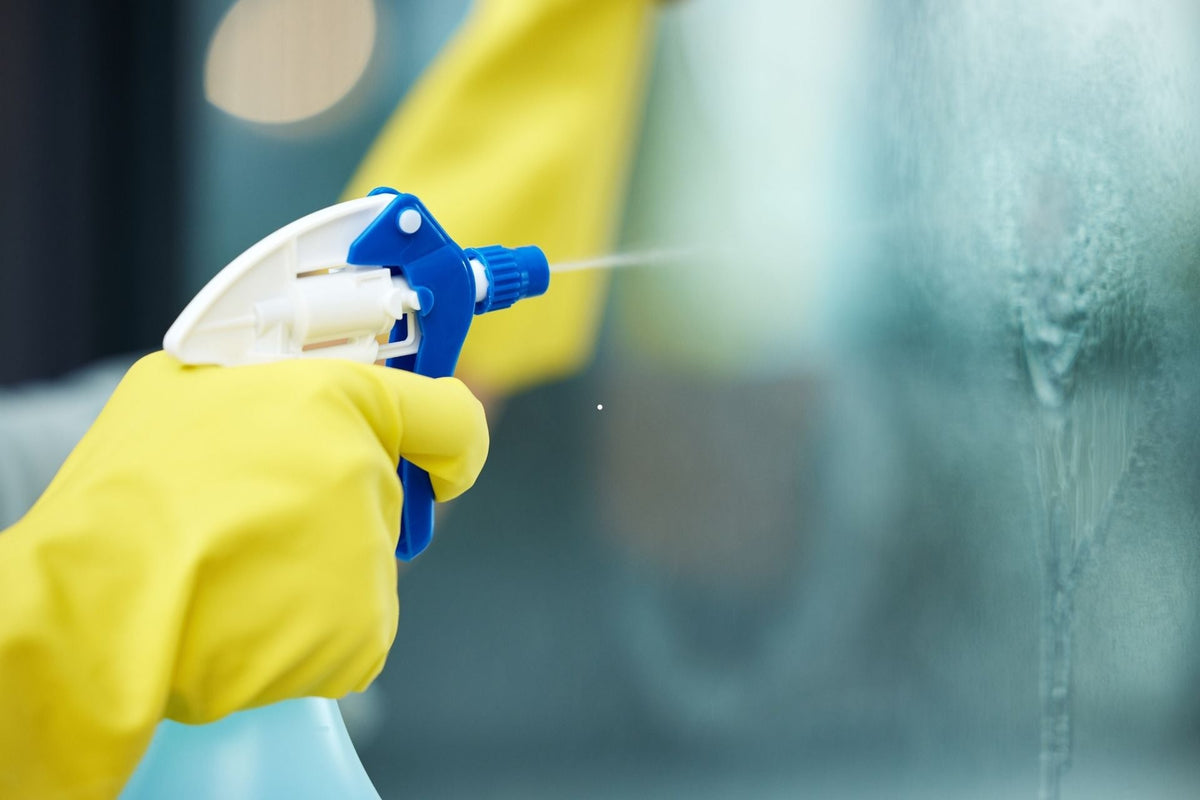
- Spray the cloth, not the table. That keeps liquid out of seams and the gaps between leaves.
- Wipe along the grain, then go over it again with a cloth dampened in plain water.
- Dry it straight away.
Do not use the tablet on oiled, waxed, or unsealed wood, on a glass tabletop, or on stainless steel legs and hardware. For those, plain soapy water and a fast dry is the safer route.
What is the best cleaner for a wood table?
Mild dish soap in warm water, for almost any finish. Furniture makers and cleaning guides land on the same answer, and it is cheap and already under your sink. For a sealed table that has gone sticky or greasy, a mild cleaner made for sealed wood is the step up, as long as you spray the cloth and dry the surface after.
What you do not need is a polish spray every time you wipe. Used often, polish is the thing that turns a table tacky in the first place.
Can you use dish soap to clean wood furniture?
Yes. A few drops in warm water on a well-wrung cloth is the standard method, and it is safe on sealed wood. The soap is not the risk. Too much water and too much soap are. Always follow it with a plain-water wipe and a dry cloth so no soap film is left behind.
What should you not clean wood with?
- Polish sprays used every time: they build up into a sticky film.
- Silicone-based polish: it layers up and is hard to get off.
- Ammonia glass cleaners: they can strip or haze some finishes.
- Scouring pads and abrasive sponges: they scratch the finish.
- A soaking wet cloth: standing water causes swelling and cloudy patches.
- Vinegar as an everyday cleaner: it is mildly acidic, and Castlery notes that repeated use can dull the sheen on some finishes.
Getting a wood table ready for the holidays
If your table is about to host a big meal, clean it a day or two ahead with the method above, including the sticky spots. A clean surface handles spills far better than one that already has a film on it.
During the meal, use placemats or a runner under hot dishes, put coasters under glasses, and blot spills instead of wiping them. Blotting lifts the spill. Wiping spreads it. Afterward, a soapy wipe along the grain and a dry cloth is all it needs.
Why our cleaner comes as a refillable tablet
Our tablet weighs about 0.2 ounces and makes a 16 ounce bottle of cleaner, which tells you how much of any spray cleaner is just water. Buying it ready-made means paying to ship that water in a new plastic bottle every time you run out. A tablet is the cleaning part without the water or the bottle. You keep one spray bottle, add tap water, and drop in a new tablet when it runs empty, so you are buying a small refill instead of another bottle.
Our tablets come three to a pack, each one makes a full 16 ounce bottle, and they are PVA-free and Leaping Bunny certified. If you do not have a bottle to reuse, the Multi Cleaner Set pairs the tablets with a refillable glass spray bottle. The trigger on that bottle is polypropylene, the one plastic part left, and glass can break if you drop it. Worth knowing before you buy.
Two more honest limits. The tablet cleans, it does not disinfect, because it is not EPA registered. And it is a cleaner for sealed hard surfaces, not for glass or mirrors. If you want to see where it fits against the rest of the range, our non-toxic cleaners page has the full line. Our guide to multi-purpose vs all-purpose cleaners explains what each kind is safe to use on.
Product details current as of October 2026.
Share:
Plastic-Free Kitchen Swaps That Actually Last