

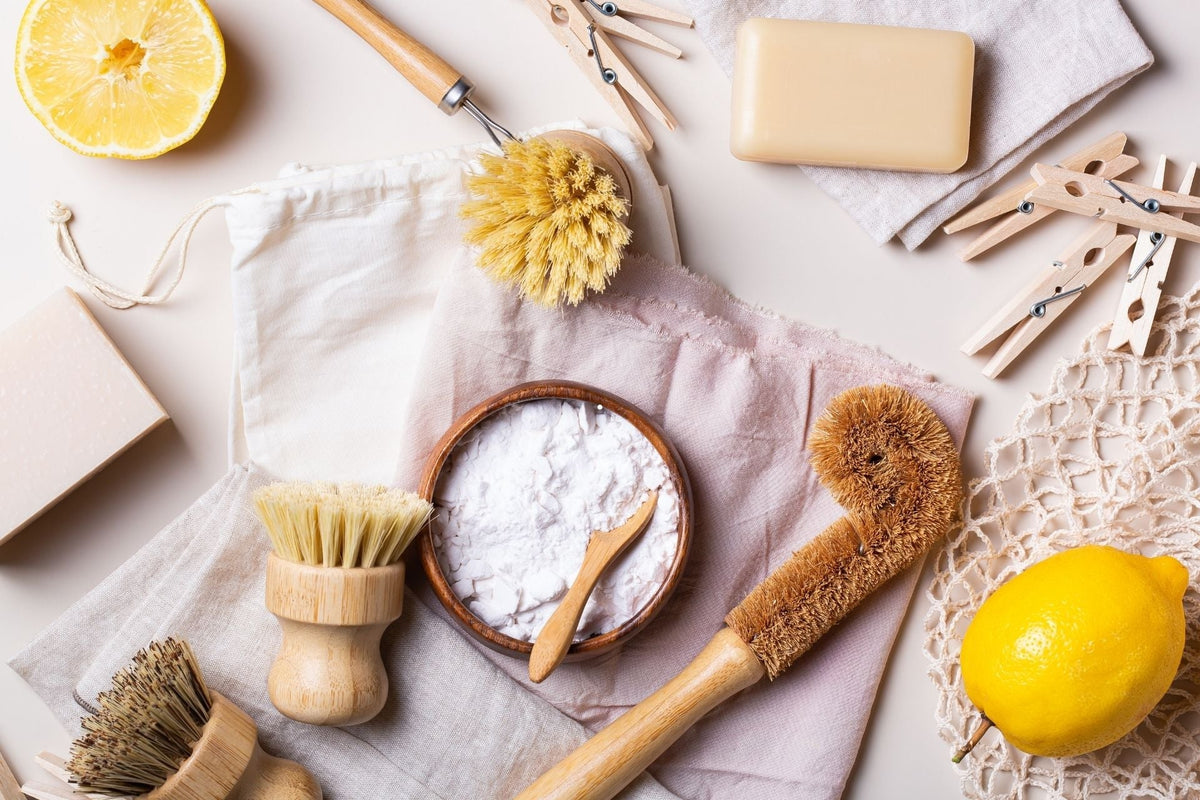
The kitchen is where most of a home's plastic hides. It is in the trash bag, the dish sponge, the roll of paper towels, the spray bottle under the sink, and the wrap around last night's leftovers. Most of it gets used once or breaks down into microplastics that end up in the sink and the food. A plastic-free kitchen does not happen overnight, and it does not have to. The swaps below are the ones that actually last, so each change sticks instead of becoming another thing you have to rebuy.
Start with the trash bag
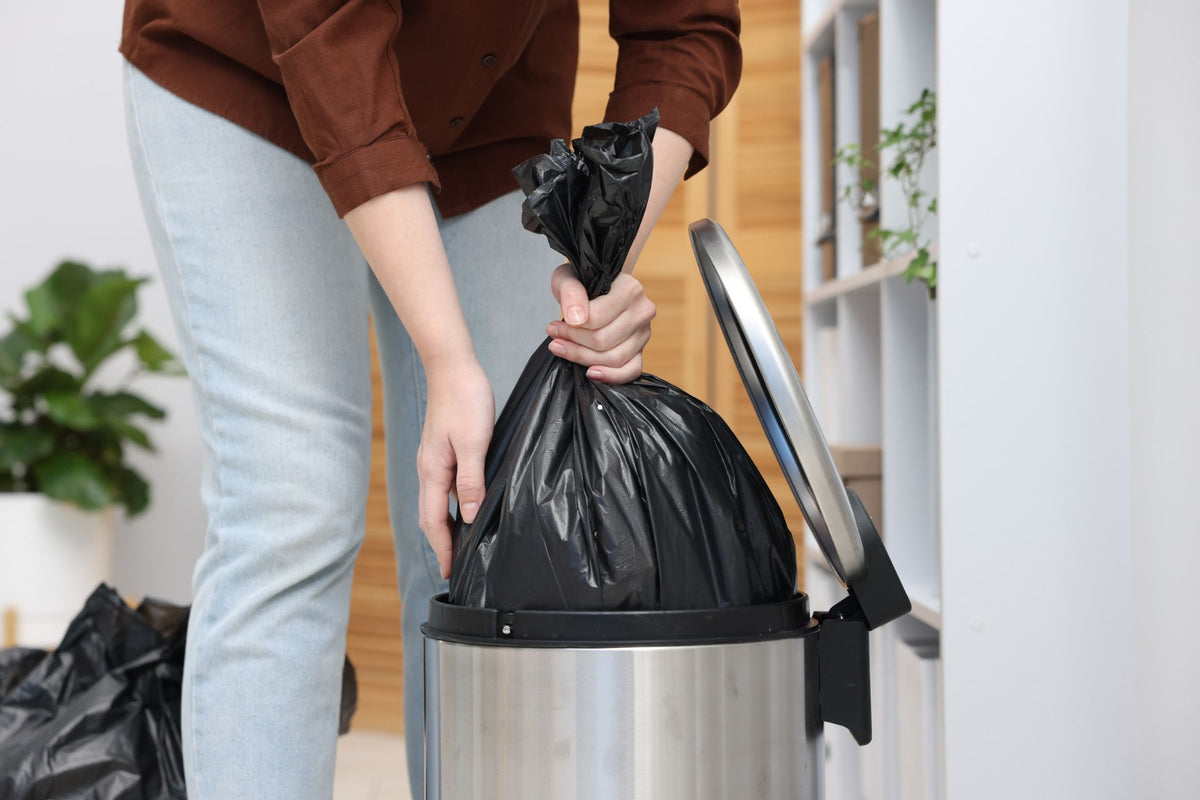
Conventional trash bags are plastic that outlives everyone who ever used one. The durable swap is a certified compostable trash bag made from plant starches, sized for a normal kitchen can. Look for a real certification like BPI or TUV OK Compost HOME, which means the bag is tested to break down in a compost setting rather than just labeled green. It holds a full bin of kitchen waste and food scraps, then returns to the soil instead of the landfill, as long as it reaches compost.
Retire the plastic dish sponge
Most kitchen sponges are polyurethane foam, which is plastic. Every time you wash dishes, that foam sheds microplastics into the water and slowly falls apart. A biodegradable dish sponge made from loofah and cellulose does the same job with plant fibers instead of foam. The loofah side handles stuck-on food, the cellulose side wipes up everyday grime, and when it finally wears out it breaks down instead of shedding plastic. It also lasts months rather than weeks, so you buy fewer of them.
Swap paper towels for something reusable
A roll of paper towels is single-use by design, and many are wrapped in plastic on the way home. A set of reusable paper towels made from cellulose and cotton wipes up spills, goes in the wash, and comes back for months of reuse. One reusable cloth quietly replaces a stack of rolls, which is the kind of swap you make once and forget about.
Refill your spray cleaner instead of rebuying it
Every plastic spray bottle you buy is mostly water shipped in plastic. A refillable cleaning tablet drops into a reusable bottle of water and gives you a fragrance-free, mineral-based spray for everyday counters, sealed hard surfaces, and the sink. It cleans rather than disinfects, since it is not EPA registered, so keep a dedicated product for anything that needs sanitizing. For everyday wiping, one bottle you keep refilling replaces a shelf of throwaway ones.
Rethink food storage and wrap
Plastic wrap and single-use zip bags are some of the hardest kitchen plastics to recycle, so they almost always end up in the trash. You do not need a special product to fix this. Glass jars you already own, a plate set on top of a bowl, beeswax or plant-wax wraps, and reusable containers all keep food just as fresh. The point is to reach for something you can use again rather than something you throw away after one sandwich.
How to make the swaps stick
The reason most plastic-free efforts fizzle is that people try to change everything in a weekend and then give up. A better approach is to replace each plastic item only when it runs out, starting with whatever you throw away most often. That is usually the trash bag or the sponge. Once one swap feels normal, move to the next. A plastic-free kitchen built one habit at a time is the kind that actually holds.
Frequently asked questions
What is the easiest plastic-free kitchen swap to start with?
The one you throw away most, usually the trash bag or the dish sponge. Both are cheap to switch, you replace them often anyway, and each swap removes plastic you were sending to the landfill every week.
Do plastic-free kitchen products actually clean as well?
Yes, for everyday use. A loofah and cellulose sponge scrubs like a foam one, reusable cloths handle spills like paper towels, and a refillable tablet makes a real cleaning spray. The main adjustment is that some plant-based items last longer, so you buy them less often.
Are compostable trash bags strong enough for a full kitchen bin?
Yes, for normal household waste. They are a little less stretchy than plastic, so the trick is not to overfill them and to use a size that fits your can. Keep the roll somewhere dry until you use it.
One swap at a time
You do not need a perfect plastic-free kitchen to make a difference. Every bag, sponge, and bottle you switch is plastic that never enters your home in the first place. Start with one, let it become a habit, and build from there. When you are ready, Plastno's plant-based cleaning line covers most of the kitchen swaps above in one place.
Share:
Multi-Purpose vs All-Purpose Cleaner (and What Each Cleans)
How to Clean a Wood Table (and Sticky Wood Furniture)