

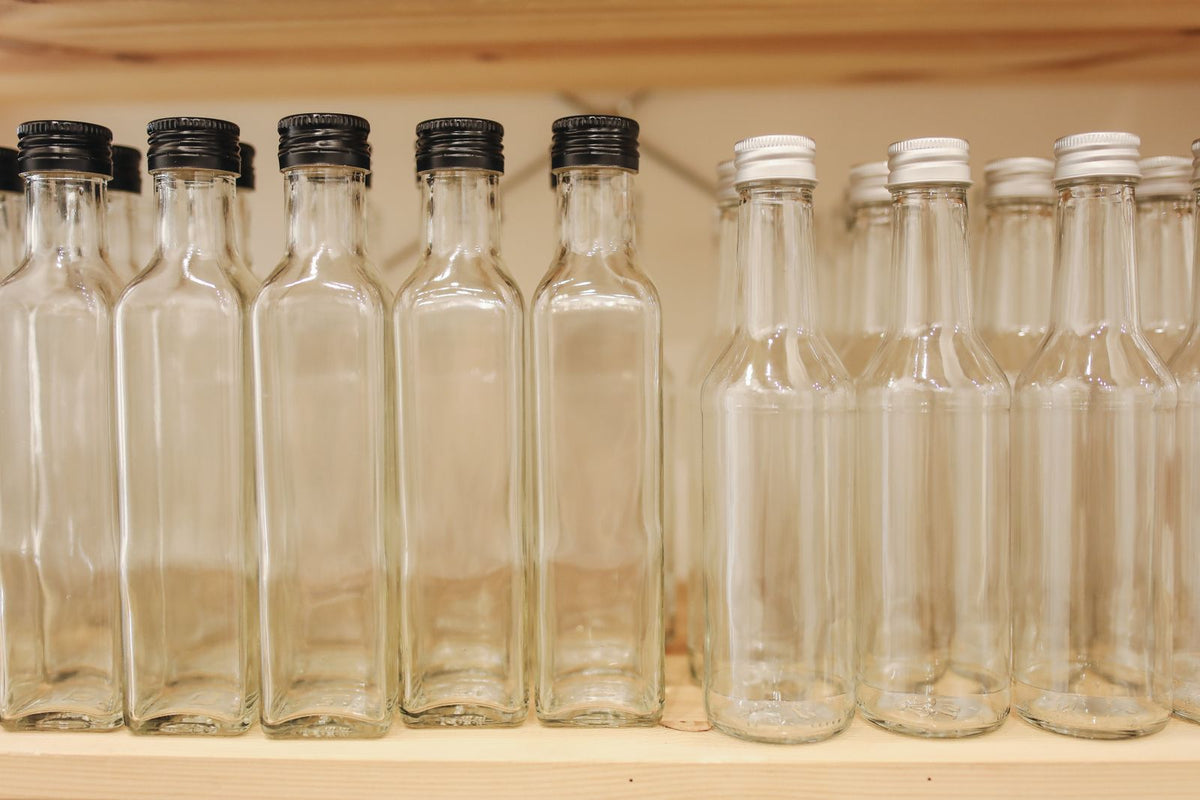
Tritan is the clear, glass-looking material in a lot of reusable water bottles, blender jars, and food containers. It also shows up in refillable cleaning spray bottles, which is how we ended up reading everything we could find about it.
So, what is Tritan? Here is the short answer. Tritan is a plastic. It is a copolyester made by Eastman Chemical, sold as a tough, BPA-free alternative to glass that will not shatter when you drop it. It is not glass, it is not a crystal, and it is not a natural material, even though it looks like all three.
We make a refillable spray bottle, and when we had to choose between glass and Tritan for it, we chose glass. So this guide covers what Tritan is, whether it is safe, why it is so hard to recycle, and how Tritan vs glass actually plays out in a bottle you refill for years.
You should know where we stand. We sell a glass spray bottle, so we have a stake in this question. Tritan is a reasonable material, and if you already own a Tritan bottle, the best thing you can do is keep using it.
What is Tritan made of?
Tritan is a copolyester, a type of polyester plastic built from more than one ingredient. Eastman, the company that makes it, describes it as a tough, BPA-free plastic that stays clear and resists shattering, even after years of use and dishwasher cycles. Eastman says it goes into household appliances, water bottles, eyewear, and phone cases.
Tritan is a brand name, not a generic material. When a product says it is made with Tritan, it means Eastman's copolyester. Eastman also sells a version called Tritan Renew, which it describes as molecularly identical to the original, with recycled content added (more on that below).
Is Tritan plastic?
Yes. Tritan plastic carries the number 7 inside the recycling triangle, which Eastman explains is the catch-all code for "other" plastics that do not fit codes 1 through 6. Polycarbonate, nylon, and some newer bioplastics carry a 7 too, so the number alone does not tell you which plastic you have.
The confusion is understandable. Tritan is made to look like glass, and the same word is also the name of a real glass. Zwiesel Glas, a German glassmaker, sells wine glasses and stemware made from what it calls Tritan crystal glass. The two are unrelated. If a water bottle or spray bottle says Tritan and has a 7 on the bottom, it is Eastman's plastic. If a wine glass says Tritan, it is glass.
Is Tritan safe?
By today's food-contact rules, yes, and a court fight over its safety went Eastman's way. Eastman says Tritan is free of BPA, BPS, and every other bisphenol, and that third-party testing shows no estrogenic or androgenic activity, which is the hormone-like effect that made BPA a concern. Eastman also says Tritan Renew meets FDA and European food-contact requirements for products you use again and again.
That claim has been challenged. In 2011, scientists from two small Austin, Texas, companies that test and certify plastics for hormone-like activity published a study. According to NPR's coverage, it reported estrogenic activity in nearly all of the plastic products they tested, Tritan included. Eastman sued the two companies over how they marketed those findings. In July 2013, a federal jury ruled for Eastman on false advertising, unfair competition, and conspiracy, as the Austin Chronicle reported.
The verdict settled that case, not the wider science. The same reporting noted that there are very few standards for testing plastics for estrogenic activity, and that how to test for it is still debated.
We are not toxicologists, and we will not tell you Tritan is dangerous. What we can say is that a cleaning bottle is a different job from a water bottle. You do not drink from it. The questions that matter more are how long it lasts and what happens to it when you are done with it.
Is Tritan microwave safe, and can it hold boiling water?
Yes, within limits. Eastman says the FDA has cleared Tritan Renew for food contact at temperatures up to and including 212°F (100°C), which covers boiling water and normal microwave heating. Eastman also says Tritan holds up in home and commercial dishwashers and resists stress cracking.
For a cleaning bottle, heat rarely matters. With our glass bottle, you fill it about 90% with warm or hot water, drop in a tablet, and attach the trigger once the water has cooled.
Can you recycle Tritan?
Not in practice, by Eastman's own account. On its Tritan FAQ page, Eastman says the recycling infrastructure to properly recycle Tritan, Tritan Renew, or any code 7 plastic does not exist yet. It adds that Tritan can technically be recycled over and over, and that it is working with recyclers and policymakers to make that happen at scale.
Tritan Renew is Eastman's answer for now. It is made with up to 50% certified recycled content, which comes from Eastman breaking plastic waste down into its basic chemical building blocks and building new plastic from them. That recycled share is allocated using a bookkeeping method called mass balance, so it describes the factory's overall mix, not an amount you could measure inside one bottle. It is recycled going in. The bottle you finish with still has no curbside route out.
Glass is not perfect either, but it has a working path. The Glass Packaging Institute says glass can be recycled endlessly with no loss in quality or purity, and that recycled glass can become new bottles and jars in as little as 30 days. The catch is participation. The EPA puts the recycling rate for glass containers at 31.3% in 2018, and most glass still went to landfills.
Is glass better than Tritan for a cleaning spray bottle?
It depends on how much your bottle travels and how often it gets dropped. Here is how Tritan vs glass compares for a refillable spray bottle.
| Tritan | Glass | |
|---|---|---|
| What it is | A copolyester plastic made by Eastman | Soda-lime glass, made from sand, soda ash, and limestone |
| Recycling code | 7, the "other" plastics code | None, glass is collected as glass |
| If you drop it | Shatter resistant, per Eastman | Can break |
| Weight | Lighter than glass | Heavier (our 16 oz bottle weighs 0.70 lb empty) |
| Recycling today | Eastman says the infrastructure to properly recycle it does not exist yet | Recyclable again and again, though only 31.3% of glass containers were recycled in 2018 |
| BPA and BPS | Made without either, per Eastman | Not used in glass |
| Hot water | Tritan Renew is cleared for food contact up to 212°F, per Eastman | Fine with warm or hot water |
| Cleaning spray bottles made from it | Blueland's Multi-Surface, Bathroom, and Glass + Mirror bottles, per Blueland (its hand soap bottles are glass) | Plastno's Multi Cleaner Spray (the trigger is polypropylene) |
Tritan wins on drops and weight. If your bottle rides around in a caddy, goes up and down stairs, or lives where kids can knock it over, that matters, and those are the reasons one large refill brand gives for choosing it. That brand uses Tritan for the spray bottles you carry from room to room and glass for the hand soap bottles that mostly sit still.
We chose glass because a cleaning spray bottle spends most of its life parked under the sink or on the counter, refilled over and over for years. For a bottle that mostly stays put, breaking is a small risk. And when it is finally done, glass has a real recycling path, while Tritan does not yet.
The tradeoffs are real, and we would rather you hear them from us. Glass breaks, so keep it off the edge of the counter. It is heavier in your hand. And our bottle is not plastic-free, because the trigger sprayer is polypropylene, the plastic marked 5 in the recycling triangle. There is no metal spring inside, so nothing rusts under the sink.
What are the downsides of Tritan?
It is still plastic, and it is not recyclable today. Those are the two that matter most for a bottle you plan to keep. The third is that the science on hormone-like activity in plastics is not settled, even though a court case over Tritan went Eastman's way.
In fairness, Tritan's upsides are real too. It is light, it is clear, and it survives drops that would end a glass bottle. A Tritan bottle that lasts for years and never breaks beats a glass bottle you replace every time it hits the sink.
How can you tell if your bottle is Tritan?
Look at the bottom. Tritan products usually carry a 7 in the recycling triangle, and brands that use it tend to say so, since the Tritan name is part of the pitch. Glass has no resin code and feels noticeably heavier in your hand. If you are still not sure, the product page or the brand's packaging guide usually spells out the material.
Should you replace a Tritan bottle you already own?
No. The greenest spray bottle is usually the one already under your sink. Making any new bottle, glass included, takes new material. Refilling the one you have takes none. Keep it clean, keep it in use, and fix the nozzle when it acts up. Our guides on how to clean a spray bottle and why a spray bottle stops spraying cover both.
When it is time for a new one, choose based on where it will live. If it travels, Tritan makes sense. If it mostly stays put, glass is the material you can recycle at the end. We walk through the bigger decision in our guide to buying a reusable spray bottle when you already own plastic ones. For the same is-it-plastic question about other materials, see does silicone have microplastics and what PVA is.
If you go with glass, our refillable glass spray bottle holds 16 ounces, and one of our mineral-based multi cleaner tablets fills it once.
Product details current as of November 2026.

Share:
What Are Kitchen Sponges Made Of, and Which Ones Are Plastic?