

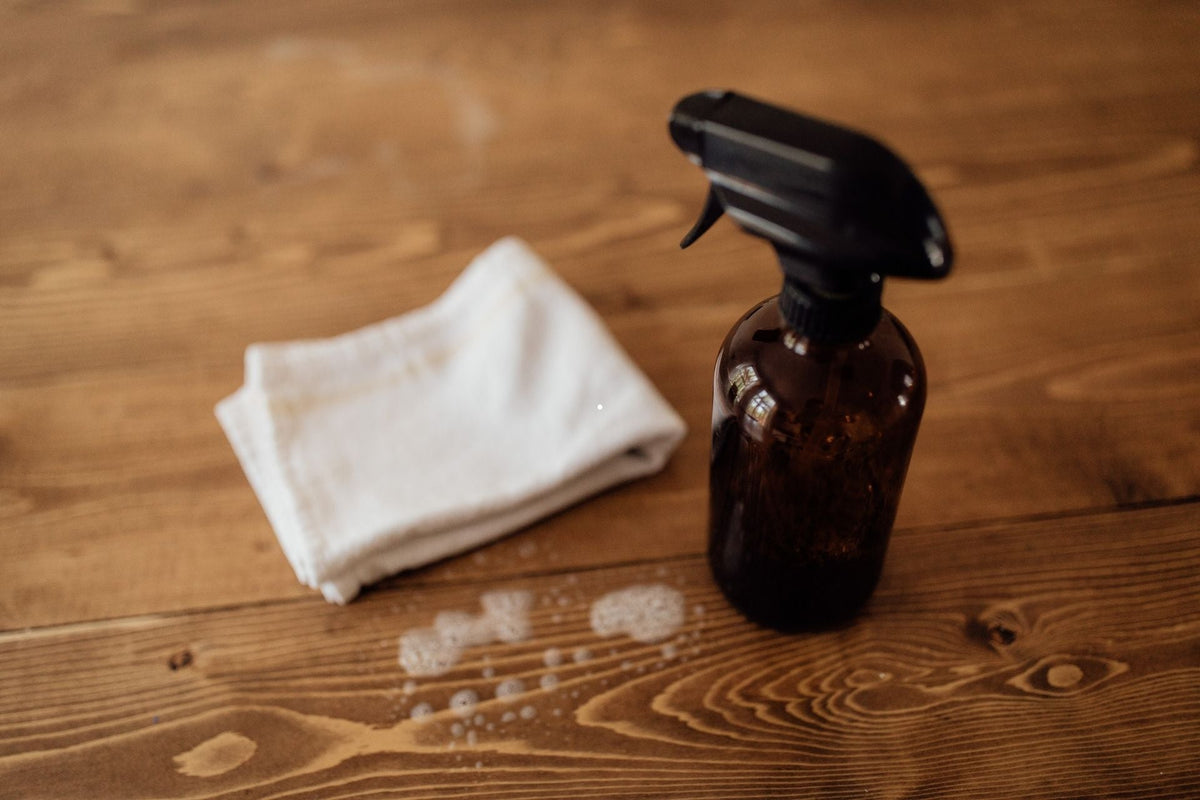
To clean a spray bottle, empty it, rinse it with warm water, then fill it with hot water and a splash of white vinegar or a drop of dish soap and shake. Pump that solution through the nozzle to clear the tube and trigger, rinse until the water runs clear, and let it air dry. The whole thing takes about ten minutes and keeps residue, cloudy film, and old smells from building up. We make a refillable glass cleaning spray, so keeping a bottle clean enough to reuse for years is squarely our interest. Here is how to do it, get old odors out, and know when hot water is safe.
How do you clean a spray bottle?
Rinse, soak, flush, and dry. The steps are simple, and the flush through the nozzle is the part people skip.
- Empty and rinse. Pour out anything left and rinse the bottle with warm water to remove the loose residue.
- Add a cleaning solution. Fill the bottle about halfway with hot water and add a splash of white vinegar for mineral and grease residue, or a drop of dish soap for oily mixes.
- Shake it. Cap it and shake so the solution reaches the whole inside of the bottle.
- Flush the nozzle. Put the trigger back on and pump the solution through it a dozen times, so the tube and the spray head get cleaned, not just the bottle.
- Rinse and dry. Rinse with clean water until no bubbles are left, then leave the bottle and trigger to air dry fully before you refill.
How do you get the smell out of a spray bottle?
Soak it with vinegar or baking soda. Fill the bottle with equal parts warm water and white vinegar and let it sit for an hour, or add a spoonful of baking soda to warm water and leave it overnight. Both lift trapped odors from old cleaner or essential oils. Rinse well and pump clean water through the nozzle afterward. If the smell will not leave a plastic bottle no matter what you do, that is the plastic itself, which absorbs residue over time.
How often should you clean a spray bottle?
Rinse the nozzle after each use with thick or homemade mixes, and deep clean the bottle whenever you switch what is inside it or every few weeks. A quick warm-water flush stops product from drying in the tube, which is the main cause of clogging. A full soak matters most when you change solutions, so an old cleaner does not mix with a new one.
Can you put hot water in a spray bottle?
It depends on the material. A thin plastic bottle can warp under very hot water, and over time plastic holds onto stains and smells because it absorbs what it touches. Glass does not. A glass bottle takes warm and hot water without warping and rinses fully clean, which is why it stays clear and odor-free far longer than a plastic one. If you have ever thrown out a spray bottle because it went cloudy or kept the smell of the last thing in it, the material was the reason.
Cleaning and reusing beats buying new
Every spray bottle you keep in service is one that does not get made, shipped, and thrown away. A ten-minute clean is almost always the lower-waste choice over a new bottle, and it works best when the bottle is built to be cleaned. Our reusable glass cleaning spray is a 16 ounce glass body that takes hot water and rinses clear, with a single-material polypropylene trigger that has no steel spring to rust and a built-in inline filter that keeps sediment from clogging the pump. The glass is reusable and recyclable, so a rinse and refill replaces tossing a plastic bottle every few weeks. It is not plastic-free, the trigger is polypropylene, but it is made to be cleaned, refilled, and kept. For a place to store and rotate your bottles between refills, we put together tips to keep cleaner bottles organized and refilled.
Frequently asked questions
Can you reuse an old cleaning spray bottle?
Yes, as long as you clean it out first. Rinse it, soak it with warm water and vinegar to remove residue from the last product, flush the nozzle, and let it dry. Avoid reusing a bottle that held a product not meant to mix with what you are adding, and when in doubt, start with a bottle that only ever held mild cleaners.
What is the best way to clean a glass spray bottle?
Warm water and white vinegar. Glass takes hot water without warping, so you can fill it with hot water and vinegar, shake, pump the solution through the nozzle, and rinse until clear. Because glass does not absorb residue the way plastic does, it comes fully clean and does not hold onto old smells.
Why does my spray bottle smell even after washing?
If it is plastic, the material has absorbed residue from past products, and washing only reaches the surface. A vinegar or baking soda soak helps, but a bottle that keeps its smell is telling you the plastic is holding it. Glass does not absorb, so it rinses back to neutral.
The takeaway
Cleaning a spray bottle is a ten-minute job. Rinse it, soak it with hot water and vinegar, flush the nozzle, and let it dry, and it stays clear and ready to reuse. The one thing that decides how long a bottle lasts is what it is made of, since glass takes hot water and does not hold stains or smells the way plastic does. Clean the bottle you have, and choose a material that makes the next clean easy.
Share:
Why Your Spray Bottle Stops Spraying and How to Fix It
Multi-Purpose vs All-Purpose Cleaner (and What Each Cleans)