

Product highlights

Material

Sustainability

Lifecycle

Purpose

Room
Scrub Sponge
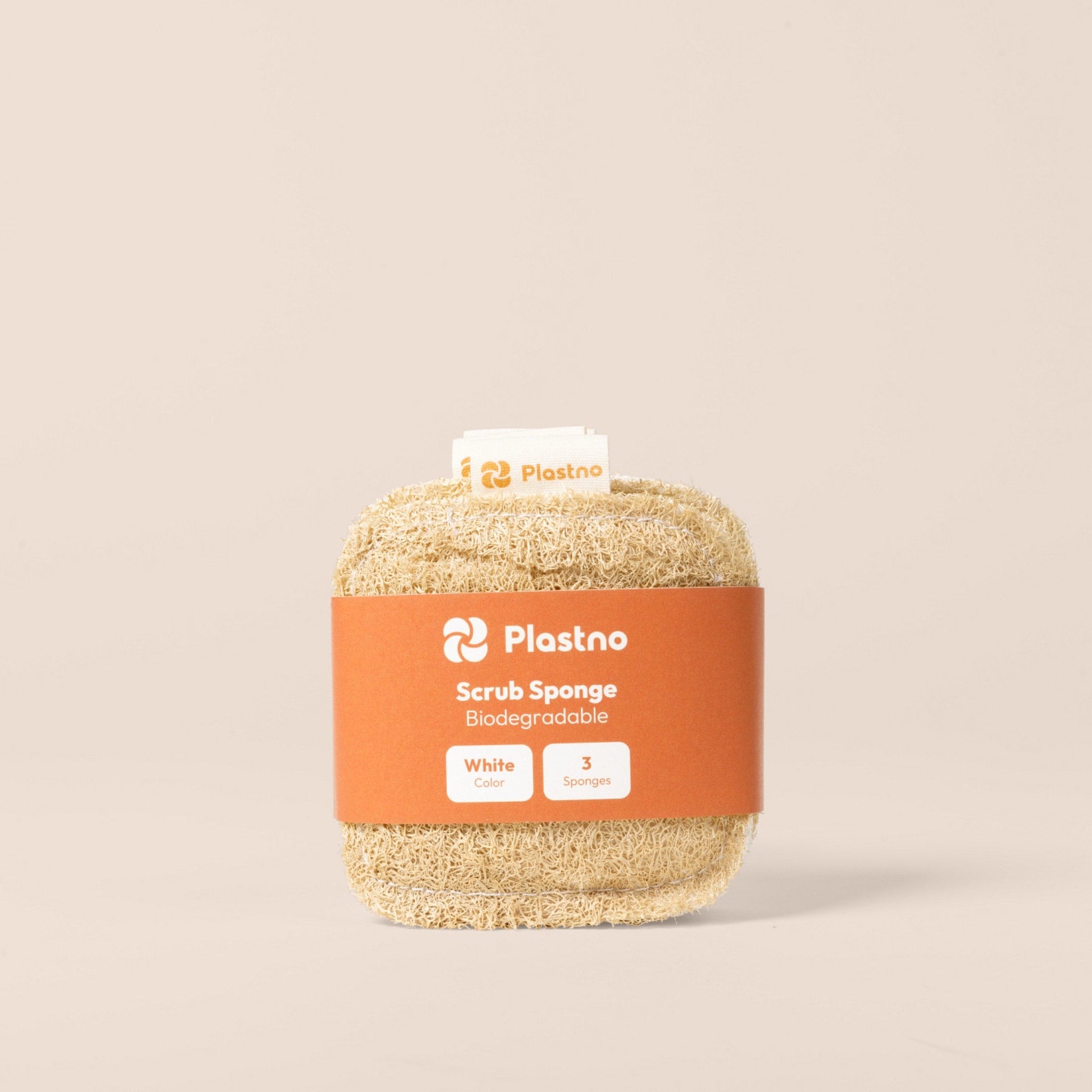
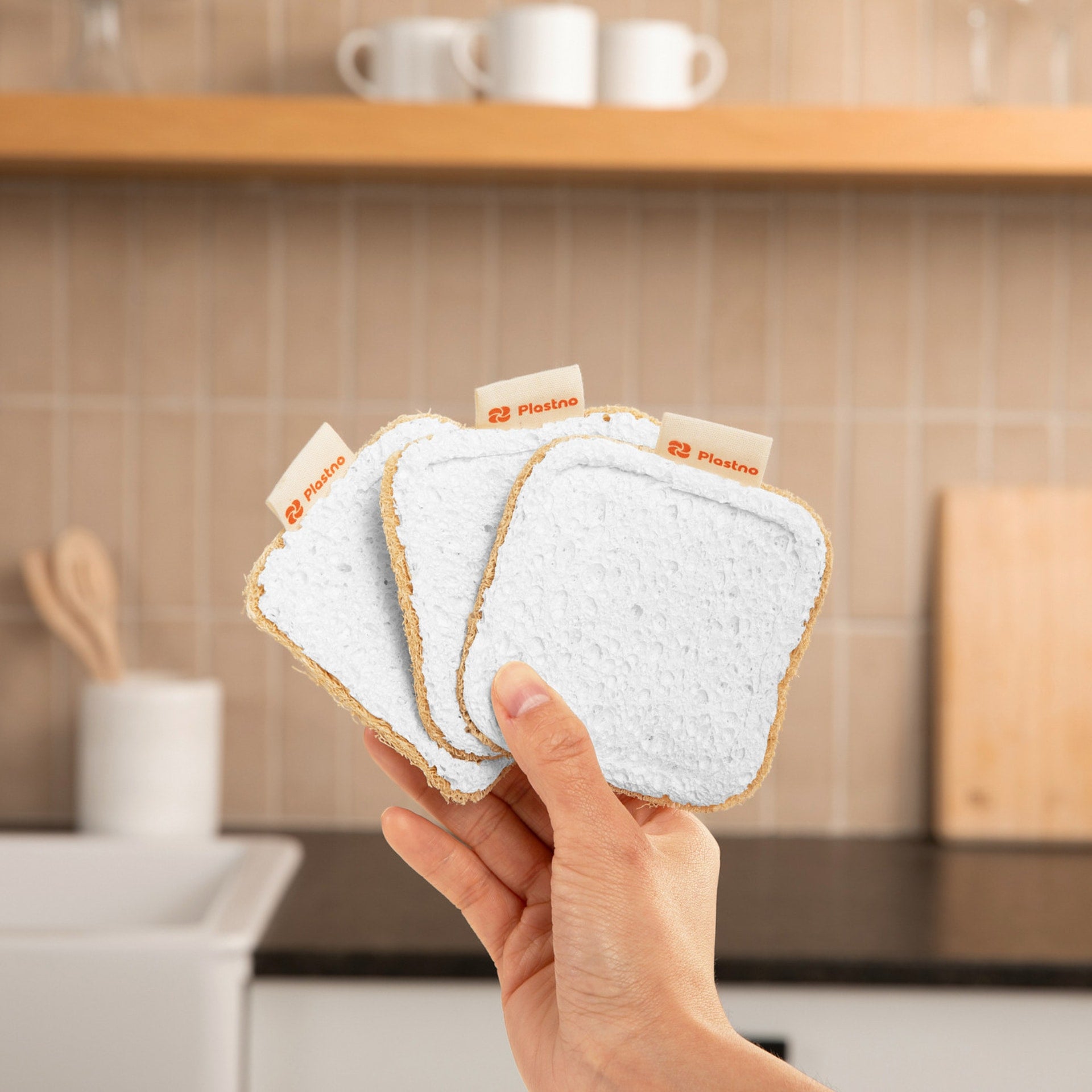
Biodegradable loofah dish sponges with a soft cellulose side, for stuck-on food and everyday dishes.
Product highlights
Material
Sustainability
Lifecycle
Purpose
Room

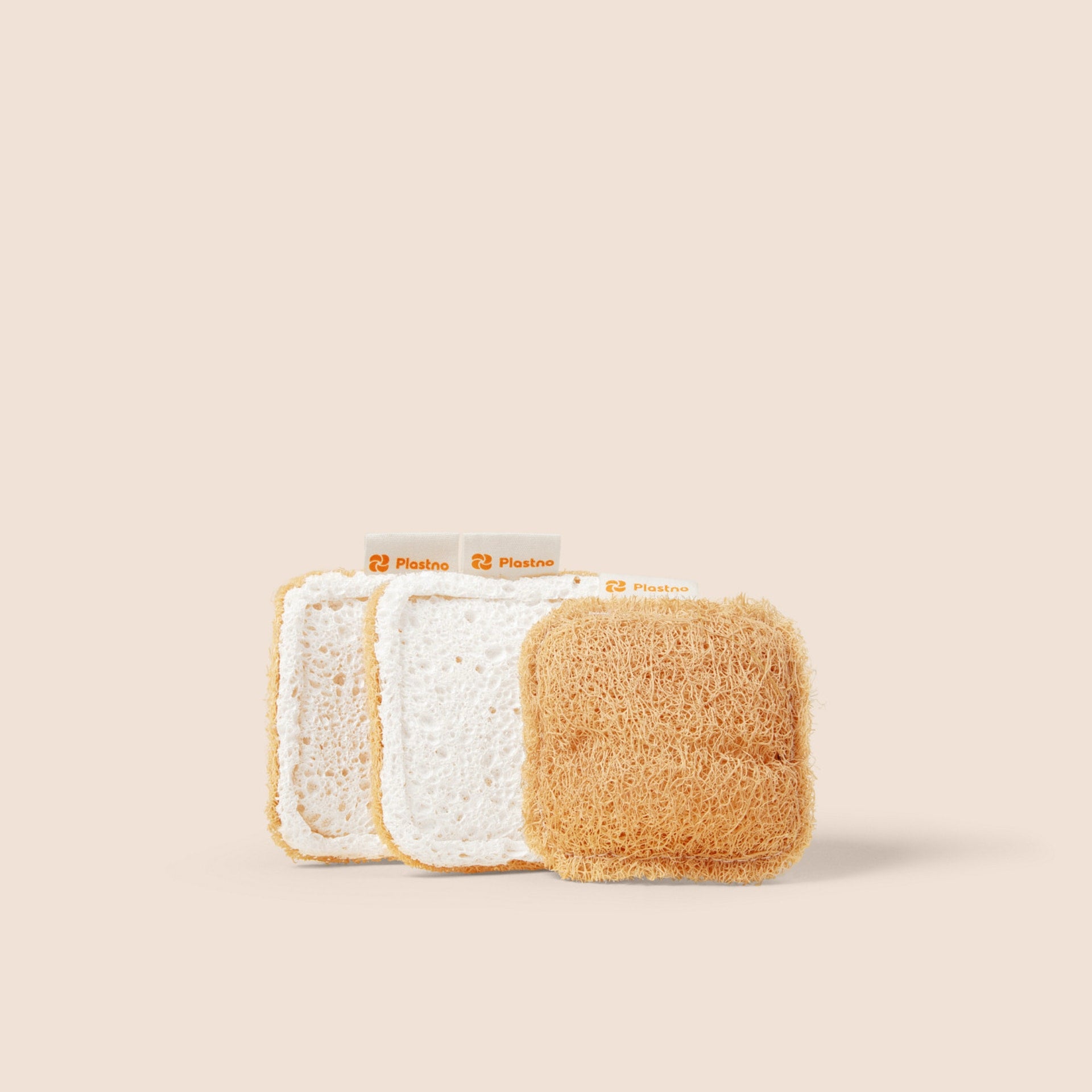
White | Tan

3 Sponges
Overview
The plastic sponge that scratches your pans and never breaks down has a better replacement. Plastno's loofah dish sponge scrubs stuck-on food with a loofah side and wipes up everyday grime with a soft cellulose side, both from plants instead of foam. When it wears out, it biodegrades instead of shedding microplastic like a synthetic sponge.
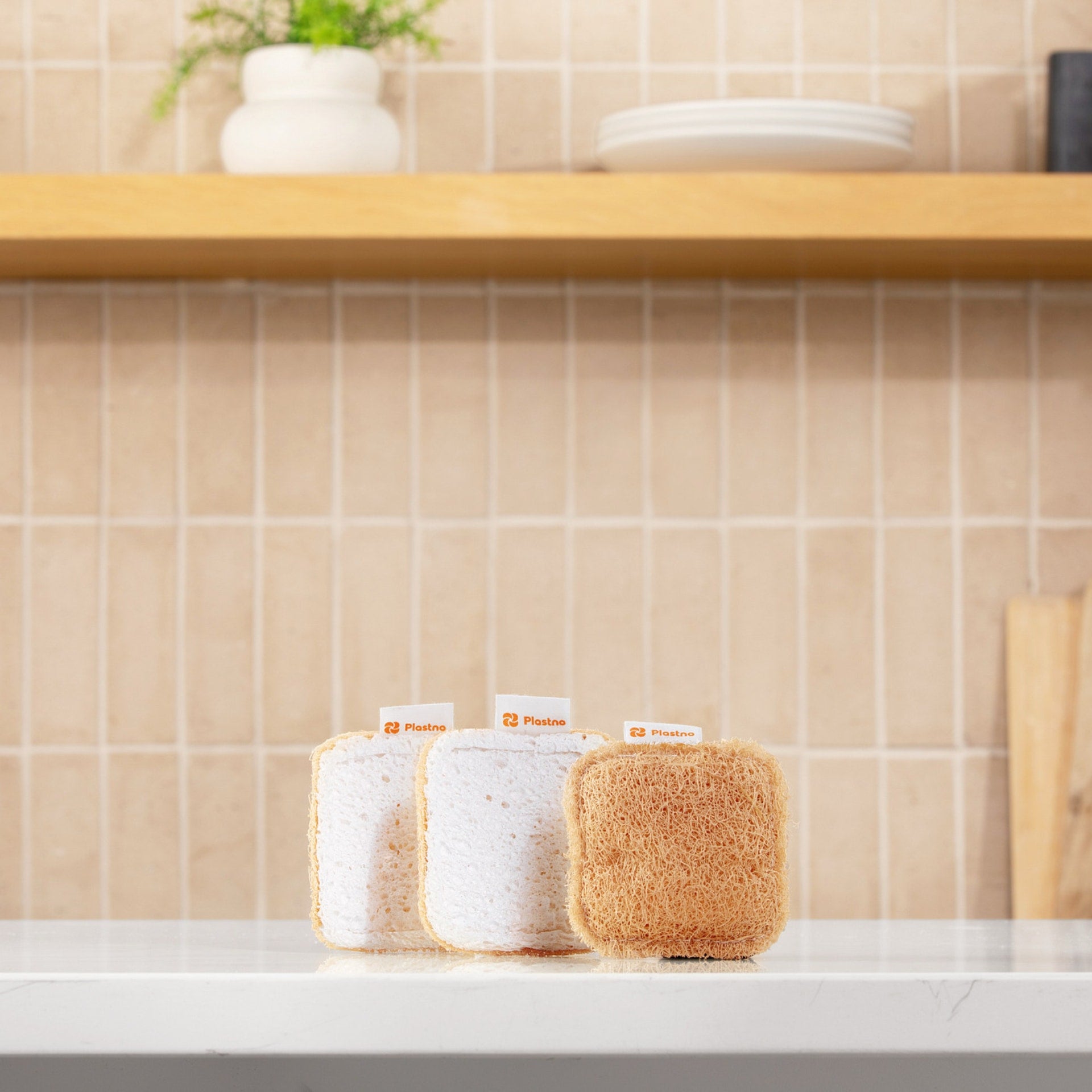
- Two sides, one sponge: A loofah side for scrubbing stuck-on food and a cellulose side for everyday washing. Comes in a 3-pack.
- Plastic-free and plant-based: Made from loofah and cellulose, hand-sewn with cotton thread instead of plastic glue, and biodegradable at end of life.
- Easy to sanitize: Top-rack dishwasher or a quick boil. Each sponge lasts two to four months.
Ingredients
Made with loofah, plant-based cellulose, and cotton thread.
Use
1. Clean. Tackle dishes, countertops, sinks, and most hard surfaces with a plastic-free, dual-action loofah and cellulose sponge.
2. Sanitize. Top rack of the dishwasher or a quick boil. Air-dry between uses and each sponge lasts 2 to 4 months.
Details
| Specification | Scrub Sponge |
|---|---|
| Shape | Square |
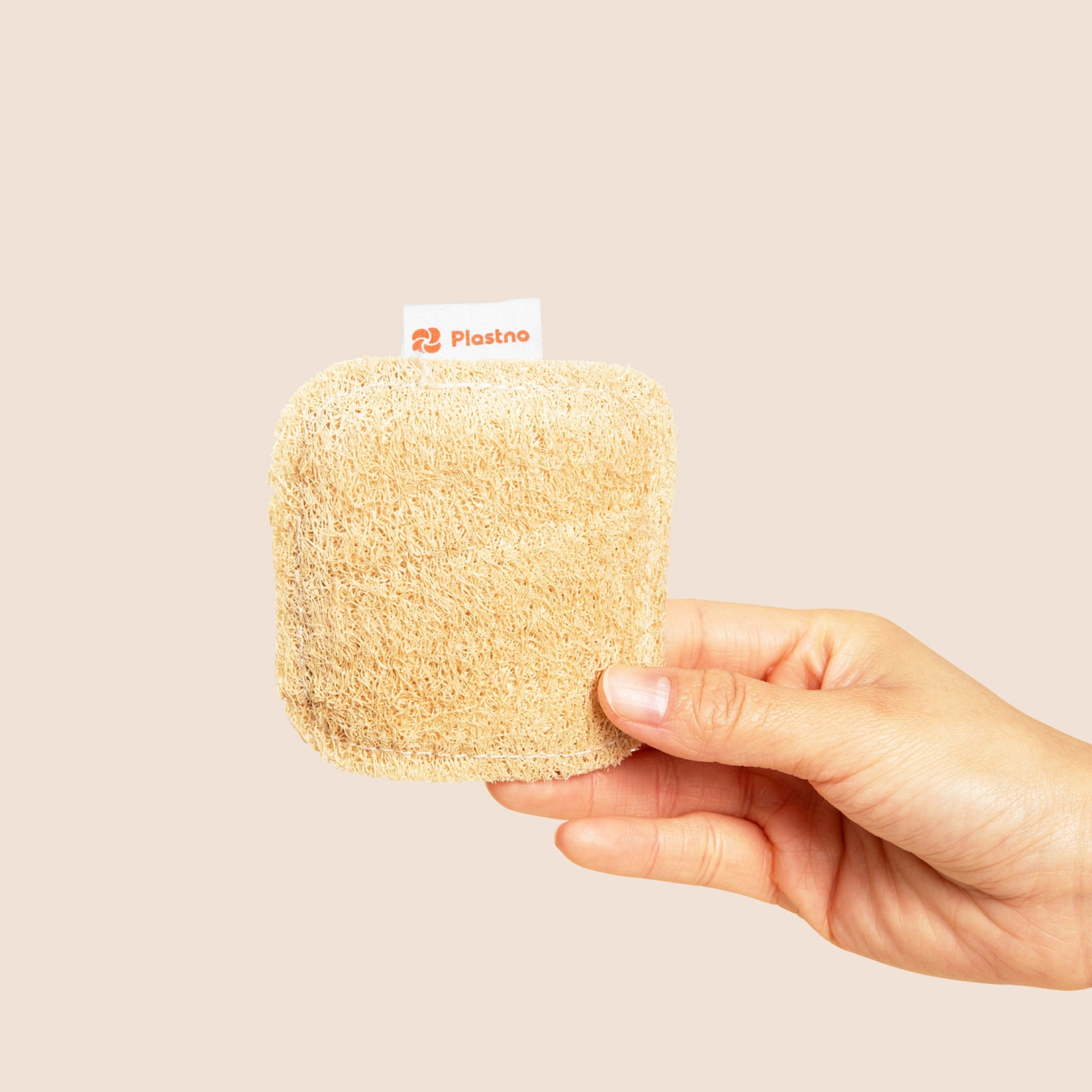
| Dimensions | 3.75" W x 3.75" H x 0.5" thick |
| Sponges per pack | 3 |
| Weight | About 0.03 lb per sponge |
| Colors | White, Tan |
| Scrub side | Loofah. 0.25" thick, for stuck-on food and grease |
| Wash side | Cellulose. 0.25" thick, for everyday dishes |
| Stated lifespan | 2 to 4 months per sponge with proper care |
| Sanitizing | Top rack of the dishwasher on a hot cycle, or boil 1 to 2 minutes. Weekly is recommended |
| Shelf life | None. Stable indefinitely when stored dry |
| Biodegradable | Yes. Both materials are plant-based |
| Compostable | Both materials break down in a home compost pile. Not third-party certified |
| Plastic scouring layer | None. The scrub side is loofah, not nylon or polyester mesh |
| Contains no | Polyurethane, polyester, nylon, polypropylene, PET, synthetic foam, plastic scrubber, added fragrance, synthetic dye, antimicrobial coating |
| Safe on | Cast iron, stainless steel, sinks and stovetops with the loofah side. Non-stick, glass and painted surfaces with the cellulose side |
| Packaging | Kraft plastic-free paper wrapper, kraft cardboard box or mailer |
Bundle & save

100% Satisfaction Guarantee

Free Shipping Over $50
Scrub Sponge
If you have any questions, you are always welcome to contact us. We'll get back to you as soon as possible, within 24 hours on weekdays.
-
Shipping Information
Fulfilled within 1-2 business days and packaged in our minimal, fully recyclable signature boxes.
-
Customer Care
Give us a few details and we’ll offer the best solution. We are available Monday to Friday (8am-5pm EST)
-
FAQ’s
Visit our FAQs page to find answers to common questions.
-
Contact Us
We'd love to hear from you. Our team is here to help. Visit our contact page to send us a message.
The loofah dish sponge that scrubs, then biodegrades
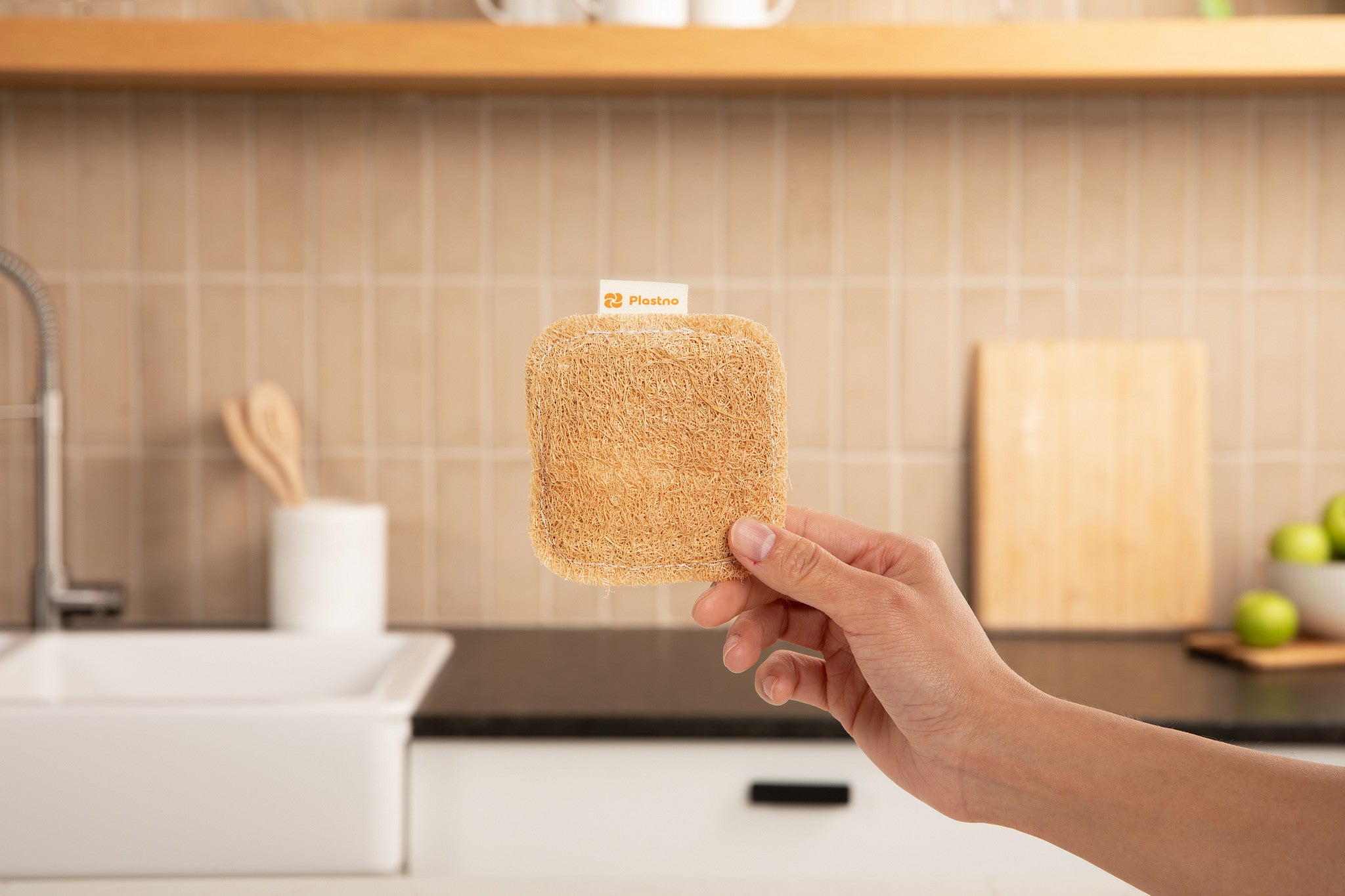
Most kitchen sponges are plastic foam that scratches your pans and sheds microplastic into the sink every time you wash. This one is two plant sides instead, a firm loofah side for stuck-on food and a soft cellulose side for everyday dishes. Same scrubbing power, none of the petroleum, and it lasts months instead of weeks before it biodegrades.
How it works
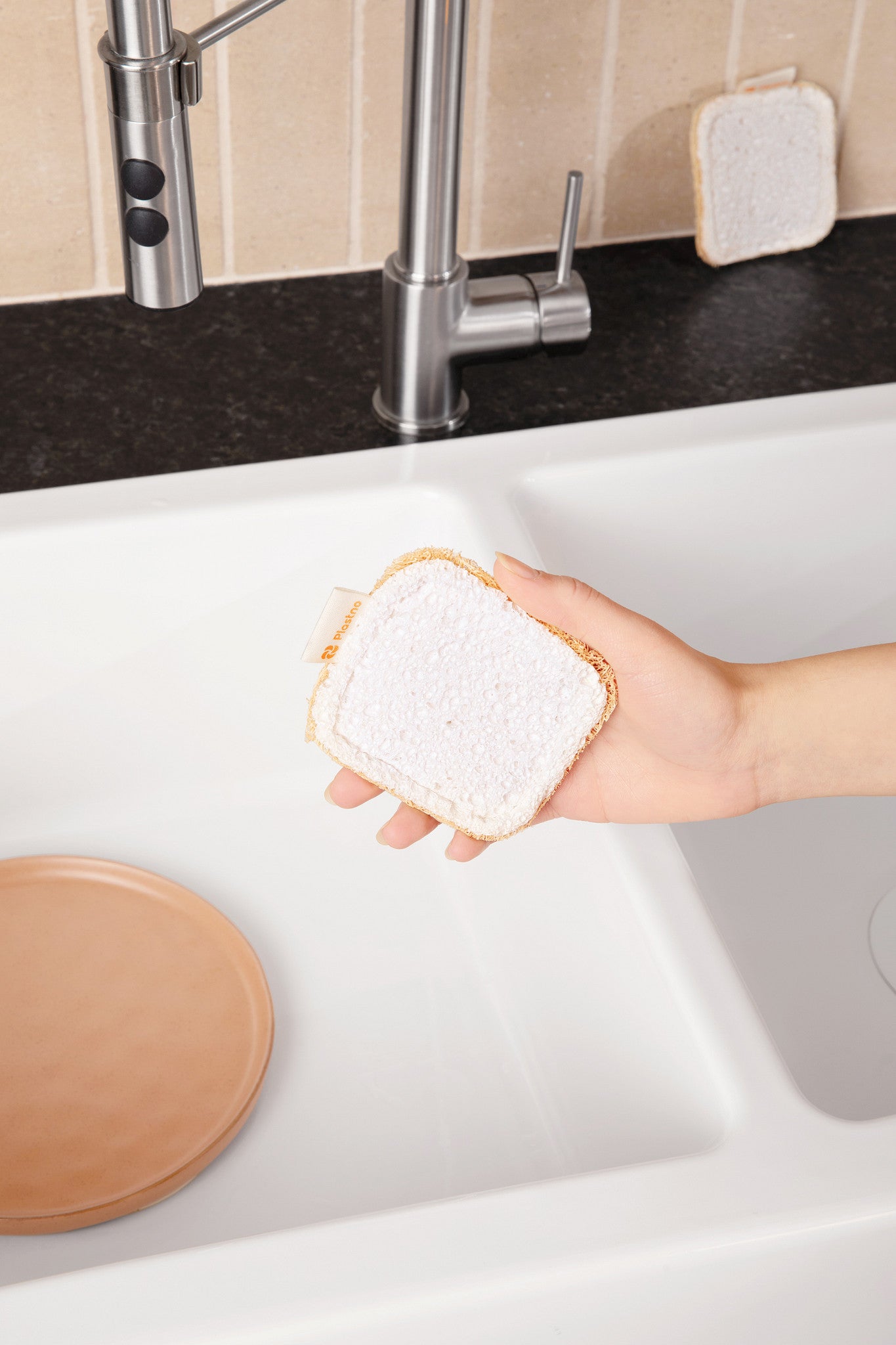
1. Wet. Wet the sponge under warm water.
2. Scrub. Loofah side for stuck-on food and grease, cellulose side for everyday dishes.
3. Rinse. Rinse well and air-dry between uses. Sanitize weekly in the dishwasher or a quick boil.
Plant-based ingredients
Loofah
Loofah is the dried fibrous skeleton of the loofah plant. We use it on the scrub side for stuck-on food, grease, and burned-on bits. Naturally biodegradable.
Cellulose
Cellulose is a plant fiber sourced from wood pulp. We use it on the wash side for everyday dishes, countertops, and sinks. Plastic-free and biodegradable.
Why switch to a biodegradable dish scrubber
A single polyurethane sponge sheds microplastics into your sink and your food every time you wash. Multiply that by every kitchen, every week. An eco-friendly dish sponge, loofah on one side and cellulose on the other, gives you the same scrubbing power, a longer life, and none of the petroleum.
What you won't find in Plastno
Human safe
Every Plastno product is made with plant and mineral based ingredients, free from the petroleum-based plastics, synthetic foams, added fragrances, and harsh chemicals found in conventional cleaning supplies. Safer for your home, safer for the people in it.
✗ Microplastic shedding
✗ Synthetic foams
✗ Petroleum-based plastics
✗ Added fragrances
✗ Harsh chemicals
✗ Synthetic dyes
✗ Antimicrobial coatings
Less plastic
From the product to the packaging, every Plastno purchase keeps single-use plastic out of your home and out of waterways. Packaging is intentionally minimal, just a clean paper wrapper and a curbside-recyclable cardboard box. No clamshells, no shrink wrap, no fancy inserts that add waste in the name of looking premium.
✓ Intentionally minimal packaging
✓ Plastic-free, recyclable paper wrapper
✓ Curbside-recyclable shipping box
✓ Paper-based tape
✓ Water-based inks
✓ No clamshells, shrink wrap, or extra inserts
Scrub Sponge vs Soak Sponge
Not sure which to pick? Here's how they differ.
Plastno
Scrub Sponge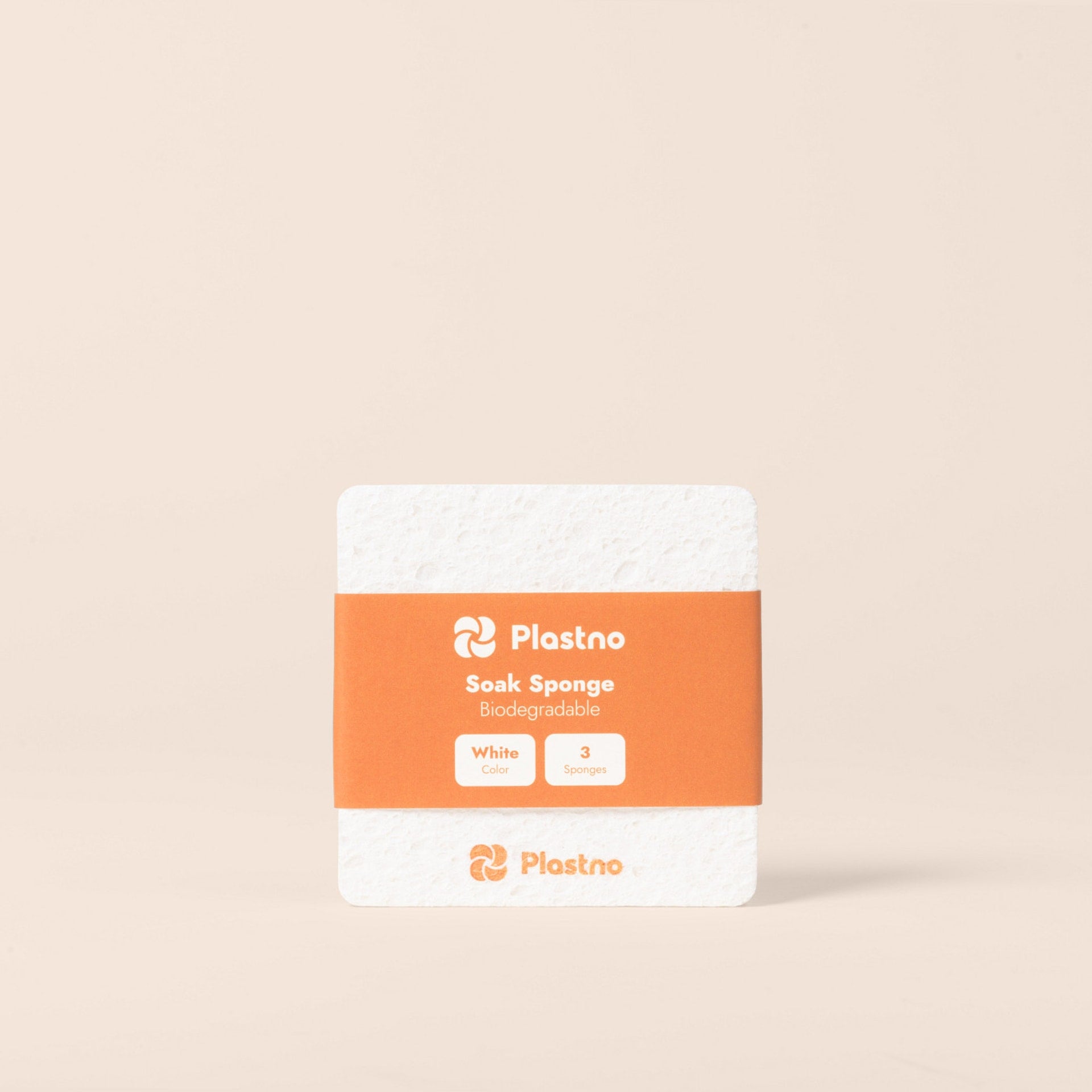
Plastno
Soak Sponge
Plastno
Scrub Sponge
Plastno
Soak SpongeBest for
Stuck-on food, pans, cast iron
Best for
Everyday dishes, glassware, non-stick
Texture
Dual-action loofah and cellulose
Texture
Soft cellulose
Safe on non-stick and glass
Safe on non-stick and glass
Material
Loofah and cellulose
Material
100% cellulose
Ships flat, pops up in water
Ships flat, pops up in water
Dishwasher safe and boilable
Dishwasher safe and boilable
What people ask before they switch to loofah
Do kitchen sponges have microplastics?
Yes. Most kitchen sponges are polyurethane or polyester, which shed microplastics every time you wash dishes. Plastno's dish sponge is different. It has a loofah scrub side and a plant-based cellulose wash side, both plant-derived and biodegradable, so it does not shed microplastics the way a plastic sponge does. Here is a full look at what our sponges are made of.
How long does a Plastno scrub sponge last?
2 to 4 months with daily use. Rinse it thoroughly and air-dry between uses. Sanitize once a week by boiling it for 1 to 2 minutes or running it on the top rack of the dishwasher. Each pack includes 3 sponges, so one pack covers roughly a year.
Does the scrub side have a plastic mesh?
No. The scrub side is loofah, the dried fiber of the loofah plant. There is no nylon, polyester, or polypropylene scouring layer, which many sponges sold as plant-based still use. The wash side is plant-based cellulose. Both sides are plastic-free.
What do I do with the sponge when it's worn out?
Both the loofah and the cellulose are plant-derived and biodegradable, so they break down far faster than a polyurethane sponge. Both materials break down in a home compost pile. Not third-party certified. You can also put it in the bin with Plastno's BPI and TUV certified trash bags.
Will it scratch non-stick pans or delicate surfaces?
The cellulose wash side is gentle on non-stick cookware, glass, and most painted surfaces. The loofah scrub side is firmer and works on cast iron, stainless steel, sinks, and stovetops. Start with the cellulose side first and flip to the loofah only when you need extra scrubbing power.