

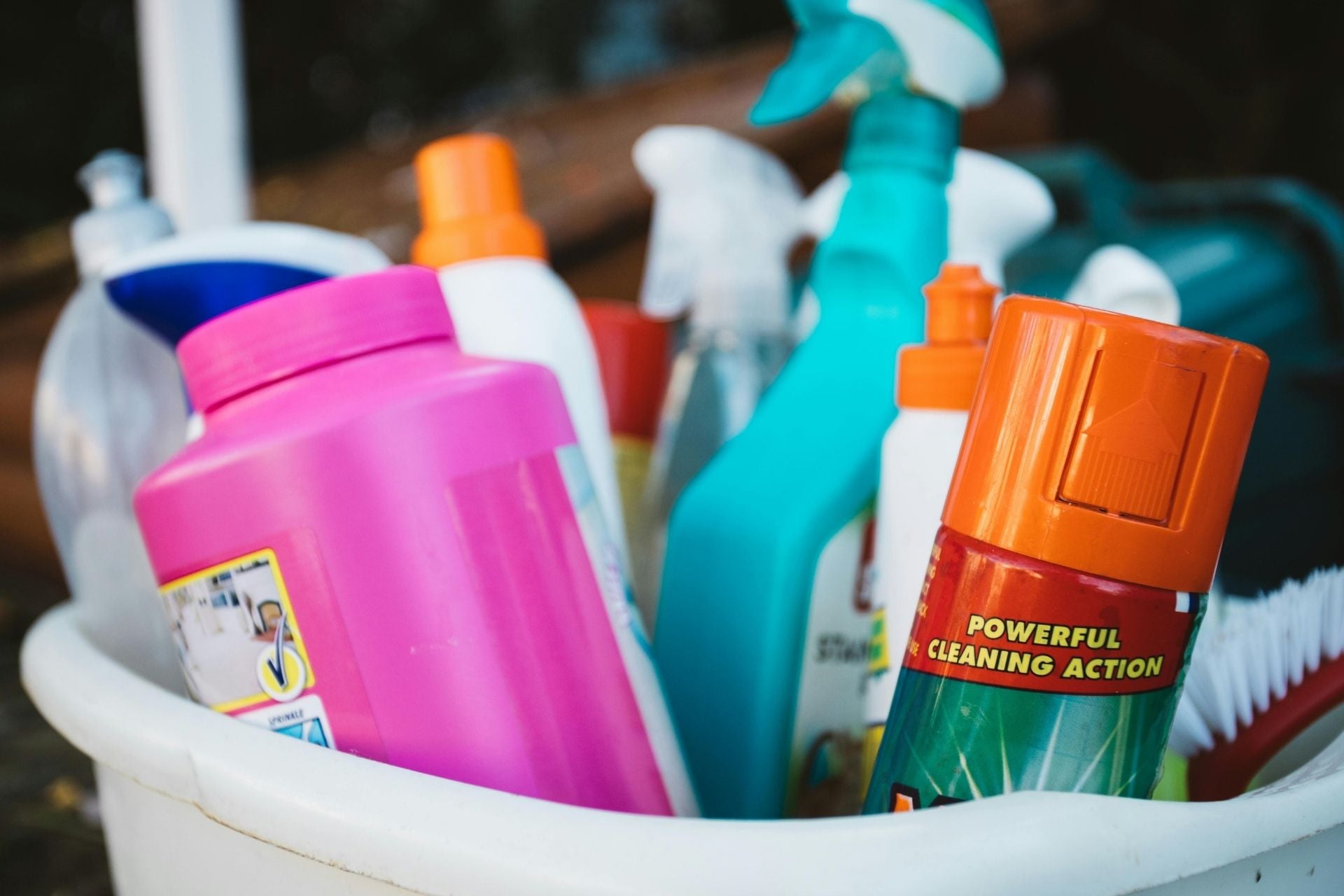
Some are, many are not, and the label alone will not tell you which is which. Plenty of everyday cleaning products contain ingredients flagged for health or air-quality concerns, and those same ingredients rinse down the drain into the water system when you are done. Others are made from simple plant and mineral ingredients that are gentler on both counts. The catch is that "non-toxic" is not a regulated word, so the only reliable way to know is to read the ingredient list. Here is what tends to raise concern, why it matters for your home and downstream, and how to choose a cleaner that is easier on both.
Are cleaning products toxic?
It depends entirely on the ingredients. Cleaning is a lightly regulated category in the United States, and manufacturers are not required to list every ingredient on the label. So a product can look and smell clean while still containing things you might rather avoid. The word "toxic" is also relative. It depends on the specific ingredient, the amount, and how you are exposed, whether that is breathing a spray, getting it on your skin, or leaving residue on a surface you prepare food on. The honest answer is that some conventional cleaners contain flagged ingredients and some do not, and the fix is to know what to look for rather than to fear the whole category.
Which ingredients tend to raise concern
A handful of ingredients come up again and again when researchers and health groups look at cleaning products. None of these means a product is dangerous on its own, but they are the ones worth understanding:
- Fragrance or parfum. A single "fragrance" listing can stand in for dozens of undisclosed ingredients, some of which people react to. Fragrance-free removes the guesswork.
- Ammonia and chlorine bleach. Both give off strong fumes, irritate the lungs and eyes, and become genuinely hazardous if they are ever mixed together.
- Quaternary ammonium compounds, or "quats." Common in disinfecting sprays and wipes, and linked in some studies to skin and respiratory irritation.
- Volatile organic compounds, or VOCs. These evaporate into the air as you clean and add to indoor air pollution.
- Dyes. Added for color only, with no cleaning benefit, so they are easy to skip.
The point is not that every cleaner is a hazard. It is that these ingredients are common, often hidden behind vague labeling, and simple to avoid once you know the names.
The label will not tell you, the ingredient list will
"Non-toxic," "natural," and "green" are marketing words with no legal standard behind them, so the front of the bottle is the least useful part. The ingredient list, on the back or the brand's website, is where the real answer lives, and a product that hides it is telling you something. The short version is to favor a full, named ingredient list, fragrance-free and dye-free, made from plant and mineral ingredients. For the full label-by-label checklist and the certifications that actually mean something, we wrote a separate guide on how to tell which non-toxic claims are real.
Toxic in your home is often toxic downstream
What you clean with does not disappear when you rinse the cloth. The fumes from harsh cleaners add to the air inside your home, and the formula itself goes down the drain and through water treatment on its way back to rivers and oceans. Ingredients like heavy synthetic surfactants and undisclosed fragrance are flagged for aquatic life the same way they are flagged indoors. The packaging is the other half of it. A cabinet full of single-use spray bottles is plastic made to be thrown away after a few weeks of use.
This is where non-toxic and sustainable line up instead of competing. A cleaner built from plant and mineral ingredients is generally gentler on waterways than one built from petroleum, and a refillable format means you stop sending new plastic bottles to the landfill every month. Choosing the safer formula and the lower-waste format is usually the same decision.
Choosing a non-toxic multi-surface cleaner
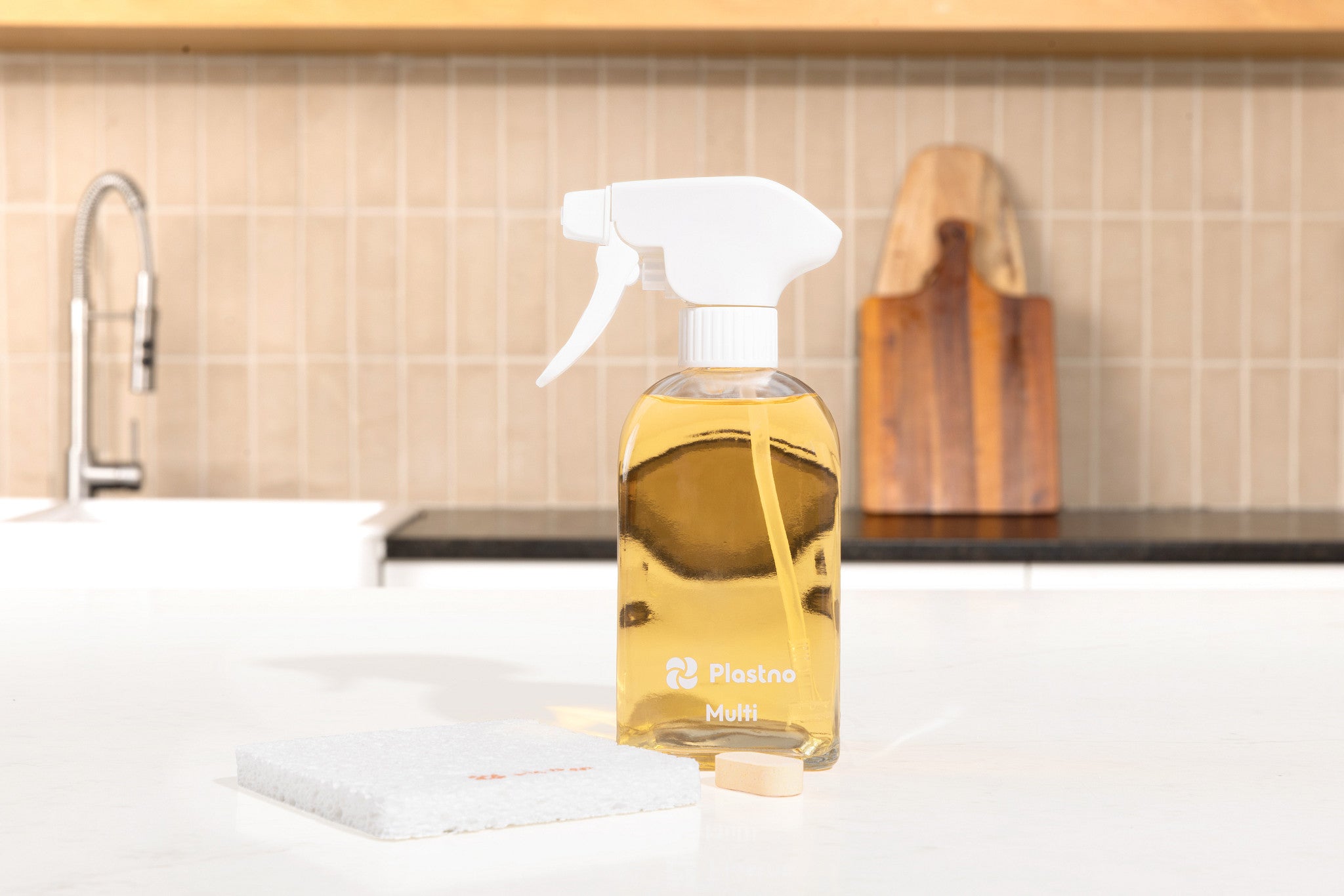
Most homes reach for one all-purpose spray for counters, sinks, and everyday surfaces, so that is the product where a swap matters most, for your home and for what goes down the drain. A Multi Cleaner Tablet is one option. It is mineral-based, fragrance-free, dye-free, and has a short, fully disclosed ingredient list you can read on the ingredients page. You drop the tablet into a reusable glass bottle of water to make a multi-surface spray for sealed counters, stovetops, sealed wood, sealed stone, and sealed tile. The glass body is reusable and recyclable, and its trigger is a single-material sprayer built to last and be recycled, so you refill instead of throwing out a plastic bottle every few weeks. It cleans rather than disinfects, since it is not EPA registered, so for anything that needs sanitizing you would use a dedicated product. For everyday wiping, a simple disclosed formula does the job without the guesswork.
Frequently asked questions
Are all cleaning products toxic?
No. Toxicity depends on the specific ingredients, the amount, and how you are exposed. Many conventional cleaners contain flagged ingredients like undisclosed fragrance or harsh fumes, while products made from simple plant and mineral ingredients generally do not. Reading the ingredient list is the only reliable way to tell.
Are non-toxic cleaners better for the environment too?
Often yes. The plant and mineral ingredients that make a cleaner safer indoors also tend to be gentler once they rinse down the drain, and choosing a refillable format cuts the single-use plastic that conventional cleaners add. It is not automatic, so check the ingredient list and the packaging, but the safer choice and the lower-waste choice usually point the same way.
Is a multi-surface cleaner safe to use?
It comes down to what is in it. A multi-surface cleaner with a short, disclosed, fragrance-free and dye-free formula is a safe everyday choice for sealed hard surfaces. As always, check the ingredient list rather than the label, and follow the directions for which surfaces it is meant for.
The takeaway
Cleaning products are not toxic as a category, but plenty of individual ones carry ingredients worth avoiding, for your air indoors and for the water they wash into. The label will not warn you, so read the ingredient list, favor fragrance-free and dye-free products made from plant and mineral ingredients, and choose a refillable format where you can. The safer cleaner and the more sustainable one are usually the same bottle.
Share:
How to Clean a Microwave Naturally (No Harsh Chemicals)