

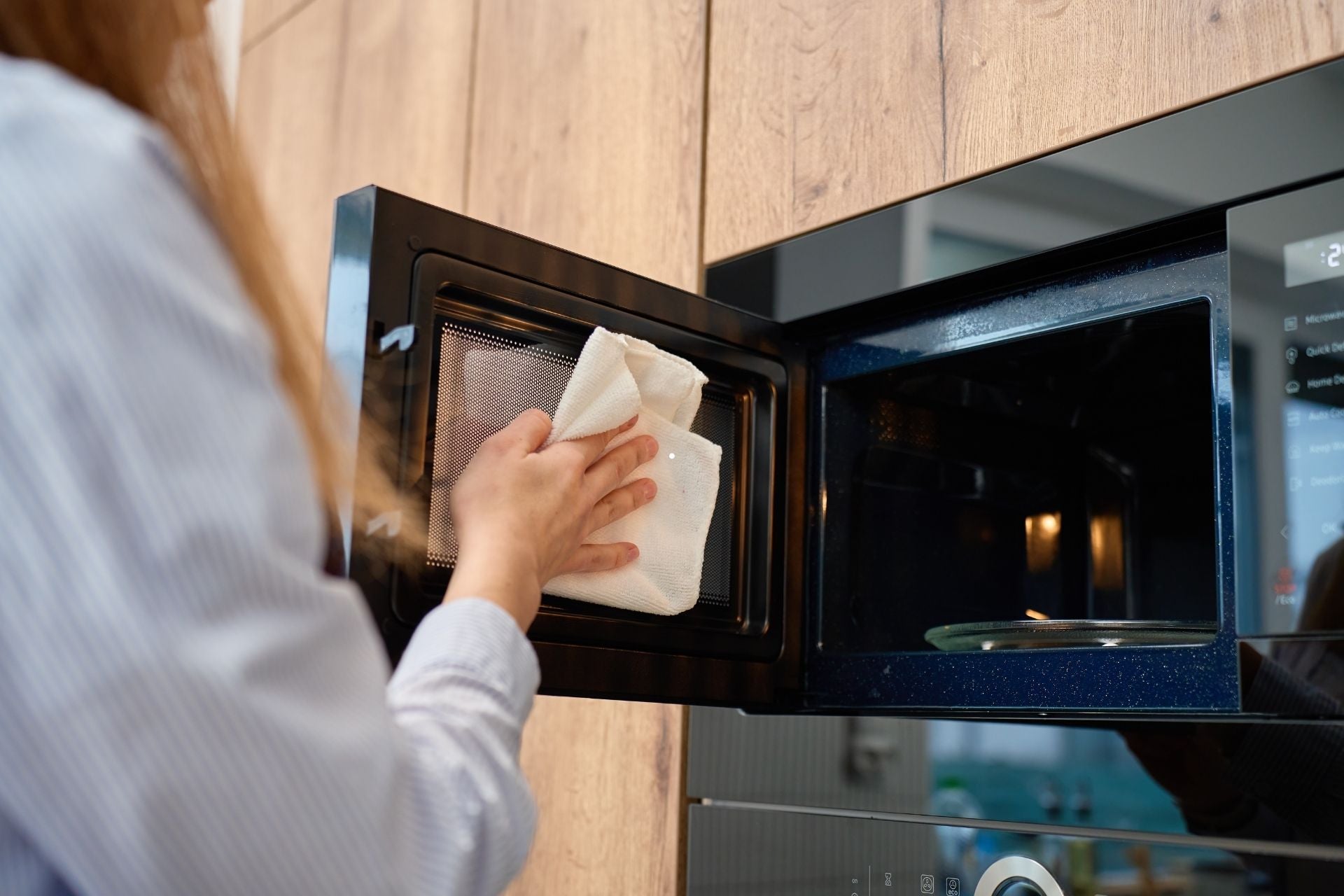
The easiest way to clean a microwave does not involve a single spray bottle. Steam does the work. A bowl of water with vinegar or lemon, a few minutes on high, and the grease and dried-on splatters wipe away with a cloth. No bleach, no ammonia, no fumes in the one appliance you heat your food in.
Here is the natural method start to finish, plus what to do about smells, stuck-on spots, and the one thing you should never do to a microwave.
The steam method, step by step
This is the whole trick, and it takes about ten minutes with two of them hands-off.
- Fill a microwave-safe bowl with 1 cup of water and 1 cup of white vinegar. No vinegar on hand? Use a cup of water with a few slices of lemon or a couple tablespoons of lemon juice instead.
- Microwave on high for 3 to 5 minutes, until the liquid boils and the window fogs up with steam.
- Leave the door closed for another 5 minutes. This is the part people skip. The steam is softening the grime while you wait.
- Open up, take the bowl out carefully because it is hot, and wipe the walls, ceiling, and floor with a damp cloth. Softened food should come away with almost no pressure.
For stuck-on, crusty spots
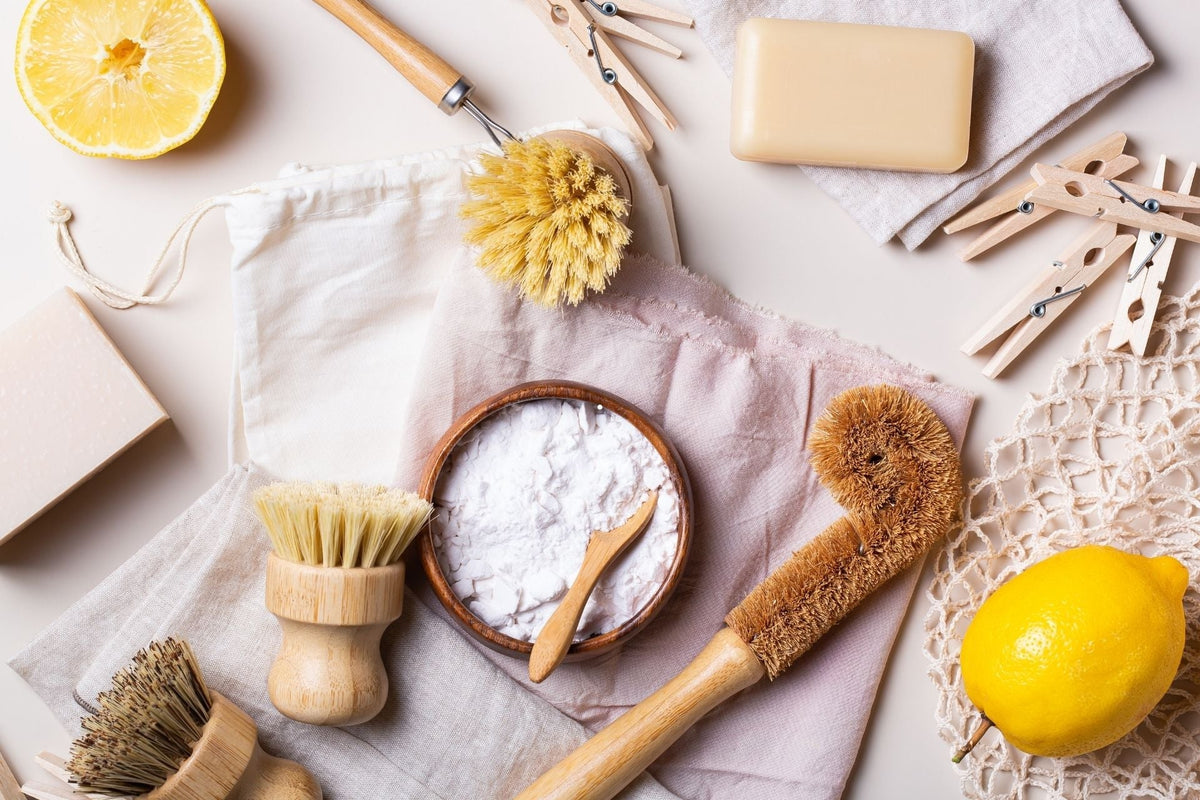
Anything that survives the steam gets a paste. Mix baking soda with a little water until it is spreadable, dab it on the crusty spot, give it a few minutes, then wipe. Baking soda is a mild abrasive, so it lifts baked-on food without the scratches a scouring pad leaves behind.
The glass tray and the door
Take the glass turntable out and wash it in the sink like a dish, with warm water and a little dish soap. For the door and its window, a cloth dampened with plain soapy water is all you need. Glass streaks when you use the wrong thing on it, so save any all-purpose or tablet cleaner for the counters and skip it here.
Getting rid of the smell
If a burned-popcorn or fish smell lingers after cleaning, the same steam bowl handles it. Run a fresh bowl of water with lemon slices for a few minutes and leave the door shut so the citrus steam sits. For a stubborn smell, leave an open bowl of baking soda inside overnight with the microwave off, and it will pull the odor out.
What not to use
A microwave interior is a painted metal cavity, and a few common cleaners cause more harm than good.
- No bleach or ammonia. The fumes linger in a sealed box you later heat food in, and bleach can pit the interior. This is the one to remember.
- No abrasive scouring pads on the walls. They scratch the coating, and scratches are where the next mess grabs hold.
- No soaking. Do not let water pool near the vents or the waveguide cover on the side wall.
Keeping it clean the low-waste way
Most microwave messes are splatters, and a cover stops them at the source. A plate turned upside down over your food works as well as any gadget. When you do wipe down, a reusable cloth beats a roll of paper towels for the same job with none of the waste.
For the counter and the appliance fronts around it, a mineral-based cleaner like our Multi Cleaner Tablet handles the sealed surfaces the steam method is not for. It is fragrance-free and cleans rather than disinfects, since it is not EPA registered. And if you would rather mix your own sprays for the rest of the kitchen, we put the working recipes in our homemade all-purpose cleaner guide.
Share:
Homemade All-Purpose Cleaner Recipes (and When to Skip the Mixing)
Are Cleaning Products Toxic and How to Tell