

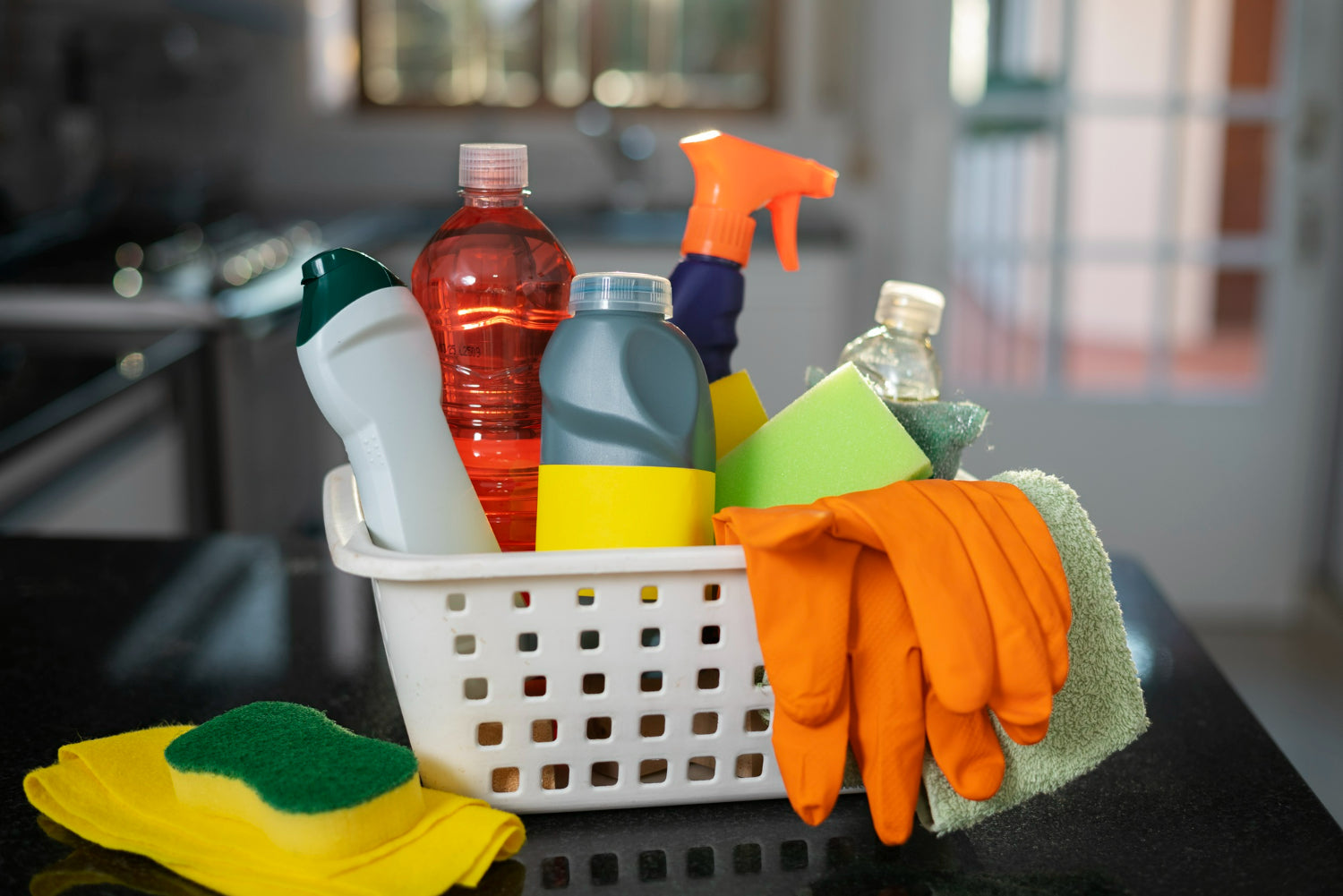
Cleaning Refill Math for Everyday Use
Cleaning ramps up when school is out. There are sticky counters, sandy floors, and more dishes than usual. That means we reach for sprays, soaps, and trash bags a lot more. If we care about waste, the big question is not only what is in the bottle, but how that bottle got to our home and what happens when it is empty.
Here, we are going to break down the real, simple math behind cleaning product subscription refills and in-store concentrates. We will look at packaging, shipping, and how to compare them per use, not just per bottle. By the end, you will have a quick formula and an easy template you can use for almost anything on your cleaning shelf.
What Actually Creates Emissions in Cleaning Products
Every cleaning product has a little story behind it. If we zoom out, emissions mostly come from three places.
- Product ingredients
- Packaging around those ingredients
- Transport from factory to warehouse to your home
Concentrates, powders, and mineral-based tablets usually ship lighter than pre-mixed liquids. Many liquid cleaners are mostly water, which is heavy to move around. When the active ingredients are separated into a small tablet, the same cleaning power takes up a lot less space in a truck.
Packaging also matters. A few big things to look at:
- Material type, like plastic, glass, aluminum, or paper
- Packaging weight, which affects shipping
- End of life, meaning what you do with it after use
Glass and metal can often be recycled, and they feel sturdy in the hand. They are heavier though, so shipping them uses more fuel. Glass can also break, which can mean wasted product and replacement shipments. Plastic is light and hard to break, but it does not go away easily. Paper is light and usually easier to recycle, yet it is not strong enough alone for everything.
There is no perfect pick. Even refill systems use some mix of plastic, paper, and metal. Every option still travels on trucks, sometimes planes. That is why it helps to look at total impact across the whole life of the product, not just the green claims on the front.
Subscriptions vs Store Refills in Real Life
Now let us compare two common setups, a cleaning product subscription and a store refill trip.
A typical cleaning product subscription might look like this:
- Reusable plastic spray bottles you keep for a long time
- Small mineral-based tablets or concentrates that ship on a schedule
- Cardboard packaging and maybe a small paper insert
You refill the same bottle with water at home, drop in a tablet, and you are set. The product inside each packet is very light, so each shipment can carry several refills at once.
The store refill option might look like this:
- Driving or walking to a shop during errands
- Buying a concentrated cleaner or big jug
- Pouring it into a spray bottle you already have
In this case, your cleaning product often rides along with other stuff you are already buying, like groceries. The per-use transport impact of that one bottle gets spread across all the things in your cart.
Here is where the tradeoffs show up:
- Subscriptions use small boxes or padded mailers, which means more packaging per shipment
- Store runs use fuel if you drive an extra trip just for cleaner
- A larger bottle bought once can mean fewer shipments or trips
- Many people mix, using subscriptions for some items and in-store for others
For a lot of homes, a hybrid approach works best. Maybe delivery for certain staples you never want to run out of, and in-store refills for things you buy less often.
A Simple Per Use Formula You Can Actually Use
To make sense of all this, it helps to use one simple rule of thumb.
Packaging emissions per use
= total packaging weight in grams ÷ total number of refills or uses
Shipping emissions per use
= estimated shipping emissions for the shipment ÷ number of refills or uses in that order
You do not need perfect numbers for this. To estimate packaging weight without a scale, you can:
- Check product specs if they are listed
- Compare to a standard empty aluminum can
- Compare to a paper mailer or cardboard box you already know is light or heavy
For shipping, think about:
- Does the cleaning product ship alone, or with other items in the same box?
- Is it part of a regular subscription, or a last minute express order?
- Do you drive a special trip to the store, or just grab it during a weekly run?
Here is one quick example:
- Option A, mineral-based tablet refills shipped every 3 months, with enough tablets for 6 full spray bottles in each box
- Option B, a 32 ounce liquid concentrate picked up while you are already at the store, enough for the same 6 bottles
If the tablet packaging and small box are lighter than the single big plastic bottle, and the box ships with other household items, the per-use packaging and shipping impact can be quite low. If the subscription ships alone in a padded mailer every month, the extra packaging starts to add up. The goal is not to get a perfect score, just to see which direction each choice leans.
Your DIY Calculator or Template
To keep this simple, it helps to set up a one-page calculator. A tiny spreadsheet works great, or even a paper chart on your fridge. For each product you compare, you can fill in:
- Product
- Format (tablet, liquid, powder)
- Container material
- Container weight (rough guess)
- Uses per container
- Shipments or trips per year
- Estimated packaging per use
- Estimated trip or shipping per use
Once it is laid out like that, small patterns pop out. For example, you might notice that bumping a cleaning product subscription from every month to every 3 months cuts your packaging and shipping per use. Or that a heavy glass bottle is fine if you buy it only once a year and refill it with lighter packets.
You can also tweak the template for your life setup:
- Car commuters who pass a store daily
- People in walkable neighborhoods who rarely drive
- Apartment dwellers who depend on delivery
- Families that stock up in bulk a few times a year
Plastno offers mineral-based tablets, biodegradable bags, and reusable tools so shipping weight stays low and packaging stays simple. The same little calculator works for any brand though. The point is to give you a clear picture instead of a gut feeling.
Turning Numbers Into Real Life Choices
Once you have rough per-use numbers, start with your highest use items. Things like all-purpose sprays, dish soap, and trash bags move through your home fast, so small gains there matter more than fancy extras under the sink.
The math can help you decide to:
- Keep a cleaning product subscription for a few key items
- Shift some products to in-store concentrates picked up with regular groceries
- Stretch subscription frequency when you see you are stocked up
- Combine store trips instead of making single item drives
Numbers will not capture everything. Convenience is real. So is storage space. Reusing bottles is only good if they actually get reused and do not sit empty in a closet. Usually, the biggest shift is simply moving from heavy single-use jugs to any kind of concentrated system, whether that means tablets, powders, or thicker liquids you dilute at home.
From there, it is about fine-tuning so your habits match your math and your space. Lower impact cleaning is not about being perfect. It is a series of small, everyday choices, like skipping an express shipment, reusing the bottle you already have, and choosing lighter refills when you can. Over a few years, that quiet math adds up.
Once you have run the numbers for your own home, the lower-impact setup is usually the one you will actually stick with. If a scheduled delivery is what keeps you stocked without extra store runs, a flexible cleaning product subscription lets you set the cadence, adjust timing, and keep shipping weight low with tablets and refills instead of heavy jugs.

Share:
Biodegradable vs. Compostable: What Shoppers Need to Know
Zero Waste Cleaning Kits for First Apartments That Actually Get Used