

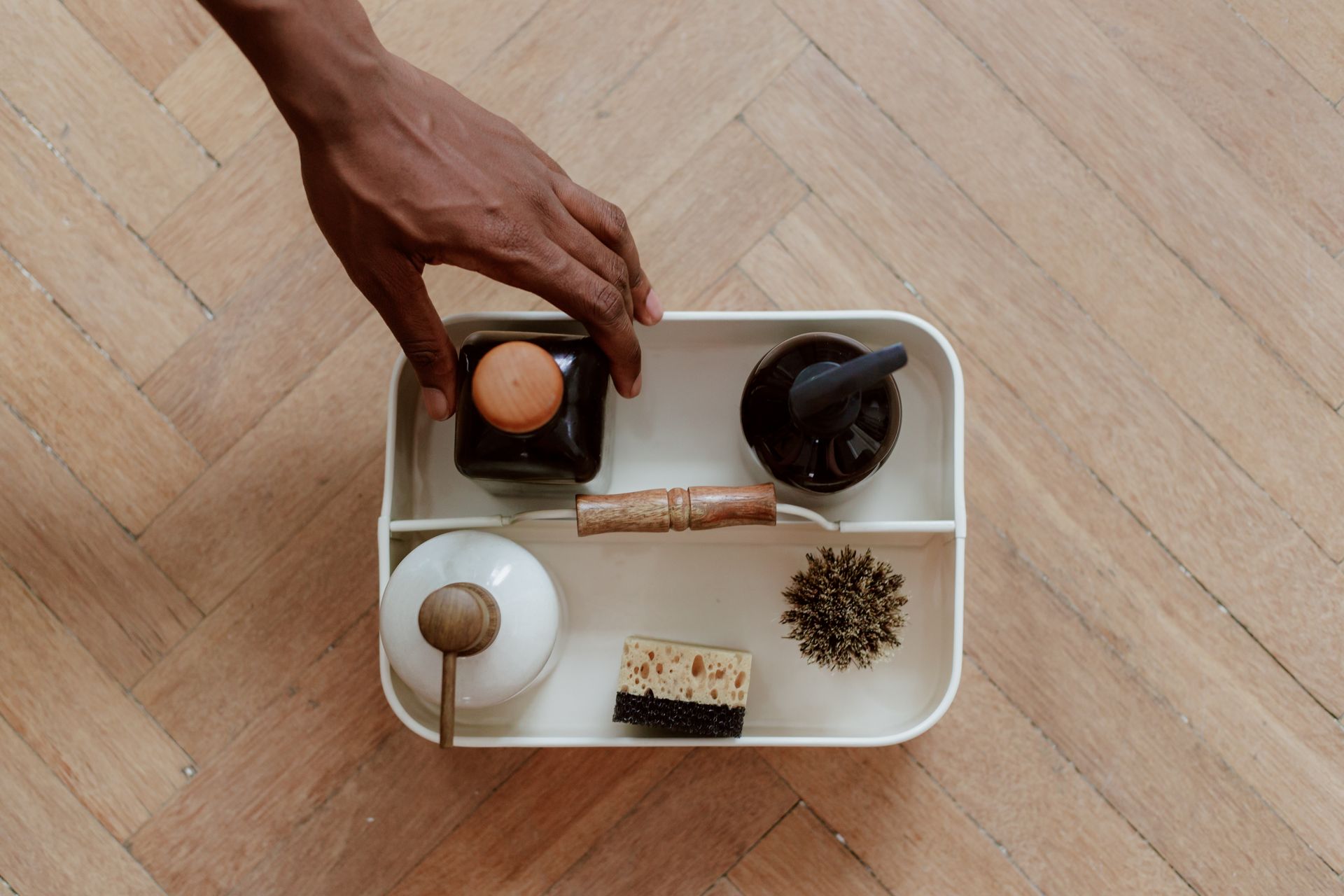
Getting keys to a first apartment feels big and grown up. Then you look around and realize you own one half-dry bottle of mystery cleaner and a roll of paper towels. That was our exact setup in a tiny first place, and it was not cute.
We started Plastno after a lot of those “uh oh, how do adults clean” moments. The goal here is simple: help you set up zero-waste cleaning kits that you will actually grab every week, not just stash under the sink. We will keep it real about tight budgets, tiny storage, roommates, and early summer move-ins when it is too hot to care about complicated routines.
What a Zero Waste Cleaning Kit Really Needs
When we say zero-waste cleaning kits, we are talking about less plastic, fewer single-use bottles, and products that actually get used up. Not perfection. Not a mason jar of trash. Just less waste in the stuff you reach for every day.
It helps to think in zones:
- Kitchen
- Bathroom
- Everything else like dust, floors, and glass
Across all three zones, a small base kit pulls a lot of weight:
- One refillable spray bottle plus mineral-based cleaner tablets for most hard surfaces
- A short stack of washable cloths and 1 or 2 biodegradable sponges
- A broom or vacuum, plus a simple mop or mop pad that fits in a tiny closet
“Start here” items for the first 90 days:
- Refillable spray bottle with tablets
- 3 to 5 cloths
- 1 or 2 biodegradable sponges
- Broom and dustpan, or shared vacuum
“Nice to have” later:
- Extra bottle for glass and mirrors
- Separate brush for grout or corners
- Extra cloth colors for more zones
There are limits, and it is better to name them. The spray nozzle is still plastic. Cloths need water and energy to wash. Not every roommate will give up paper towels. That is okay. The point is that instead of a heavy box of different plastic bottles, you carry a few light tools that you refill and finish.
Building A Starter Kit For Tiny Kitchens
First apartments often have summer move-in kitchens where the counter is also the desk and maybe the only real table. Storage is one cabinet under the sink, and half of that is pipes. So the kitchen kit has to be small and easy.
Quick zero-waste-leaning kitchen checklist:
- One refillable spray bottle with a mineral-based cleaner tablet for counters, stove, fridge shelves, table, and even cabinet doors
- Biodegradable sponges for dishes and quick wipe-downs
- A couple of cloths for drying dishes and polishing surfaces
- Trash bags made with less plastic, sized for a small bin
For these bags, keep extras in a cool, dry spot so they last on the shelf. Hot, sunny spots speed up wear. If the kitchen bakes in the afternoon, a closet or bedroom shelf is often better.
To make the kit part of your routine, not part of the clutter:
- Keep the spray and sponge out where you cook, not buried in a cabinet
- Wipe counters while coffee brews
- Do a quick stovetop wipe while pasta water heats
There are tradeoffs:
- Glass spray bottles feel solid and look nice, but they can break on tile. If you are clumsy or have stone floors, think about where you store them.
- Mineral-based tablets come with less packaging and are light to move, but you do need tap water and a few minutes for them to dissolve.
- Lower-plastic trash bags help cut down on plastic in your daily kitchen bin, but in hot weather they should not sit packed full for days. Take them out more often when it is hot.
Bathroom Cleaning That Does Not Take A Full Caddy
First apartment bathrooms are usually small, often shared, and low on storage. A giant plastic cleaning caddy is not the move. The good news is the same simple kit can cover a lot.
Minimal bathroom setup using the base kit:
- The same refillable bottle and mineral-based cleaner tablets for sink, counter, and the outside of the toilet
- One cloth in a different color or with a clear label for bathroom use
- Optional small brush for grout or corners that can hang on a hook
Storage ideas for real bathrooms:
- A small bin under the sink with the spray, bathroom cloth, and brush
- A little shelf or crate that everyone knows is the “clean kit” spot
- A hanging caddy on the back of the door if there is no cabinet space at all
Shared spaces mean shared habits and some mess. Tradeoffs help keep the peace:
- Not everyone will remember which cloth is for what, so color-coding or writing “bathroom” on a tag actually matters.
- Someone will probably keep a bottle of classic blue cleaner. That is fine. The goal is less waste, not controlling every product in the apartment.
- Mineral-based tablets save you from hauling big bottles up stairs, but you may want to remind roommates to refill the spray bottle instead of buying a fresh one every time it is empty.
Trash, Recycling, And Roommate-Proof Habits
In summer, trash runs get sweaty fast. Bins live in hot alleys, recycling might be down the block, and no one wants a smelly kitchen. A simple system goes a long way.
Lower-plastic trash bags fit into zero-waste cleaning kits like this:
- Great for kitchen and bathroom bins that get taken out often
- Need shade and a dry spot for storage so they stay strong
- Not a match for long-term storage or really heavy, sharp trash that could tear through
To cut down on waste without turning into a full zero-waste household:
- Keep a small box or bin for paper and cardboard near the door or desk
- Rinse jars and cans right after cooking so they do not sit crusty in the sink
- Use one clear trash spot for “stuff we are not sure is recyclable” so you can check building rules later
Real life will still sneak in. There will be late-night takeout with mystery plastics. Some buildings barely support recycling. That is a building problem, not a personal failure. The win is less plastic in your daily routine and easier ways to keep the place clean.
To make your kit roommate-proof:
- Put the refillable spray bottle and cloths wherever people used to keep disposable wipes
- Add a small marker line that says “refill with tablet and water to here” so anyone can mix a new batch
- Keep spare mineral-based tablets in a visible jar so refilling feels casual, like grabbing tea bags
Quick move-in conversations can help:
- Agree on what “clean enough” means for counters and sinks
- Decide who buys which refills so one person is not covering everything
- In warmer months, take out bags more often and do a 10-minute weekly reset where everyone helps
On a single afternoon you can set up a simple, zero-waste-leaning cleaning kit that works with your actual life. One refillable bottle mixed with a mineral-based tablet, a couple of biodegradable sponges, a few cloths where you really use them, and low-plastic trash bags in the main bin. A quick first wipe of your counters and bathroom sink makes the space feel yours.
At Plastno, we built things like cleaner tablets, biodegradable sponges, and trash bags made with less plastic to fit right into small apartments and shared spaces. Start with a tiny setup that feels easy, then adjust as you see what you actually reach for week after week.
Whatever your first place looks like, a small kit you actually refill beats a cabinet full of bottles you forget about. If you would rather start with the basics already matched together, our zero waste cleaning kits are built to be simple to refill and compact enough to fit a tiny apartment.
Share:
Cleaning Subscription Emissions: Refills vs. In-Store Concentrates + Calculator
What BPI Certification Means for Plastno's Compostable Trash Bags