

BPI certification is one of the most recognized compost marks in North America, and it is one of the two our trash bags carry. If you have seen the BPI logo on a compostable product and wondered what it actually guarantees, this is the plain version: what BPI is, what it tests, how it differs from a home-compost certification, and what it means for the bags in your kitchen.
What BPI Certification Is
BPI stands for the Biodegradable Products Institute, the leading North American certifier of compostable products. The BPI mark verifies that a product fully breaks down in commercial or municipal composting facilities and meets a recognized scientific standard. BPI also audits the material formulation and supplier chain, and it keeps a public database so retailers and shoppers can confirm a product is really certified.
What BPI Actually Tests
BPI certification is built on the ASTM D6400 standard for compostable plastics. To pass, a product has to disintegrate and break down in the heat and controlled moisture of a commercial composting facility, and it has to do so without leaving behind toxic residue. The key word is commercial. BPI on its own certifies industrial composting, not backyard composting, which is a separate and more demanding test.
BPI vs TUV OK Compost HOME
The two certifications cover different environments:
- BPI verifies composting in a commercial facility under ASTM D6400
- TUV OK Compost HOME verifies composting in a backyard bin at normal outdoor temperatures
Commercial compost access varies a lot by region, so a bag that is only BPI certified may need a facility you cannot easily reach. That is why we pair it with the home certification. You can read the home-compost side in our guide to what TUV OK Compost HOME means.
What BPI Means for Plastno's Compostable Trash Bags
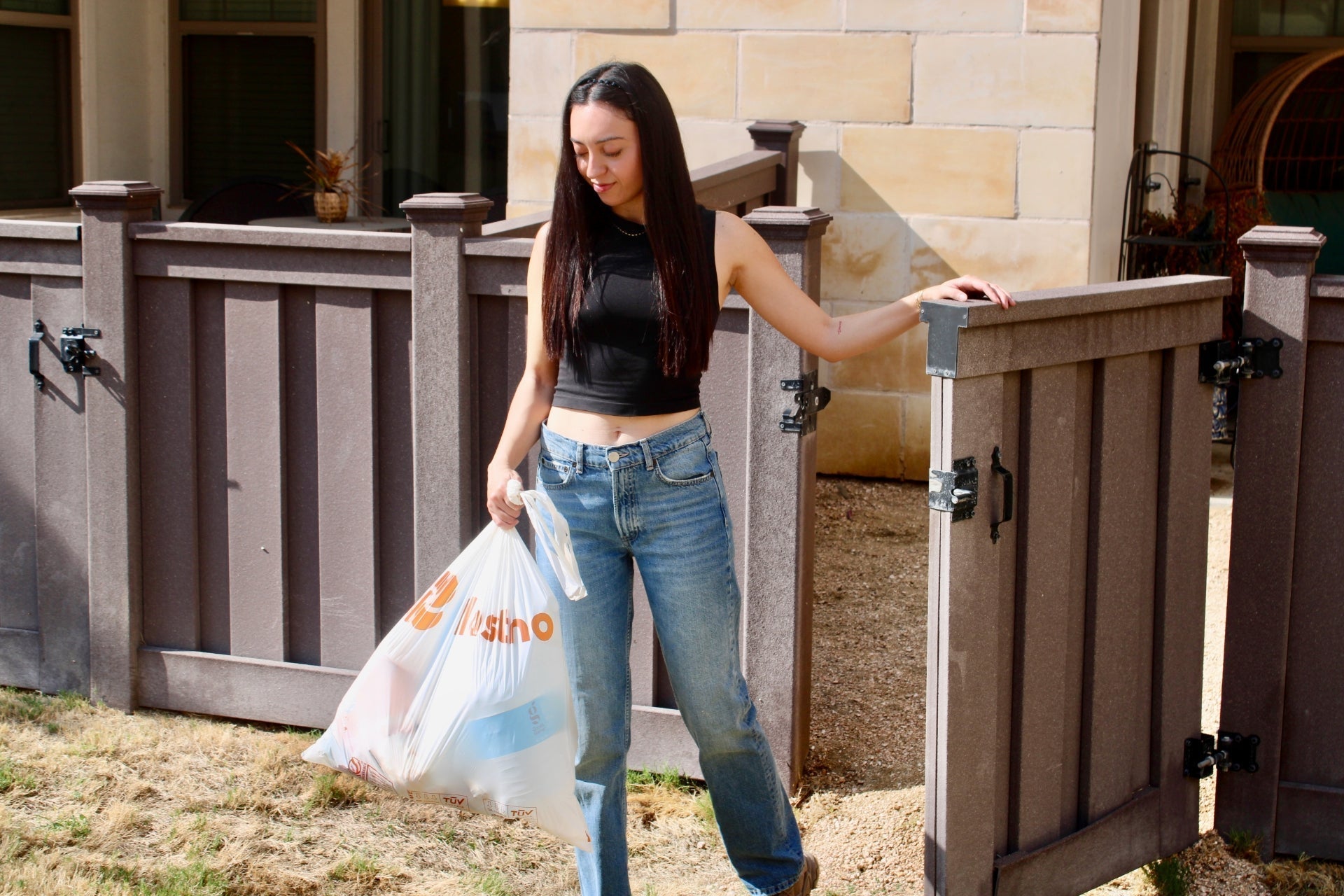
Our compostable trash bags are BPI certified and TUV OK Compost HOME certified, so they are verified for both the facility and the backyard. They are made from a blend of cornstarch, PLA, and PBAT. PBAT is petroleum-derived but engineered to compost, which is the honest reason we call the bags compostable rather than plastic-free. Both certifications are listed on our certifications page so you can verify them directly.
How to Compost a BPI Certified Bag
If you have access to commercial composting, a BPI certified bag is built for exactly that stream. A few pointers:
- Check whether your municipal or curbside program accepts certified compostable bags, since rules vary
- Use the bag for food scraps and organics, not as a recycling bag
- Store the roll cool and dry and use it within about 12 months
BPI tells you a bag will compost in a facility, and pairing it with a home certification tells you it will compost in your yard too. When you are comparing compostable trash bags, the certifications are the part worth reading first.



Share:
Zero Waste Cleaning Kits for First Apartments That Actually Get Used
What Leaping Bunny Certification Means for Plastno's Cleaning Tablets