

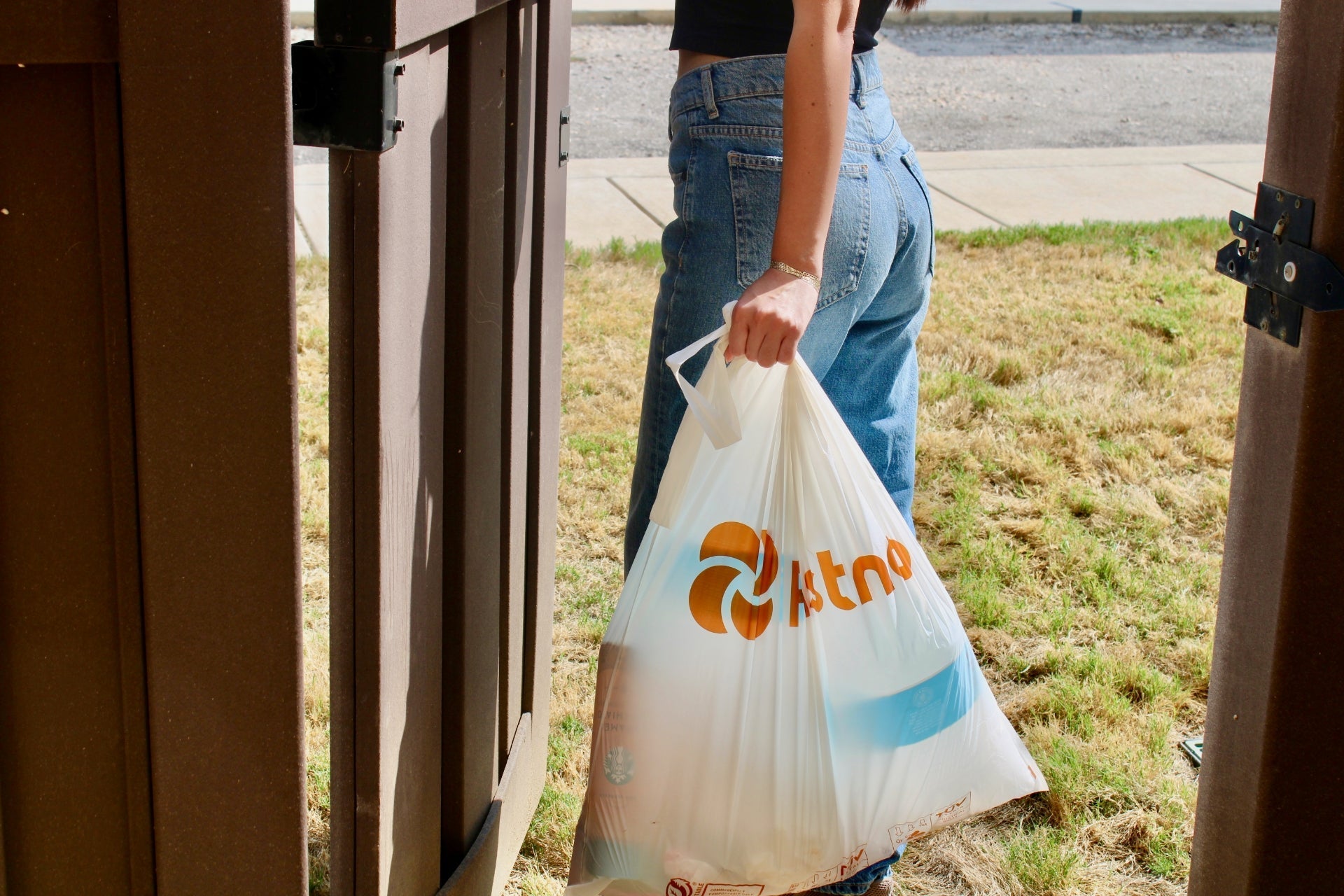
When a trash bag says it is home compostable, TUV OK Compost HOME is one of the few certifications that actually backs the claim. It is the standard built specifically for backyard composting, and it is the more demanding of the two compost certifications our trash bags carry. Here is what it tests, why it is harder to pass than industrial certification, and what it means for the bags in your kitchen.
What TUV OK Compost HOME Certifies
TUV runs the OK Compost HOME program, the international standard for home-compostable products. To earn it, a product has to break down in a backyard compost environment at ambient temperatures, roughly 20 to 30 degrees Celsius. The certification reviews the material formulation, how completely the finished product disintegrates in a controlled home-compost test, and whether it leaves behind anything toxic.
For clarity on naming, we write the certifier as TUV. You may see the umlaut spelling elsewhere, but the program and the standard are the same.
Why Home Composting Is the Harder Test
Industrial composting facilities run hot and stay tightly controlled, which makes breakdown easier. A backyard pile is cooler, wetter or drier depending on the week, and never managed to the same precision. A material that breaks down in those messier, lower-temperature conditions has cleared a tougher bar. That is why a product certified for home compost is also considered compostable industrially, but not the other way around.
TUV OK Compost HOME vs BPI
The two certifications answer different questions:
- BPI verifies composting in commercial facilities under ASTM D6400
- TUV OK Compost HOME verifies composting in a backyard bin at normal outdoor temperatures
For most US households, the home mark is the meaningful one, because commercial compost access is inconsistent from city to city. If you cannot reach an industrial facility, a home-compost certification is what lets you compost the bag where you actually live. We cover the commercial side in more detail in our guide to what BPI certification means.
What It Means for Plastno Trash Bags
Our compostable trash bags are TUV OK Compost HOME certified and BPI certified, so they are tested for both the backyard and the facility. They are made from a blend of cornstarch, PLA, and PBAT. PBAT is petroleum-derived but engineered to compost, which is why we describe the bags as compostable rather than plastic-free. You can confirm both certifications on our certifications page.
How to Compost a Certified Bag at Home
A few habits help the bag do its job:
- Store the roll somewhere cool and dry, since heat and humidity start the breakdown early
- Drain wet waste before tying off so the bag stays stronger in the bin
- Add it to an active backyard compost pile along with food scraps and other organics
If you are deciding which compostable bag to trust, the home-compost certification is the detail worth checking first. It is the one that tells you the bag will break down in your yard, not just in a facility you may never reach.



Share:
What Leaping Bunny Certification Means for Plastno's Cleaning Tablets
Is Polyvinyl Alcohol a Plastic? What PVA Is and Whether It's Safe