

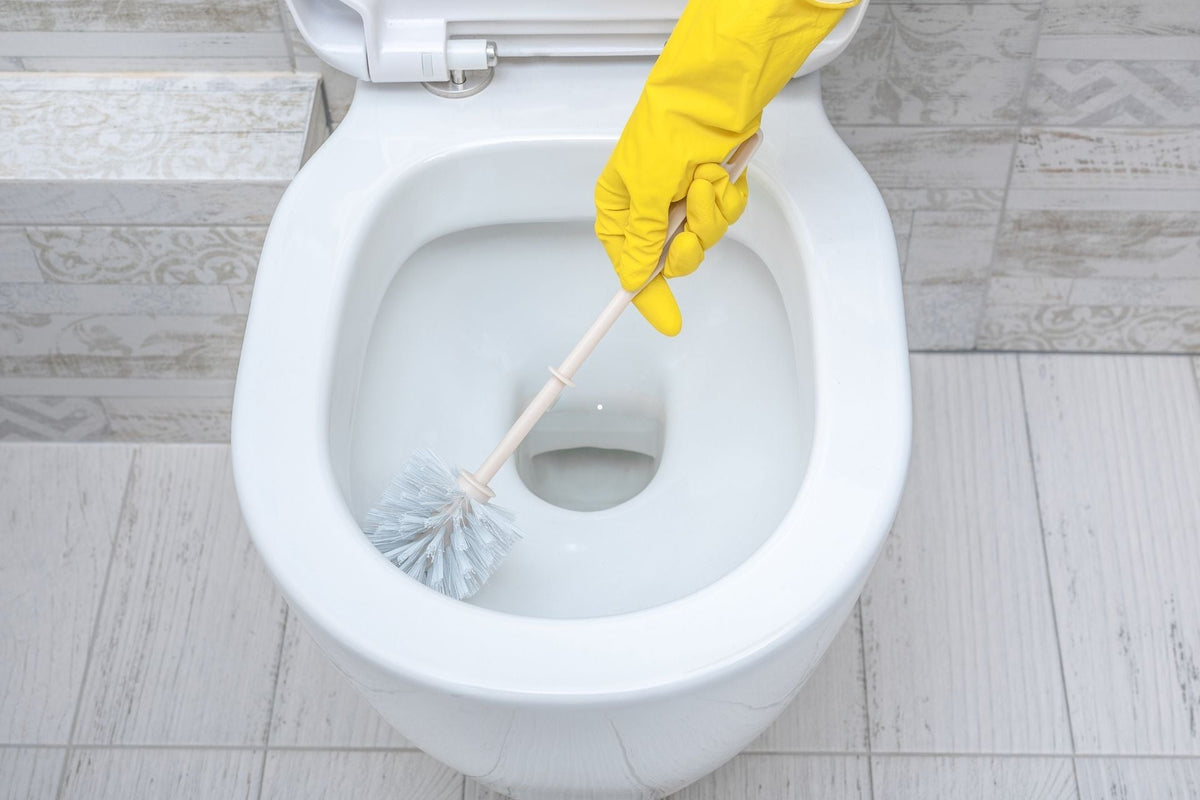
That ring around the waterline and the brown or rust-colored streaks below it are almost never dirt. They are mineral deposits from hard water, sometimes rust from the pipes, sometimes a pink or black film from bacteria or mold. Bleach only lightens the color for a day or two and then the stain comes back, because bleach does not dissolve minerals. The things that actually remove these stains are mild acids you probably already own.
This is the natural way to do it, no bleach and no wall of single-use plastic cleaner bottles. Here is what each stain is, the methods that remove it, the one step most people skip, and what you should never mix.
Know what you are looking at
Matching the method to the stain saves you a lot of scrubbing.
- White, gray, or brown ring at the waterline is limescale, hardened minerals from hard water. Acid dissolves it.
- Rust or orange streaks are iron in the water supply. Acid handles this too.
- A pink or orange film is usually a bacteria that grows in damp bathrooms, not rust. It wipes away easily and comes back if the bowl sits unused.
- Black spots are mold or mildew, most common in a guest bath that does not get flushed often.
Most stains are the first two, which is why an acid, not bleach, is the real fix.
The step that makes everything work
Lower the water level first. Every method below works better on a dry, exposed stain than on one sitting under an inch of water that dilutes your cleaner. Turn off the supply valve behind the toilet, flush once to drain most of the bowl, then push the last of the water down the trap with your toilet brush. Now the stained porcelain is exposed and your cleaner hits it at full strength.
The natural methods, by stain
Everyday stains, vinegar and baking soda
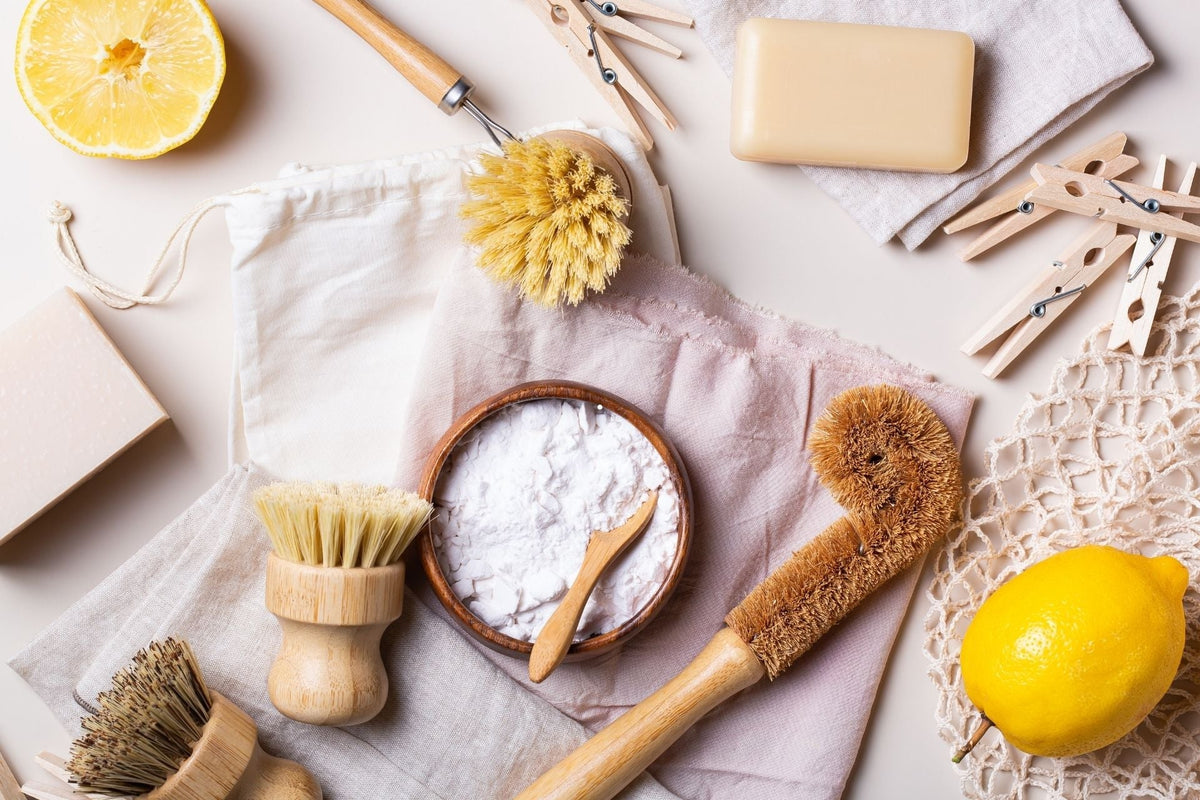
Pour about a cup of distilled white vinegar around the bowl, coating the waterline. Add half a cup of baking soda, let it fizz, and leave it 20 to 30 minutes. Scrub with the toilet brush and flush. This clears most light rings and discoloration.
Rings above the waterline, the paper-towel trick
The waterline ring and any streaks under the rim are the hard part, because liquid runs right off a vertical surface. Soak a few paper towels or a wad of toilet paper in vinegar and press them against the stain so the acid stays in contact. Leave it an hour, or overnight for a heavy ring, then scrub. Throw the paper towels in the trash, do not flush them.
Hard-water and limescale rings, citric acid
For a stubborn mineral ring, citric acid is stronger than vinegar and has almost no smell. Sprinkle a few tablespoons into the emptied bowl, add enough warm water to cover the stain, and let it soak for a few hours or overnight. Use warm water, never boiling, because a sudden temperature change can crack the porcelain.
Really stubborn rings, borax then a pumice stone
Sprinkle a quarter cup of borax into the bowl, add a cup of vinegar, wait 20 to 30 minutes, and scrub. If a mineral ring still will not budge, a pumice stone made for toilets is the last resort. Keep both the stone and the porcelain soaking wet the whole time so it grinds off the deposit without scratching the glaze. Use it only on the porcelain bowl, never on the seat or any enameled surface.
What to never do
A few of these matter for your safety, not just the porcelain.
- Never mix bleach with vinegar or any acid. It releases chlorine gas. This is the reason a natural, single-acid method is the safer one to reach for.
- Use warm water, not boiling. Pouring boiling water into a cold bowl can crack it.
- Do not flush the paper towels you pressed on the stains. They belong in the trash.
- Wear gloves for the citric acid and borax steps, and open a window.
Keep the ring from coming back
A stain that keeps returning is a hard-water problem, not a cleaning failure. A quick vinegar swish and a brush once a week stops minerals from hardening into a ring in the first place, which is far less work than removing a set-in one. In a guest bath that rarely gets used, flushing every few days keeps the pink film and mold from settling.
A low-waste cleaner for your everyday surfaces
The bowl is a job for the pantry acids above. For the everyday surfaces around it, like the sink and a sealed counter, our Multi Cleaner Tablet is a refillable, fragrance-free multi-surface spray for sealed hard surfaces that skips the plastic bottle. Drop one tablet in a bottle of tap water and you have a mild spray you can keep by the sink. It is mineral-based, and it cleans rather than disinfects, since it is not EPA registered. For soap scum, limescale, mirrors and glass, or anything that needs disinfecting, reach for a cleaner made for that job. If you are setting up from scratch, the Multi Cleaner Set pairs the tablets with a refillable glass bottle, and here are the homemade all-purpose cleaner recipes if you would rather mix your own.
Match the acid to the stain, lower the water first, and skip the bleach. A toilet ring is minerals, and minerals come off with the vinegar or citric acid already in your kitchen, no harsh chemicals and no bottle to throw away.
Share:
Are Cleaning Products Toxic and How to Tell
Why Your Spray Bottle Stops Spraying and How to Fix It