

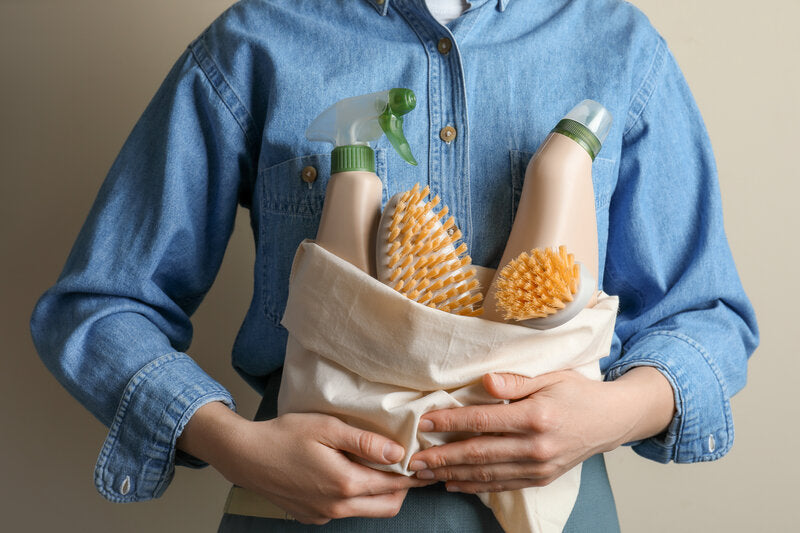
Eco-friendly cleaning sounds like it should be complicated or expensive. It is neither. At its core it means cleaning your home with fewer harsh chemicals and less waste, using tools you can reuse instead of throw away. This guide covers what that actually involves, the recipes and swaps to start with, and how to keep a green clean working over time.
What eco-friendly cleaning actually means
There is no official badge for a clean being green, so it helps to know what you are aiming for. Eco-friendly cleaning usually comes down to three things: fewer harsh chemicals going down the drain, less single-use plastic and packaging, and reusable tools that last. One honest note: the word natural is not regulated, so a label alone does not tell you much. Look at the actual ingredients and any real certifications instead of the marketing.
Start with what you already have
The greenest product is the one you already own. Before buying anything, use up what is under the sink and take stock of cloths, jars, and bottles you can repurpose. Then make changes one swap at a time as things run out. Replacing everything at once just creates a different pile of waste.
Make your own cleaners
A few pantry basics handle most of the house:
- All-purpose spray: equal parts white vinegar and water. It cuts grease, lifts grime, and deodorizes. Skip it on natural stone, where the acid can etch.
- Scrubbing paste: baking soda and a little water for sinks, stovetops, and tubs.
- Citrus vinegar: soak citrus peels in vinegar for two weeks, strain, and dilute for a fresher-smelling spray.
- Cutting boards: half a lemon and a pinch of salt to lift stains and odor.
The reusable swaps that cut the most waste
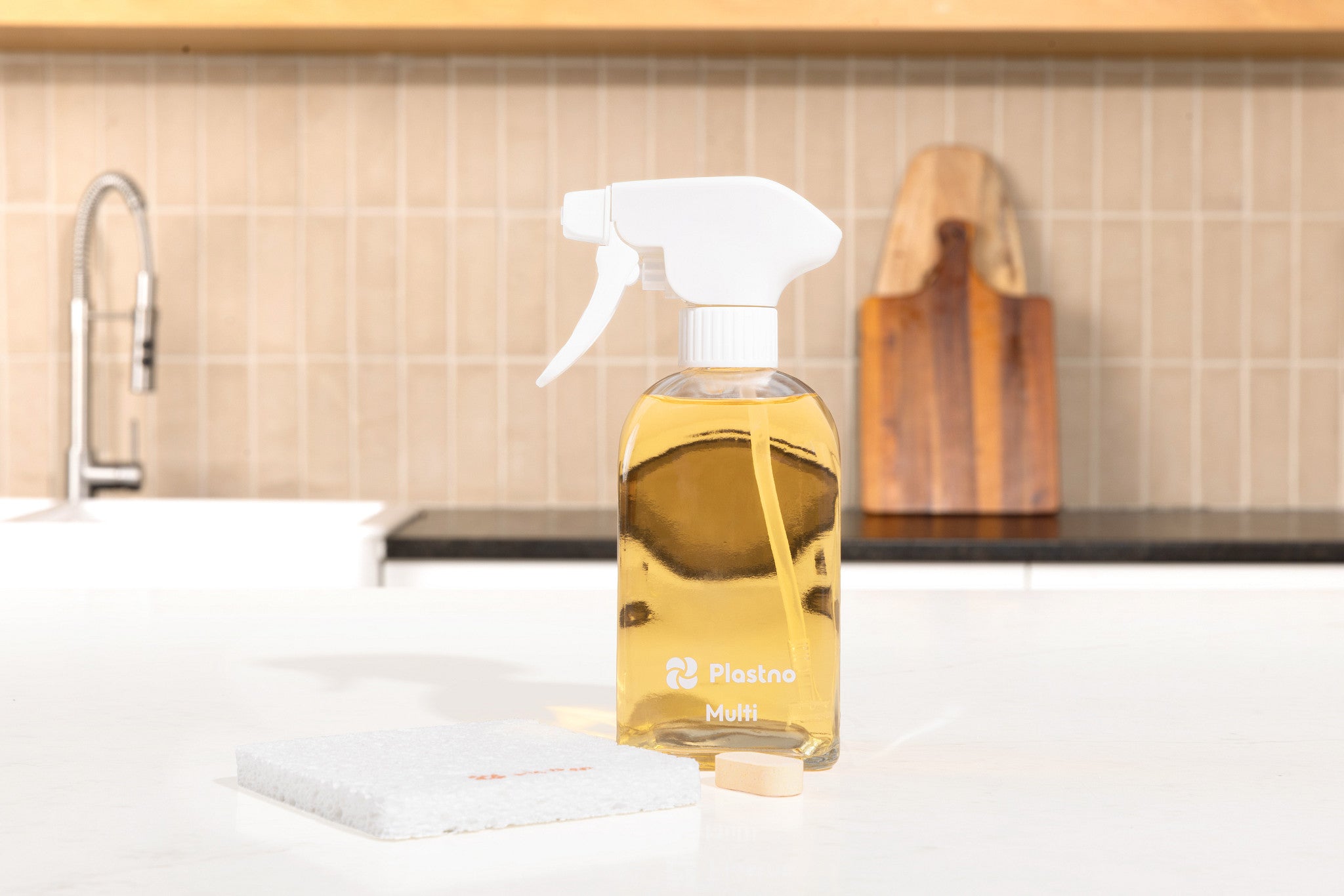
Tools matter as much as cleaners. A sponge cloth replaces paper towels, a biodegradable scrub sponge replaces the plastic kind that sheds microplastics, and a refillable mineral-based cleaner handles everyday messes without synthetic fragrance. For the full short list, see our guide to eco-friendly cleaning essentials.
Why green cleaners sometimes fall short
People often switch to natural cleaners, decide they do not work, and switch back. Usually it is technique, not the product. Natural cleaners tend to work by dwelling rather than foaming, so give a spray a minute to sit before wiping. Use the right tool for scrubbing, work in sections, and remember that a concentrated cleaner needs the dilution on the label to perform. Done that way, they handle the vast majority of household jobs.
Clean room by room
The same basics adapt to every room. For the two that get dirtiest, we have detailed walkthroughs for zero waste kitchen cleaning and plastic-free bathroom cleaning.
Build it into a routine
Eco-friendly cleaning sticks when it is a habit rather than a once-a-season scramble. A simple schedule keeps each job small. Here is how to make a cleaning schedule that actually sticks.
Share:
Eco-Friendly Laundry Tips for a Greener Wash
Pet-Friendly Cleaning Products: What to Use and What to Skip