

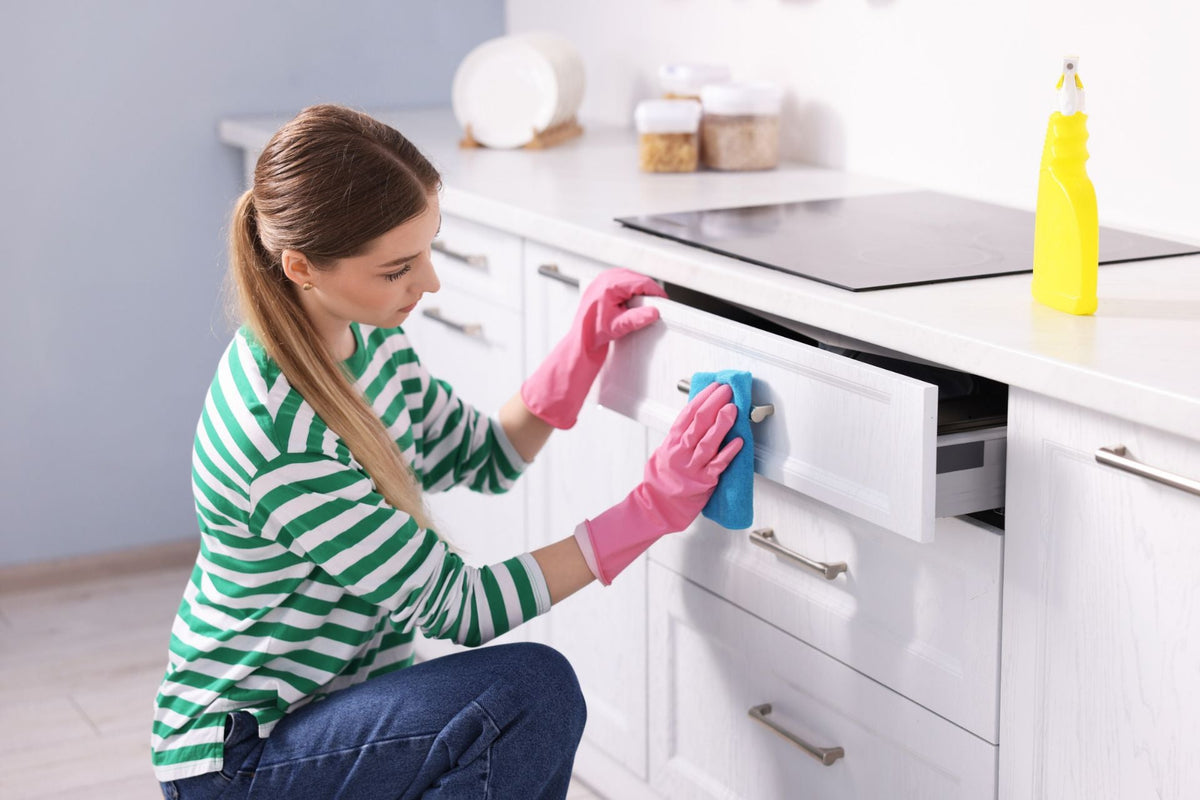
The cabinets next to the stove get a film you do not notice until you touch them. Cooking sends tiny droplets of oil into the air, they land on the nearest doors, dust sticks to them, and the longer that layer sits the tackier it gets.
The best way to clean kitchen cabinets is simpler than most guides make it. Warm water with a little dish soap, a soft cloth wrung out until it is barely damp, a plain-water wipe after, and drying right away will clean most kitchen cabinets, including greasy ones. The finish on your cabinets decides everything else.
Fair warning about who is telling you this: we make a cleaning tablet, and it works on sealed cabinets. Most of this guide does not need it. Dish soap does the bulk of the job, and we would rather say that up front.
What you need to clean kitchen cabinets
- Dish soap and warm water
- Two soft cloths, one for washing and one for rinsing
- A dry, lint-free towel
- A soft brush or an old toothbrush for grooves and corners
- A non-scratch sponge for sticky spots
For the sponge, skip anything with a green scouring layer. Our Soak Sponge is plant-based cellulose with no scrubbing side, so it is soft enough for a cabinet finish, and it is biodegradable when it wears out.
Check what finish your cabinets have first
Most kitchen cabinets fall into one of four groups, and they do not all want the same treatment.
- Painted: smooth, solid color, often with a clear coat on top.
- Stained and sealed wood: you can see the wood grain under a clear, slightly glossy finish.
- Laminate or thermofoil: a smooth plastic surface over an engineered wood core, usually very uniform.
- Unsealed or oiled wood: matte, feels like bare wood, and darkens when it gets wet.
Not sure? Put one drop of water inside a door where nobody will see it. If it beads up, the finish is sealed. If it soaks in and leaves a dark spot, the wood is unsealed, and you should use as little water as possible and follow the care instructions from whoever made or finished the cabinets.
How to clean kitchen cabinets, step by step
- Start at the top. If your cabinets do not reach the ceiling, the tops are holding dust and grease. Vacuum or wipe them first so nothing falls onto the doors you just cleaned.
- Mix warm water with a few drops of dish soap. A few drops, not a squeeze. Too much soap leaves its own sticky film.
- Wring the cloth until it is barely damp. Water that runs into seams and edges is what makes doors swell and paint lift.
- Wipe from the top down, one section at a time. On wood, follow the grain.
- Get the grooves with the soft brush. Raised panels and edges collect the most grime.
- Wipe again with a cloth dampened in plain water. This lifts the soap residue that dust would otherwise stick to.
- Dry each section with a towel as you go. Water left standing near the sink, range, and dishwasher is what damages a finish.
Handles and knobs get the same damp cloth and a quick dry. Keep cleaner out of the hinges, where it collects and holds moisture.
How to clean greasy kitchen cabinets
To degrease kitchen cabinets, patience matters more than a stronger product. The usual mistake is scrubbing, which pushes the grease around and can wear down the finish.
- Soften it first. Hold a warm, soapy cloth against the sticky spot for 30 to 60 seconds before you wipe.
- Wipe, do not scrub. Use a non-scratch sponge in small circles. Rinse the sponge often so you are not spreading grease back on.
- Repeat instead of pressing harder. A thick layer near the range hood can take two or three passes.
- Rinse and dry the same way as the everyday clean.
On sealed cabinets, a mild cleaner made for sealed surfaces can make this faster. Our multi cleaner tablet is mineral-based and built on washing soda, which is alkaline, and alkaline cleaners are good at lifting kitchen grease. Drop one tablet into 16 ounces of warm water and give it 20 to 30 minutes to dissolve. Spray it onto your cloth rather than onto the cabinet, wipe, then rinse and dry.
Do not use it on glass cabinet doors, stainless steel handles or hardware, or unsealed or oiled wood. And like any new cleaner, try it inside a door first. If you want the tablet and a refillable glass spray bottle together, that is our Multi Cleaner Set.
What is the best thing to clean kitchen cabinets with?
Dish soap and warm water, for almost every finish. Cabinet makers say the same thing. North Point Cabinetry's care sheet recommends common dishwashing liquid to remove grease, followed by a damp cloth and a thorough dry. KraftMaid's cleaning guide calls for warm water with a non-abrasive household cleaner and a soft cloth.
Diluted vinegar is a popular home remedy, but it is the wrong tool for grease. Vinegar is an acid, and acids are better at mineral deposits and hard water marks. Soap is what lifts oil. Our guide to homemade all-purpose cleaner recipes has a soap-based mix for greasy jobs and a list of the surfaces to keep vinegar away from.
What not to use to clean kitchen cabinets
- Bleach and ammonia: both can damage cabinet finishes, according to cabinet maker care guides.
- Scouring pads and powdered cleansers: they scratch and dull the finish.
- Melamine foam erasers: they work by being abrasive, so they can rub through paint and gloss.
- Wax polishes, silicone sprays, and petroleum solvents: KraftMaid specifically warns against all three. They can leave a residue that holds onto grease.
- A soaking wet cloth: extra water gets into seams and edges.
- Wet dish towels hung over the doors: the steady moisture is hard on the finish below the sink.
How do you clean kitchen cabinets without removing paint?
Use the mildest option, the least water, and no abrasives. Warm water with a drop of dish soap, a soft cloth, a gentle wipe, a rinse, and a dry. Test anything new inside a door, and if the cloth picks up color, stop and go back to plain soapy water.
How to clean wood cabinets
Stained and sealed wood cabinets take the same method as everything above, wiping with the grain and drying straight away. The finish is what protects the wood, so the goal is to clean the finish without wearing it down.
Unsealed or oiled wood is different. Water soaks in and can raise the grain or leave marks, so use a cloth that is only just damp, dry it immediately, and check the care instructions for that finish. Do not use our tablet on unsealed wood.
How often should you clean kitchen cabinets?
A quick wipe once a month, which is what North Point recommends, and a full clean a couple of times a year. The doors closest to the stove, the sink, and the trash can need attention more often, because that is where grease and splashes land.
A good time for the full clean is right before a big cooking stretch, like the holidays. Grease that goes on a clean surface wipes off far more easily than grease that lands on an old layer.
How do you bring old kitchen cabinets back to life?
Start with a full clean, because a lot of what looks like a tired finish is just a grease film. Once the doors are clean and completely dry, buff them with a dry cloth. Skip wax and polish sprays, which KraftMaid advises against. Small scratches can be hidden with a touch-up marker in a matching color, which is what cabinet makers recommend before anything more drastic.
If the whole kitchen is due, our kitchen cleaning checklist puts the cabinets in order with everything else, and you can see the full cleaning range on our non-toxic cleaners page.
Product details current as of October 2026.
Share:
Trash Bag Sizes Chart and How to Pick the Right Size