

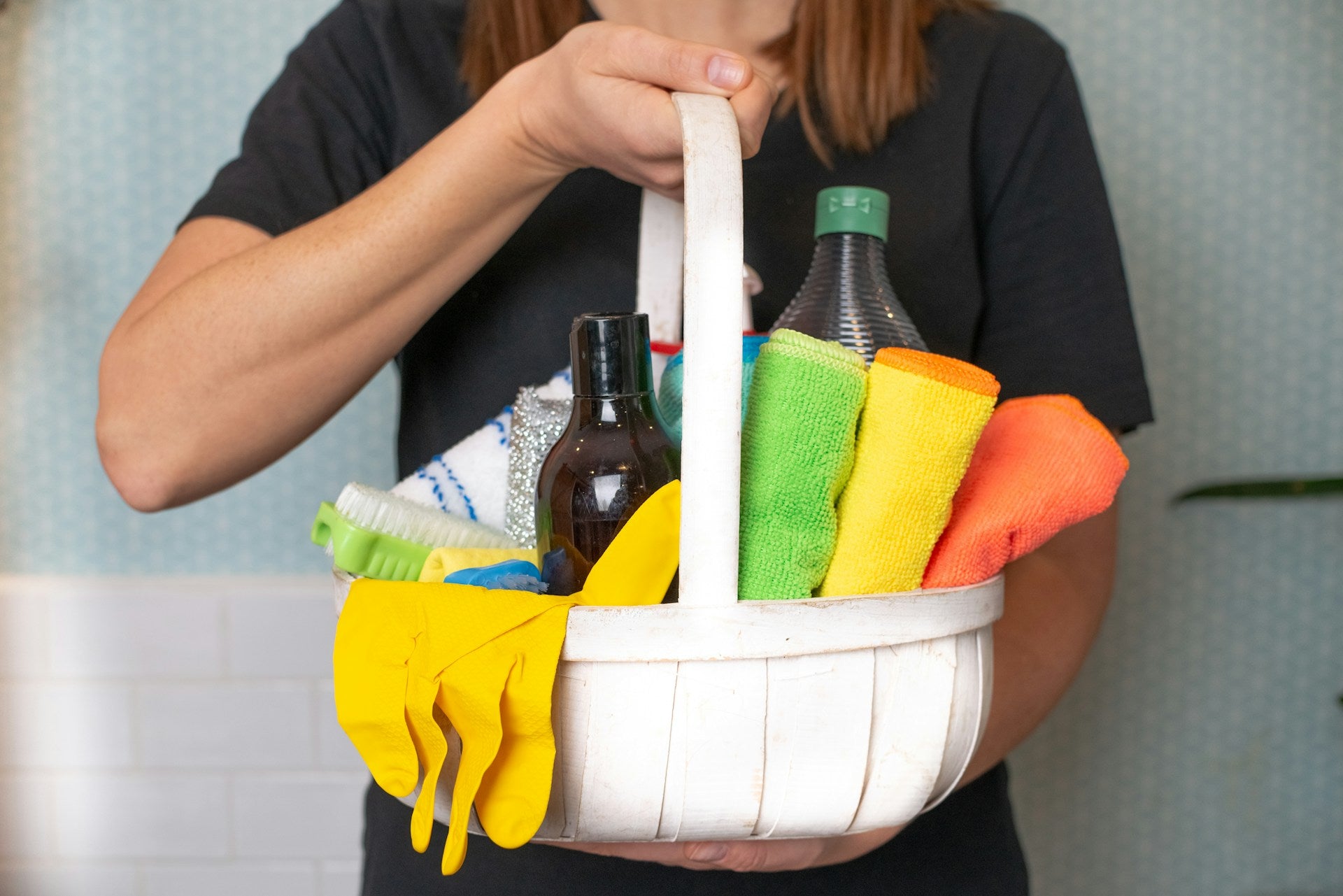
Most cleaning supplies lists are thirty items long. That is not because a house needs thirty products. It is because surface-specific cleaners are easy to sell, so the category keeps inventing them: a granite spray, a stainless spray, a glass spray, a tub spray, a wood spray, each in its own bottle, each half-used under your sink two years later.
A house needs about six things. Here is the actual list, what each one does, and which popular items you can skip.
The short list
1. One all-purpose cleaner. Handles counters, stovetops, sealed wood, sealed stone, tile and cabinet fronts. This is 80 percent of your cleaning.
2. A scrub sponge. For baked-on food and the sink, where a cloth will not do.
3. A reusable cloth. For wiping, drying and spills. Replaces paper towels.
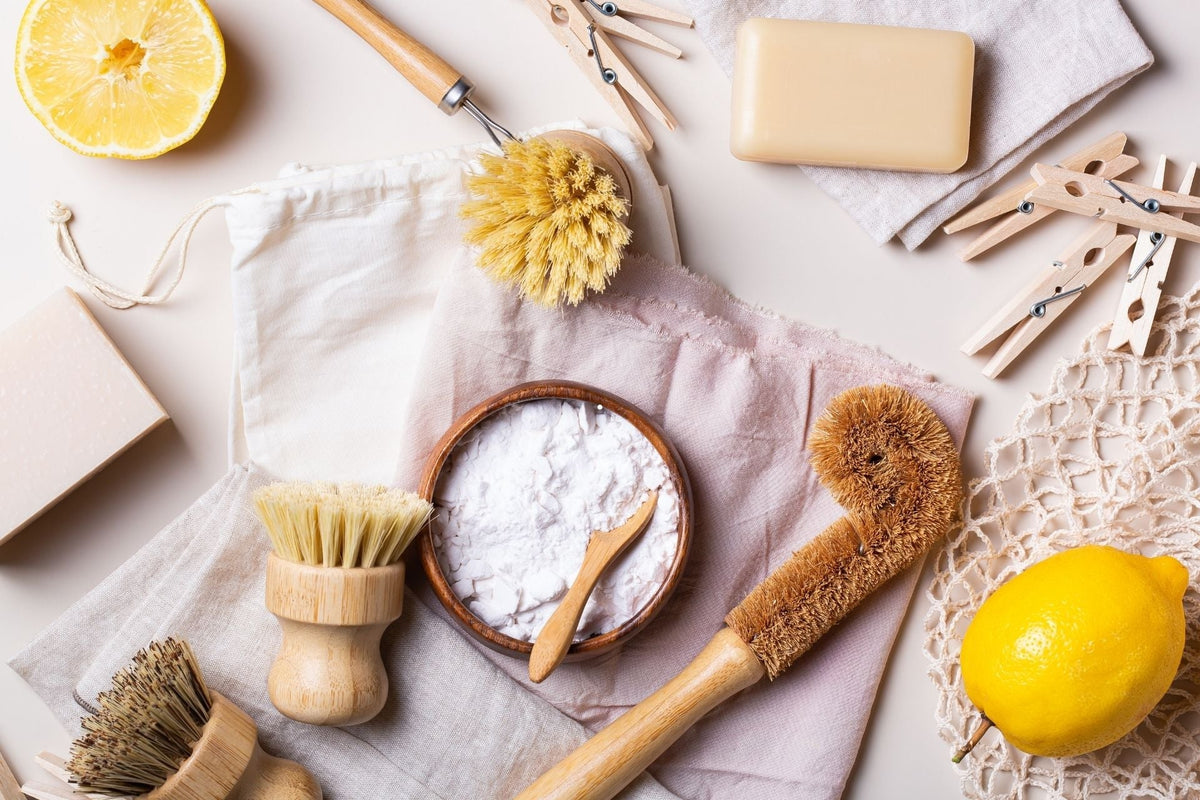
4. Baking soda. A mild abrasive for scorched pans and stained mugs, and an odor absorber in the fridge or bin.
5. A dish soap or dish bar. For dishes, and as an emergency stand-in for the all-purpose cleaner.
6. Trash and compost bags. Sized to your bins.
Optional depending on your home: a toilet brush, a glass cleaner if you are fussy about windows, a mop, and a stone sealer if you have natural stone counters.
That is the whole kit. Everything else in the aisle is a variation on one of those six.
What each item is actually for
The all-purpose cleaner
This is the item worth choosing carefully, because it does most of the work. Two things matter: what it is rated for, and whether it rinses clean.
Rated for matters because "all-purpose" is a marketing phrase, not a specification. Sealed stone, unsealed stone, glass and floors all behave differently, and a cleaner that is fine on laminate can etch marble. A product that names its approved surfaces is more useful than one claiming to work on everything.
Rinsing clean matters more than people expect. A cleaner that leaves residue builds a film that dulls the surface, which is why so many people end up searching for how to stop their counters looking streaky. Dish soap is the usual culprit here, since it is engineered to cling.
The scrub sponge
Conventional sponges are polyurethane, a plastic, and they shed microplastic fragments as they break down. A cellulose and loofah sponge does the same job and biodegrades. Either way, the sponge is for scrubbing, not for wiping down a whole kitchen, which is what the cloth is for.
The reusable cloth
The single biggest waste reduction on this list. A cellulose and cotton cloth absorbs many times its weight, washes out, and lasts months. Paper towels are the most disposable thing most kitchens buy.
Baking soda, and not its stronger cousin
Baking soda is sodium bicarbonate, pH around 8.3, mild enough to use on almost anything. Washing soda is sodium carbonate, pH around 11, and a genuinely different chemical that needs gloves and will corrode aluminum. They are frequently recommended interchangeably and should not be. We wrote up the difference between washing soda, baking soda and borax if you want the detail.
What you can skip
The items most often on a cleaning supplies list that a normal home does not need:
- Surface-specific sprays. A granite cleaner, a quartz cleaner and a wood cleaner are largely the same idea in three bottles. One cleaner genuinely rated for sealed stone covers all of it.
- Polish and shine restorer. These work by leaving a film. On a non-porous surface the film attracts more grime and dulls it further.
- Antibacterial everything. Most surfaces in a home need cleaning, not disinfecting. Save an actual registered disinfectant for the situations that warrant it, like a board that held raw chicken, and use a plain cleaner for the rest.
- Air fresheners. They add fragrance rather than removing the cause. Better ventilation and taking the bin out solves more.
- Disposable wipes. Convenient, and the most expensive way to buy a cleaner, since you are paying for a single-use cloth every time.
Two things worth knowing before you buy
Vinegar is not a universal answer. It is genuinely useful on glass, in a kettle and on hard-water deposits. It is also an acid, so it etches marble and travertine and wears the sealer on granite. The natural-cleaning internet recommends it for everything, and on stone counters that advice does real damage. More on that in our guide to cleaning granite and marble.
"Natural" is not a regulated word. Neither is "non-toxic." A label carrying either tells you what the marketing department chose, not what is in the bottle. The useful test is whether you can find a complete ingredient list in under a minute, and whether the brand names what its product is not for. Our guide to verifying cleaning product claims covers how to read a label properly.
Build the kit as things run out
Do not replace everything at once. Throwing away a half-used bottle to buy a greener one is a net loss, and it is how people end up spending a lot to feel organized.
Use what you own. When a product runs out, replace that one item with something better. Within a few months you have swapped the whole cupboard without waste and without a big bill, and you will have learned which items you actually reach for.
What we make, and what we do not
For the sake of being direct about it: we make four of the six things on this list, across our non-toxic cleaners and tools ranges.
Our non-toxic cleaning tablets are the all-purpose cleaner. One tablet dissolves in 16 ounces of warm water in a refillable bottle, so the bottle stays and only the tablet gets replaced. Allow 20 to 30 minutes for it to dissolve fully. Eight mineral-based ingredients, published in full on our ingredients page, fragrance-free and dye-free, with no PVA film. Rated for sealed countertops, stovetops, sealed wood and sealed stone including marble, granite, quartz, travertine and terrazzo. Not for floors, and not for glass or mirrors. Not EPA registered, so it cleans and we make no claim that it disinfects. Leaping Bunny certified cruelty-free, which covers animal testing only.
Our scrub sponge is cellulose and loofah, biodegradable, and replaces the plastic kind. The sponge cloth is the reusable cloth. Our compostable trash bags are BPI certified for industrial composting facilities and TUV OK Compost HOME certified for backyard piles.
We do not make dish soap, baking soda, a mop or a toilet brush. Buy those wherever you like. The point of a short list is that it is short, not that one company fills it.
Share:
How to Switch to Biodegradable Garbage Bags for a Greener Home
Complete Guide to Using Compostable Trash Bags at Home