


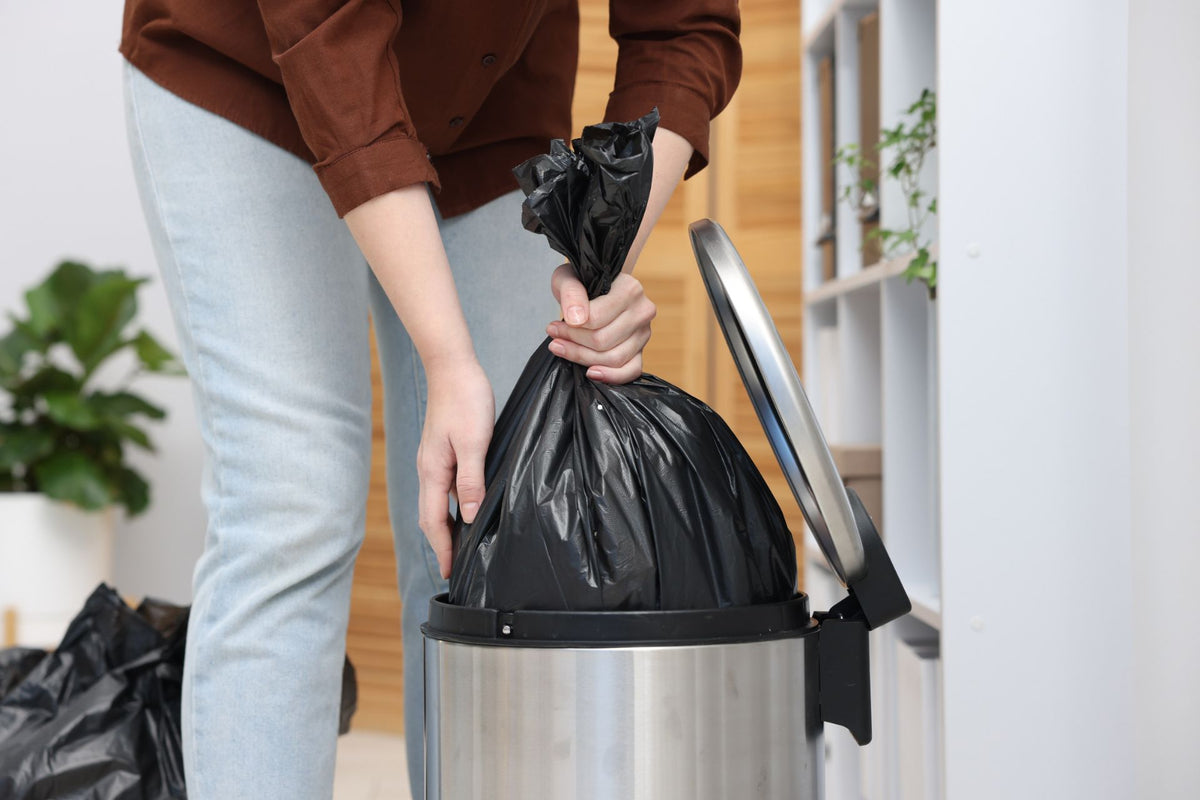
It's a simple task, but one that we often overlook: putting a trash bag in a trash can. While it might seem like a no-brainer, there are actually several tips and tricks that can help you get the most out of your can liners.
In this article, let's explore different techniques for swapping a garbage bag and discuss some crucial pointers for changing trash bags that will allow you to maximize the use of each bin liner.
Two Ways to Put a Trash Bag in a Can
The Hat Method
The Hat Method involves opening the trash bag and placing it over the trash can like a hat. The edges of the bag are then folded over the sides of the can, securing it in place. Here is a step-by-step guide to using the Hat Method:
- Remove a trash bag from the roll.
- Hold the bag by its edges and open it up completely.
- Position the open bag over the trash can, making sure the bag's edges are evenly distributed around the can's rim.
- Gently press the bag down into the trash can so that it lines the interior.
- Fold the edges of the bag over the sides of the trash can, ensuring the bag stays in place and won't slip inside when the trash is added.
The Open and Shake Method
The Open and Shake Method is a more straightforward approach to placing a trash bag in a trash can. It involves opening the bag, giving it a shake to fill it with air, and then placing it inside the trash can. Here's how to use the Open and Shake Method:
- Remove a trash bag from the roll.
- Hold the bag by its edges and open it up completely.
- Give the bag a vigorous shake to fill it with air. This will make it easier to insert the bag into the trash can and ensure it fully lines the interior.
- Place the inflated bag inside the trash can, ensuring the bag's edges are evenly distributed around the can's rim.
- Press the bag down into the trash can, allowing it to line the interior.
There isn't a wrong way to place a trash bag inside a trash can, so don't worry if you haven't been using the methods mentioned above. It's not really a big issue.
The "hat" method can be helpful for putting a trash bag into a trash can. It might even work better for some people and certain trash cans.
This method is also quieter than the traditional open-and-shake method, so if you prefer avoiding loud noises, this alternative could be perfect for you. However, the open-and-shake way is still completely fine.
You won't damage your trash bag or trash can by using the standard method. Additionally, we won't tell you which method is the best for placing a trash bag in a trash can. As long as you replace the bag when it's full, either way should work well.
Best Practices for Putting a Trash Bag in a Trash Can
You must clean the trash can regularly and change the trash bags. If a bag has leaked or fallen inside the can, there might be leftover residue, and we have a full guide on how to clean a trash can, including how to do it without a hose. Doing this is crucial for several reasons, such as preventing unpleasant odors and keeping flies, ants, and roaches away.
Regularly cleaning your trash can not only helps avoid pest infestations and foul smells but also ensures a cleaner environment in the future. Have some heavy-duty, compostable garbage bags ready in your kitchens and garages.
A trash can that accommodates a 13-gallon bag is usually the standard size for these spaces, although some homes may require larger cans that hold 20- to 30-gallon bags. It is common to forget to replenish trash bags after disposing of garbage and replacing the compostable trash bag.
For that standard size, Plastno's 13-gallon Waste Bag Tall is BPI and TUV OK Compost HOME certified, so it breaks down in both commercial and home compost.
To avoid this, use this helpful tip: set an alarm or reminder for yourself before leaving the house. For most individuals, five minutes should suffice, but consider allowing extra time if you have to navigate numerous stairs.
Conclusion
Putting a trash bag in a trash can may seem mundane, but there are different methods to consider based on your personal preference. Make sure to clean your garbage can regularly to prevent unpleasant odors and keep pests away.
In addition, having heavy-duty, compostable garbage bags on hand and setting reminders to replenish them can help ensure you're always prepared to dispose of your garbage correctly. By following these tips, you can make the most out of your compostable garbage bags and ensure that your home or workspace stays clean and hygienic.
Searching for an environmentally friendly substitute for conventional plastic bags? Plastno makes one.
Our compostable garbage bags are made from a cornstarch, PLA, and PBAT blend and are certified to break down in both backyard compost bins and commercial composting facilities. Composting them keeps that material out of a landfill, where nothing composts. Place an order today and begin effecting positive change.
Share:
Exploring the Ingredients of Biodegradable Garbage Bags
Trash Bag Thickness Chart (Mil and Microns Explained)