

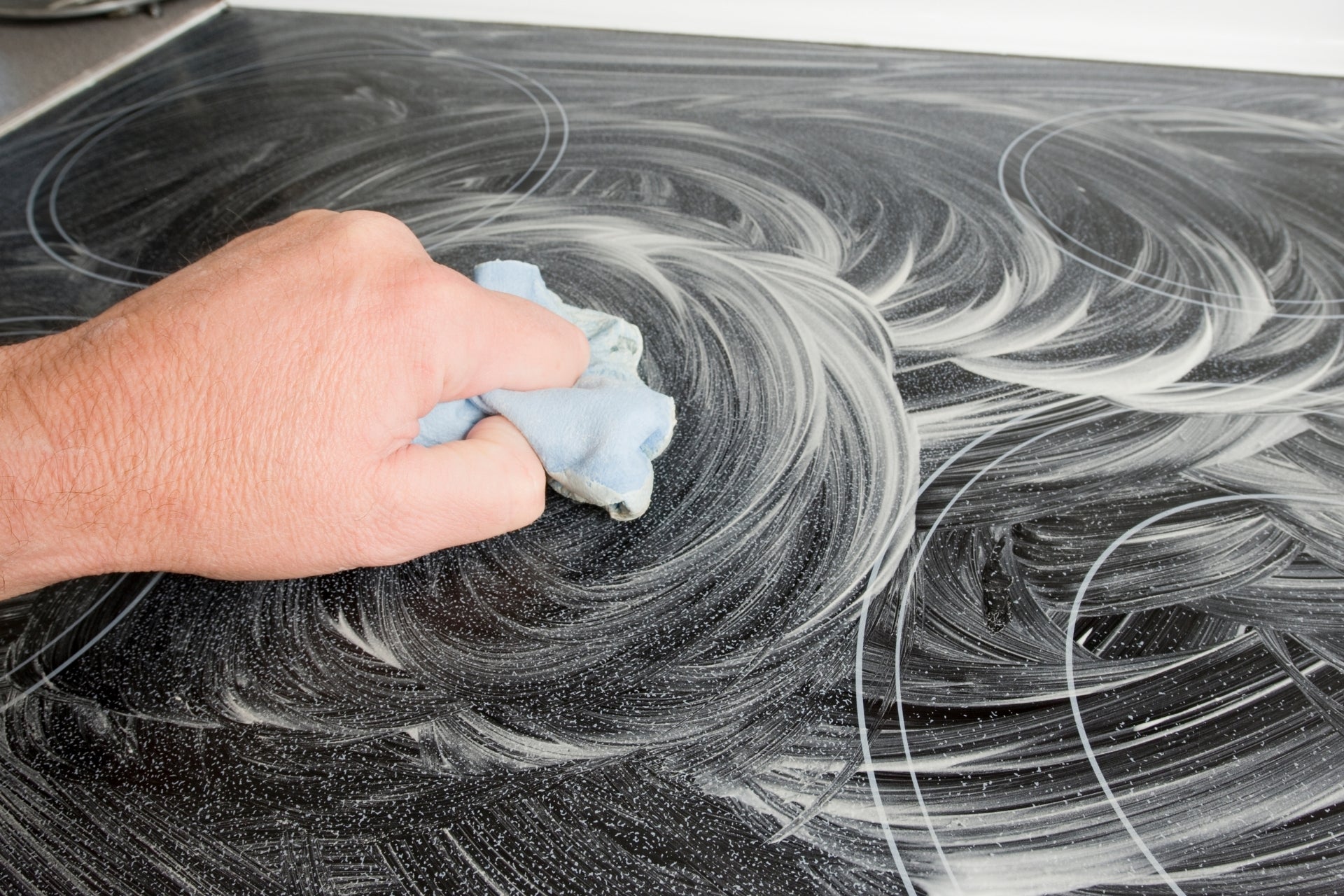
A glass stove top is the easiest surface in a kitchen to clean and the easiest one to ruin. It is a sheet of ceramic glass, so it will not stain, but it scratches, and the wrong scrubber leaves marks that never come out.
Most of the advice online skips the part that actually matters, which is timing. Here is the method, the two things that damage the surface permanently, and how to get it streak-free rather than merely clean.
Wipe it after every use, while it is warm
Not hot, warm. Once the surface is cool enough to touch but still slightly above room temperature, a damp cloth removes almost everything with no product at all.
This single habit is the difference between a two-minute wipe and a twenty-minute restoration project. Spills that sit through one more cooking cycle get baked on, and baked-on residue is the only thing on a glass cooktop that requires real effort.
Never wipe a hot cooktop. Cold water on hot ceramic glass risks thermal shock, and you can crack it.
The weekly clean
For the ordinary film of grease and splatter that builds up over a week:
- Make sure it is fully cool. Every step below assumes this.
- Wipe away loose crumbs with a dry cloth first, so you are not dragging grit across the glass.
- Spray with a cleaner and let it sit for a few minutes. Grease needs contact time. Spraying and immediately wiping is why people think a cleaner is weak.
- Wipe with a soft cloth in straight passes rather than circles.
- Buff dry with a second, clean, dry cloth. Skip this and you get streaks. This step is not optional on a dark glass surface.
That is it for maintenance. The buffing step is where most people go wrong, and it is the entire reason a cooktop looks smeared after cleaning.
Burnt-on residue, done properly
For anything baked hard onto the glass, do not attack it with a stronger cleaner. Soften it, then lift it.
Sprinkle baking soda over the spot. Lay a cloth soaked in hot water over the top and leave it for fifteen minutes. The heat and moisture soften the residue while the baking soda gives you a mild abrasive that will not scratch ceramic glass.
Then take a razor-blade cooktop scraper held at a shallow angle, almost flat to the surface, and slide it under the edge of the residue. This is the tool professionals use and it is the correct answer for burnt-on food. Held flat it will not scratch the glass. Held upright it will gouge it, so keep the angle low and never dig.
Wipe away the debris, then clean and buff as normal.
For a truly stubborn burnt ring, a dedicated cooktop cream is worth owning. It contains a fine polishing abrasive designed for ceramic glass, and it does something a general cleaner cannot.
The two things that cause permanent damage
Abrasive pads and powders. Steel wool, green scouring pads and gritty powder cleansers all leave a haze of micro-scratches. You will not see it after one use. You will see it after a year, as a dull patch that no cleaning brings back, because the glass surface itself has been abraded.
Sugar spills left on heat. This is the one almost nobody warns about. Melted sugar, jam or a boiled-over sweet sauce can pit ceramic glass permanently if it stays on a hot surface. If you spill something sugary while the burner is on, turn the heat off and, with an oven mitt and a scraper, get it off while it is still soft. Waiting for the cooktop to cool is the wrong call in this one specific case.
Also skip: bleach, ammonia, oven cleaner, and anything designed for a different appliance. None of them do anything a mild cleaner and a scraper cannot, and several will dull the finish.
Why it looks streaky, and how to stop it
Streaks on a glass cooktop are almost never dirt. They are residue left behind by whatever you cleaned with, made obvious by a dark, reflective surface. Three causes, in order of how common they are:
Too much product. A cooktop needs a light mist, not a soaked surface. Excess cleaner has nowhere to go and dries into a film.
Not buffing dry. Any cleaner left to air-dry on glass leaves something behind. A dry cloth pass fixes it.
Dish soap. It is the most commonly recommended cooktop cleaner and it is engineered to cling and foam, which is exactly wrong on a non-porous reflective surface. If dish soap is what you have, use a tiny amount, rinse with a clean damp cloth, and buff dry.
If your cooktop looks hazy rather than streaky and cleaning does not touch it, that is either micro-scratching from an abrasive pad or genuine mineral buildup from hard water. The second responds to a cooktop cream. The first does not respond to anything.
Where our cleaner fits, and where it does not
Being straight about this, because it is a two-part answer.
Stovetops are a surface our non-toxic cleaning tablets are formulated for, and they sit alongside the refillable bottle in our non-toxic cleaners range. They handle the after-cooking wipe-down and the weekly grease film well, which is most of what a cooktop actually needs. Eight mineral-based ingredients, published in full on our ingredients page, no fragrance, no dye, and nothing abrasive that could scratch ceramic glass.
What it is not is a specialist glass product. Our formula is not designed for streak-free glass, and on a dark reflective cooktop you should expect to buff dry with a clean cloth to finish. For burnt-on residue you still want a scraper, and for a mirror finish on a badly neglected cooktop a dedicated cooktop cream will outperform any all-purpose cleaner including ours.
So: our tablet for the daily and weekly clean, a scraper for baked-on food, and a cooktop cream in the cupboard for the occasional deep clean. That is three items instead of a shelf of them, which is the same argument we make in our cleaning supplies list.
One practical note on the tablet: it takes 20 to 30 minutes to dissolve in a bottle of warm water, because there is no dissolving plastic film to speed it along. Start the bottle before you need it rather than mid-clean.
It is not EPA registered, so it cleans and we make no claim that it disinfects or sanitizes.
A note on coil and induction
Everything above applies to smooth ceramic glass, which covers most electric and induction cooktops. Induction is the same glass surface, with the added advantage that the glass itself stays cooler, so spills bake on less.
Exposed coil elements are a different job. The drip pans lift out and can be soaked, the coils themselves should never be submerged, and you simply wipe them down once cool.
The habit that replaces all of this
Wipe it after cooking, while it is warm, with a damp cloth. Thirty seconds.
Every deep-clean method above exists because that step got skipped for a few weeks. A cooktop that is wiped after each use never needs a scraper, never needs cream, and never develops the burnt ring that sends people searching for how to fix it.
If you want the wider version of that argument, our guide to verifying non-toxic cleaning products covers how to judge what a cleaner can and cannot do from its label.
Share:
How to Clean Granite and Marble Countertops (Skip the Vinegar)
Does Silicone Have Microplastics