

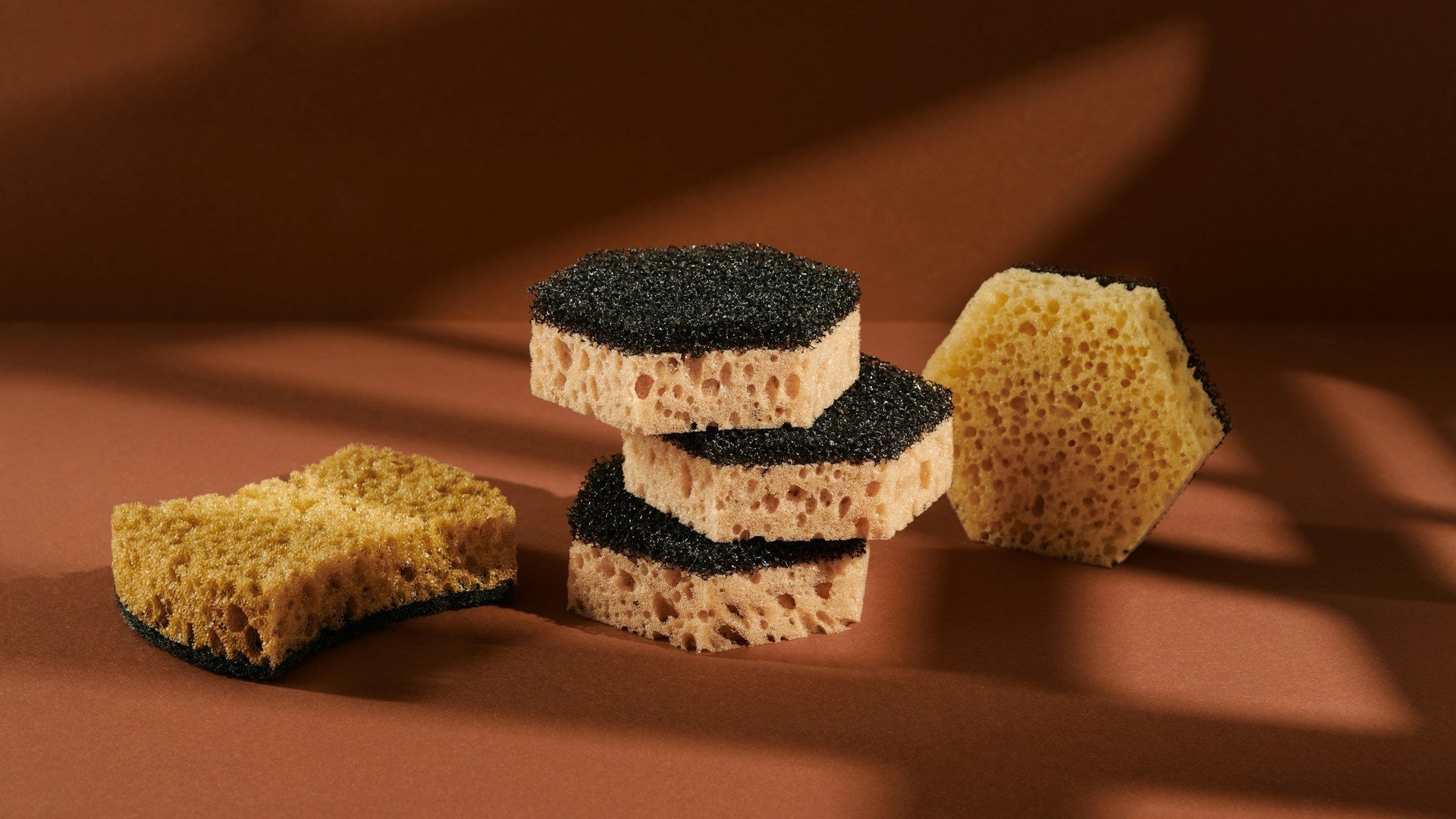
The kitchen sponge is one of the most-used and least-thought-about tools in the house. Most are made from polyurethane and polyester, which are plastic, and they shed tiny plastic fibers while they wear out in weeks. Plant-based sponges are the low-waste alternative. Here is how to use them well and when to swap them.
What plant-based sponges are made of
Plastno's sponges are made from plant-derived materials like cellulose, loofah, and organic cotton. They are plastic-free and biodegradable, so at the end of their life they break down instead of lingering as microplastic. They replace conventional sponges that shed plastic into your sink with every scrub.
How to use each type
- A scrub sponge handles baked-on messes, pots, and the sink, with a textured side for scrubbing and a softer side for wiping.
- A soak sponge holds a lot of water for wiping counters and spills.
- A sponge cloth works like a reusable paper towel, absorbing up to ten times its weight and washing clean again and again.
Keep them fresh longer
Plant-based sponges last longest when they dry out between uses. Wring a sponge fully and stand it up or hang it so air reaches all sides, rather than leaving it flat in a puddle at the bottom of the sink. Rinse it after big jobs, and run sponge cloths through the dishwasher or washing machine to refresh them.
When to replace them
A natural sponge will soften, fray, and stop holding its shape as it nears the end of its life, usually somewhere between two and six months depending on use. That is normal. Unlike a plastic sponge, a worn plant-based one can go into your compost rather than the trash.

Share:
Simple Ways to Keep Your Cleaner Bottles Organized and Refilled
Signs Your Cleaning Routine Isn’t Truly Eco-Friendly