

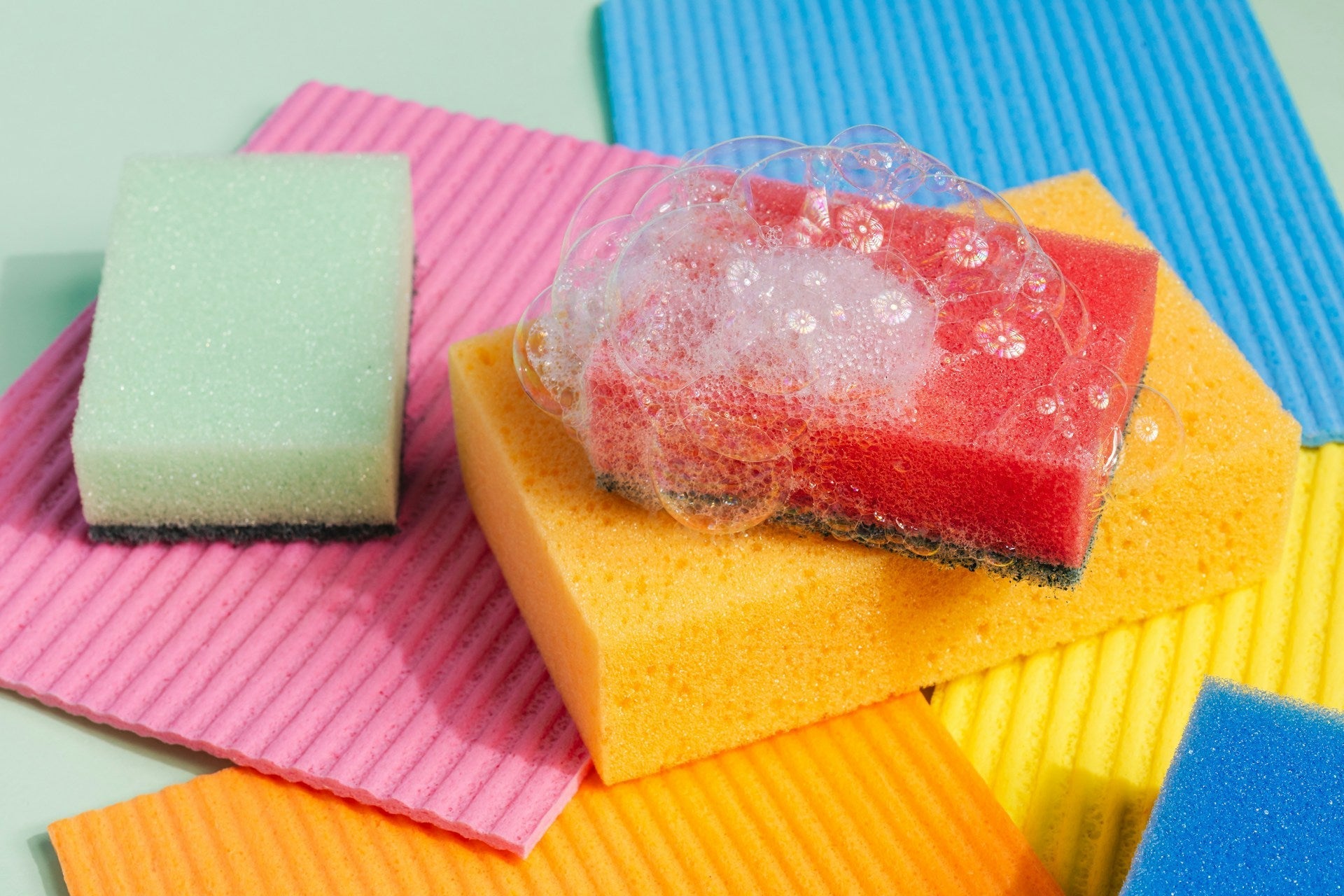
Kitchen sponges get gross fast, especially when the weather is cold and the kitchen stays extra busy. Between winter baking, warm meals, and fewer open windows, there is more moisture hanging around and more mess to clean up. All that moisture, heat, and food buildup makes the perfect environment for a sponge to go sour in no time.
One way to keep things fresher is by switching to biodegradable sponges, which are made from plant-based materials instead of plastic. They hold up well in daily cleaning and break down more easily when it is time to toss them. For example, our Soak Sponge is made entirely from plant-based cellulose and breaks down far more readily than plastic foam at the end of its life. We call our sponges biodegradable rather than compostable, because we do not hold a compostability certification for them. But switching your sponge is only part of it. A few easy habits can help any sponge last longer and keep your kitchen feeling cleaner too.
Keep It Dry Between Uses
The fastest way for a sponge to turn smelly is when it stays wet. A damp sponge is a cozy spot for bacteria to grow, especially during winter when the air is not moving much. Even with the best sponge, mold and odor show up fast if it never gets a chance to dry out.
To keep that from happening, give your sponge a good spot to air out. Do not let it sit in the bottom of the sink or bunched up on the edge. Instead, try one of these:
• Use a sponge holder with slots or gaps so air can reach the whole surface
• Stand it on its edge near a window or vent if the air is warm and dry
• Keep it far from piles of dishes or anything that might weigh it down
It also helps to clean up earlier in the day when there is still sunlight and warmth in the kitchen. A sponge used right before bedtime sometimes stays damp without a real chance to dry before the next use. With just a better drying spot, your sponges will stay fresher and ready for the next mess.
Rinse and Ring Out After Every Use
Food particles, soap scum, and grease can get stuck deep in a sponge after just one wipe of the counter. If it is not rinsed out right away, that gunk sits there and starts to build up. By the next meal, you are wiping your sink with old food and funky water.
The best time to rinse is right after you finish cleaning. Before setting the sponge down, make it a habit to hold it under hot running water for a few seconds. Squeeze it several times until the water runs clear. Then give it two strong squeezes to remove as much water as possible.
Here is how to do it quickly without adding to your routine:
• After scrubbing, rinse the sponge under hot water while gently kneading it with your palm
• Keep squeezing it tightly so you force out both suds and food
• Once clean, press between folded towels or dishcloths for one extra squeeze if needed
These few seconds after each cleaning go a long way. This extends the life of your sponge and limits the smell that tends to show up a few days in.
Clean It Each Week the Simple Way
Daily rinse-and-dry habits help, but every sponge still needs a deeper clean after a few days of heavy scrubbing. If left alone, even the cleanest sponge starts to carry a smell or feel a little slimy. That is just a sign it is time for your weekly refresh.
We like to keep it simple. There is no need for commercial cleaners or scrubbing tools. Try one of these:
• Place the damp sponge in the microwave for 60 seconds to steam away bacteria (only if it does not have metal or plastic in it)
• Run it in the top rack of your dishwasher with the other dishes
• Soak it in hot water with a bit of baking soda for 10 to 15 minutes
Biodegradable sponges hold up just fine with these methods and tend to dry out faster too, making them easier to keep clean in winter. Our biodegradable sponges can be refreshed by boiling them or placing them in the dishwasher on the top rack, so they are easy to refresh and reuse. Building this into your weekend routine helps keep funk and wear from sneaking up on you.
Don’t Let It Do Every Job
We get it, sponges are convenient. It is easy to just grab the same one and scrub down everything from coffee drips to pet bowls. But sponges wear out faster and pick up weird smells when they are used for too many different things.
If your sponge is trying to clean up every single kind of mess, it is going to get overloaded fast. It helps to give each sponge a job and stick with it. Try keeping a few kinds of cloths or sponges nearby and split up the work.
• Use one sponge just for dishwashing
• Pick another for wiping down counters and tables
• Keep a separate cloth or sponge for anything linked to pets or kids
Labeling or color-coding can help if you keep multiple sponges around. That way, you are not wiping peanut butter off a plate with the same thing you used to scrub the dog’s bowl. You will be surprised how much longer they last when they are not doing everything.
A Fresh Kitchen Tool That Holds Up
A sponge does not have to get gross just a few days after you bring it home. With simple habits like proper drying, quick rinsing, and once-a-week cleanings, it is easier to get more use out of each one without adding effort or stress.
Being a little more thoughtful about how we use and care for sponges pays off fast. When a sponge stays clean, it smells better, works longer, and does not feel like something you have to toss after every load of dishes. If we are trying to live with less waste and still keep an active kitchen running, those small shifts really matter.
Biodegradable sponges give us a cleaner starting point, but daily habits are what make the difference. They are built to last long enough to do the job well, and because they are cellulose rather than plastic foam they do not shed microplastics while you use them. With regular rinsing and drying, they can last several months of everyday use before wearing out.
At Plastno, we believe everyday routines can have a real impact when they support cleaner living and less waste. Small habits like rotating sponge use and rinsing them well make a big difference, especially when paired with tools built to last. Our kitchen essentials, including our biodegradable sponges, are made to support a lower-waste lifestyle without losing everyday function. If you are ready to clean smarter and toss less, we are always here to help. Reach out and let us know how we can make your home routine more sustainable.
Share:
How to Cut Holiday and Party Waste Without the Stress
A Room-by-Room Guide to Ditching Plastic Cleaning Tools